
Blade Application Guides / Application Guide / Building, HVAC and marine insulation fabrication
Stone Wool Lamella Mat Cross-Cutting Blades
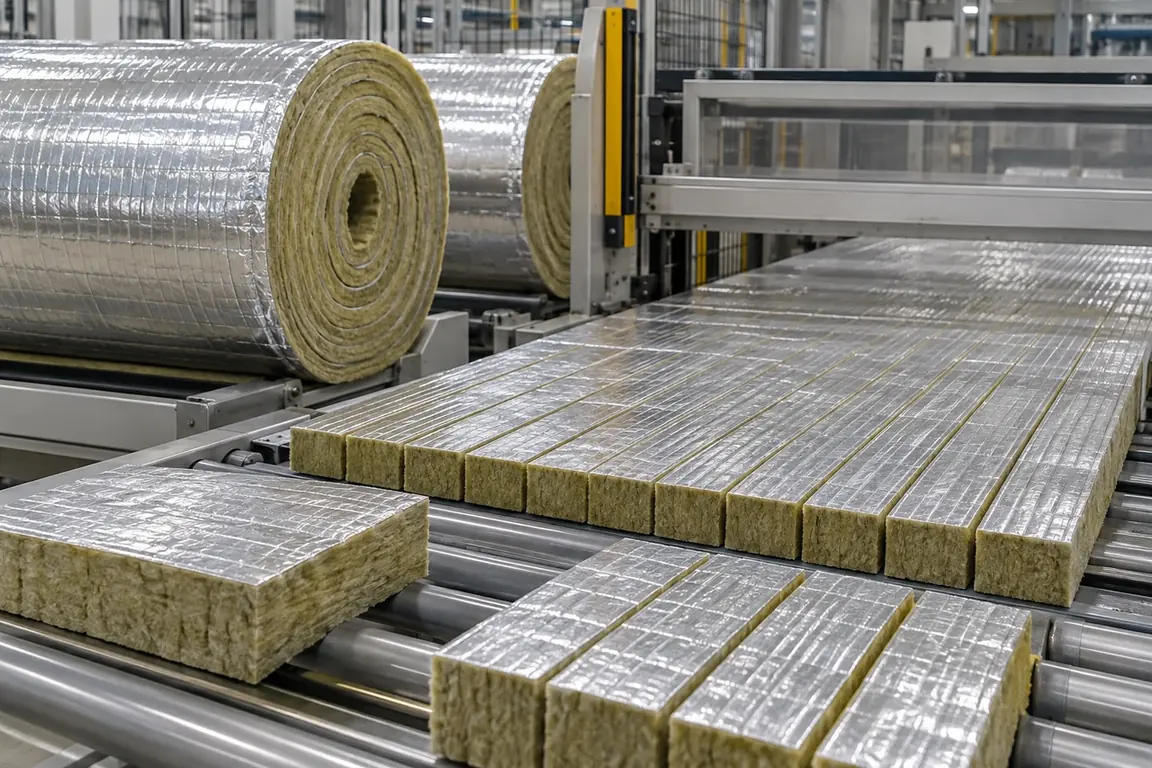
Stone wool lamella mat cross-cutting blades size flexible insulation made from edge-oriented stone wool strips bonded to a supporting facing. The material differs from conventional glass-fiber batts, ceramic-fiber blankets and aerogel blankets because the lamella orientation and facing must remain coordinated through cutting and handling. Review should identify the supplied construction, facing, required geometry, support, dust controls and accepted finished edge.
Where This Cutting Application Appears
Duct insulation length preparation
Lamella mats are cross-cut into controlled lengths for wrapping ducts or other approved insulation assemblies.
Pipe and tank profile sizing
Flexible mat sections are prepared to an approved layout for curved insulation coverage.
Insulation kit component preparation
Repeated mat pieces are cut and identified for staged installation or assembly.
Common Ways to Describe This Cutting Problem
- stone wool lamella mat cross-cutting blades
- foil faced rock wool mat cutting knife
- stone wool lamella strip sizing blades
- HVAC lamella insulation cutter knives
- marine stone wool mat profile cutting blade
- rock wool lamella facing trim knife
- flexible stone wool roll cross cutter
- clean cut lamella insulation blades
Define the Required Cut Result
- Complete separation without pulling lamella strips away from the supporting facing.
- Controlled finished geometry after the flexible mat is released and supported for inspection.
- Facing edges remain continuous without excessive tearing, wrinkling or separation.
- Managed fiber and dust generation through cutting, collection and packaging.
Problems to Diagnose Before Changing the Knife
Lamella strips shift or detach at the edge
- Confirm lamella direction and the supplied bond to the facing.
- Review support immediately around the cutting line.
- Observe whether movement begins during cutting, unloading or later bending.
Foil or reinforced facing tears
- Identify the facing construction without assuming an unconfirmed material.
- Compare straight cuts, corners and profile transitions on the same sample.
- Inspect which face initiates the tear and how the part is collected.
Cut edge compresses or changes shape
- Record holding and support conditions during cutting and inspection.
- Check geometry immediately after cutting and after normal recovery.
- Separate temporary compression from permanent fiber or layer displacement.
Loose fibers and dust remain on finished pieces
- Identify where fibers are generated and how they are collected.
- Review contact surfaces and cleaning before pieces are stacked.
- Apply the customer's inspection and packaging criteria to trial pieces.
Knife Forms That May Be Considered
| Possible knife form | When it may be considered | What must be confirmed |
|---|---|---|
| Serrated lamella mat cutting arrangement | When the supplied flexible stone wool and facing respond well to a controlled sawing action. | Lamella construction, facing, support, machine motion, dust handling and accepted edge. |
| Supported straight cross-cutting arrangement | For preparing rectangular lengths from rolls or larger lamella mat sheets. | Cut list, lamella direction, facing orientation, support area and collection method. |
| Custom insulation profile arrangement | When installation kits require angles, openings or non-rectangular boundaries. | Controlled profile, support, flexible-part measurement, waste removal and packaging sequence. |
Information to Send for Technical Review
You do not need to know the exact blade name. Send the available workpiece, machine, current-knife and cut-result information so the application can be reviewed against a drawing or sample.
- Stone wool lamella mat identification, supplied construction and representative samples.
- Lamella orientation and complete facing or reinforcement description.
- Roll or sheet format, approved cut list and profile drawings.
- Material face, support, holding and unloading sequence.
- Machine station, cutting motion and available interface information.
- Photographs of accepted and rejected facing, lamella and fiber edges.
- Dust control, collection, contact and packaging requirements.
- Inspection method, trial quantity and repeat production expectation.
Questions About This Cutting Application
Is stone wool lamella mat cutting the same as fiberglass batt cutting?
No. Lamella mats contain oriented stone wool strips bonded to a facing, so strip alignment and facing integrity require separate review.
Why must lamella direction be marked?
Direction affects how strips are supported, separated and retained by the facing at the cut edge.
When should flexible mat geometry be measured?
Follow the customer's approved support and recovery condition and document it with the result.
Which defect images are useful?
Show the full piece and close views of shifted strips, facing tears, compressed edges and loose fibers.
Can facing construction be guessed from its appearance?
No. Use supplied material identification and customer or manufacturer documentation.
Request a Custom Cutting-Knife Review
Send the workpiece details, machine or holder information, current knife photos or sample, required quantity and examples of the present cut problem. Final dimensions, material, edge geometry and tolerances are confirmed from the approved requirements.