
Blade Application Guides / Application Guide / furniture and panel finishing
Wood Edge-Banding Roll Slitting
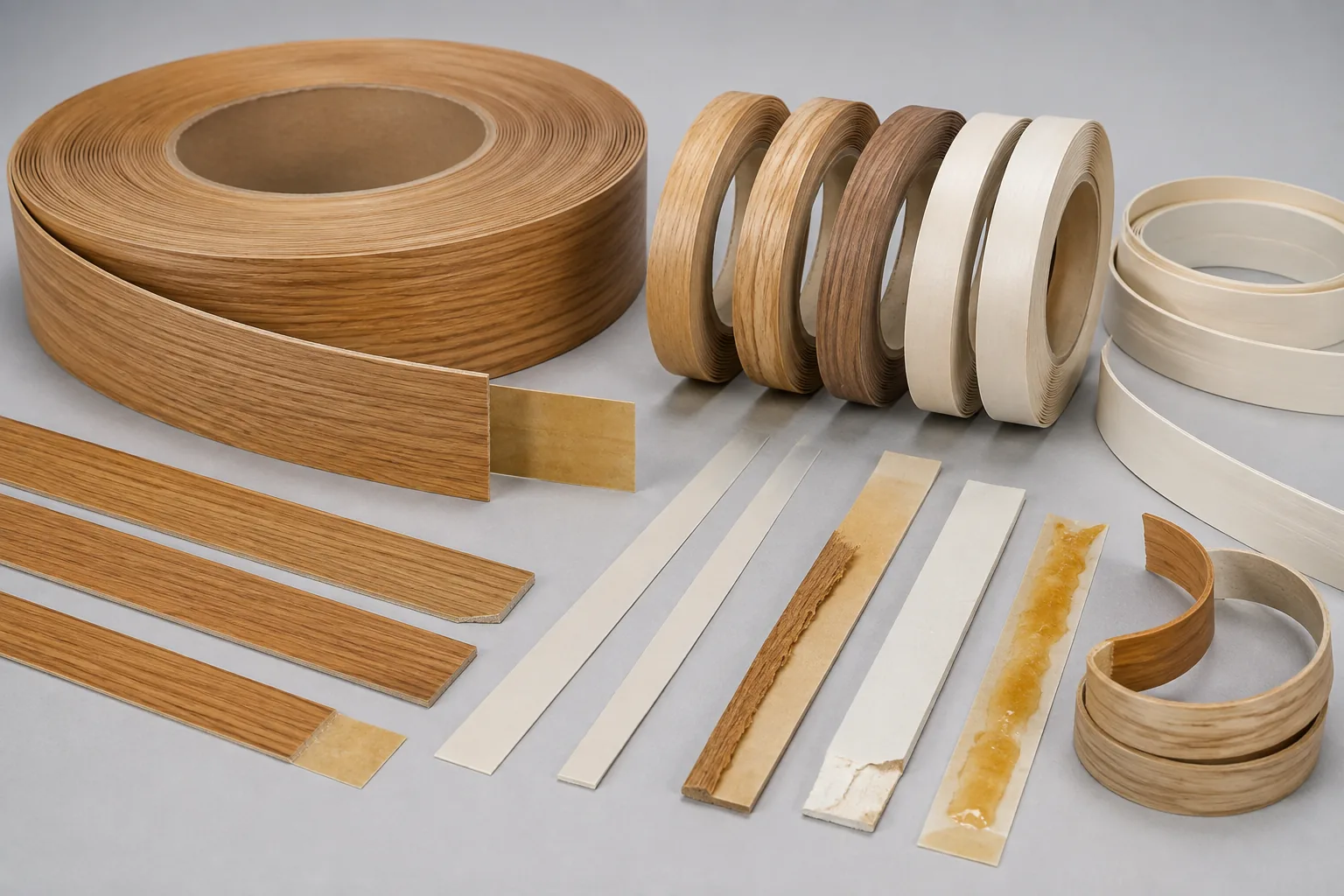
Edge-banding stock may combine decorative wood veneer or melamine with paper, fleece, hot-melt adhesive or a protective layer. Because these layers respond differently to shear and compression, a useful slitting review must identify the complete web construction and how narrow strips are guided and rewound.
Updated
Where This Cutting Application Appears
Converting master edge-banding rolls
Slit wide coated or laminated stock into the narrow widths required for different panel thicknesses.
Trimming coated roll edges
Remove coating beads, uneven backing or damaged margins before the material reaches printing, finishing or rewinding.
Recovering usable rolls after web damage
Separate sound lanes from localized tears or telescoped edges when the converter's quality plan permits recovery.
Roll Slitting And Edge Trimming process boundary
roll slitting and edge trimming for wood veneer or melamine edge-banding rolls is a linked sequence: the output condition and datum from each operation become the controlled input for the next. It should not be evaluated as one generic cut or accepted only by the final dimension.
Roll Slitting And Edge Trimming setup checkpoint
For wood veneer or melamine edge-banding rolls, define the operation order, intermediate dimensions, registration transfer, material support, web or part handling and waste route for every stage of roll slitting and edge trimming.
Roll Slitting And Edge Trimming acceptance checkpoint
Verify both intermediate and final results from roll slitting and edge trimming, including dimensions, registration, edge or feature quality, material damage, waste separation and stable transfer between stages.
Define the Required Cut Result
- Consistent strip width through the complete master roll
- Clean decorative faces without veneer splinters or melamine chips
- Complete separation of backing and adhesive layers
- Rewound edges free from loose fibers, ridges and transferred adhesive
Problems to Diagnose Before Changing the Knife
Wood fibers tear along the strip edge
Check veneer grain angle, incoming edge checks, web tension, lateral tracking, knife overlap and support after the slit.
Melamine chips or whitens at the cut
Review coating brittleness, edge compression, shear clearance, side load, runout and temperature at the slitting station.
Adhesive builds up on knife faces
Identify adhesive chemistry and coating side, then compare roll temperature, exposed adhesive, knife finish and cleaning intervals.
Strip width drifts or rolls telescope
Inspect web guiding, unwind and rewind tension, spacer stack, shaft runout, axial knife movement and core alignment.
Knife Forms That May Be Considered
| Possible knife form | When it may be considered | What must be confirmed |
|---|---|---|
| circular slitter | A single rotary slitter may suit thin, well-supported edge-banding webs where the line is designed for razor or score-style separation. | Confirm the machine's cutting principle, outside and bore diameters, thickness, bevel, rotation, backing surface and acceptable face marking. |
| paired rotary shear knife | An upper-and-lower shear pair may give better layer control on thicker, backed or brittle decorative constructions. | Confirm upper and lower geometries, overlap, horizontal clearance, side load, shaft fits and the operator's setting procedure. |
| score knife | Score cutting may be considered only where the edge-banding construction and anvil system tolerate compression without visible whitening or adhesive squeeze-out. | Verify anvil hardness and condition, penetration setting, web support and finished-edge samples before approving this route. |
Information to Send for Technical Review
You do not need to know the exact blade name. Send the available workpiece, machine, current-knife and cut-result information so the application can be reviewed against a drawing or sample.
- Decorative face: natural veneer, reconstructed veneer, melamine or another finish
- Backing, primer, adhesive and protective-layer construction
- Total thickness and variation across the master roll
- Master-roll width, requested strip widths, slit count and edge-trim allowance
- Unwind, guide and rewind arrangement with normal tension range
- Knife shafts, spacers, anvils and available adjustment ranges
- Current knife dimensions, bevel, rotation and cleaning history
- Samples showing wood tear, melamine chipping, adhesive transfer or width drift
Questions About This Cutting Application
Can one knife slit both wood veneer and melamine edge banding?
Possibly, but the failure modes differ. Veneer can split with the grain, while melamine may chip or whiten; evaluate both constructions and the machine setup before standardizing.
Why does adhesive collect on only one side of the knife?
The coated face, bevel orientation, side load or exposed adhesive at the slit may direct transfer to one face. Mark web orientation and inspect both knives or the anvil.
What causes a narrow edge-banding roll to telescope?
Width variation is one cause, but rewind alignment, tension, core condition and web guiding also matter. Compare slit width before and after rewinding.
Is score slitting suitable for a visible melamine edge?
It depends on the coating and acceptable appearance. Compression can create whitening or edge deformation, so review representative finished rolls before approval.
What must a matched rotary shear drawing include?
Show upper and lower knife dimensions, datum faces, bevels, running overlap, horizontal clearance, shaft fits and the direction of web travel and rotation.
Related product and service information
- Hydrocolloid Wound Dressing Edge Trimming Blades - hydrocolloid wound dressing · edge trimming
- Decorative Veneer Roll Slitting - decorative veneer rolls · continuous veneer slitting
- Kraft Paper Roll Slitting: Edge Quality and Dust - kraft paper rolls · roll slitting
Request a Custom Cutting-Knife Review
Send the workpiece details, machine or holder information, current knife photos or sample, required quantity and examples of the present cut problem. Final dimensions, material, edge geometry and tolerances are confirmed from the approved requirements.