
Blade Application Guides / Application Guide / Technical films
Window Tint Film Cross Cutting
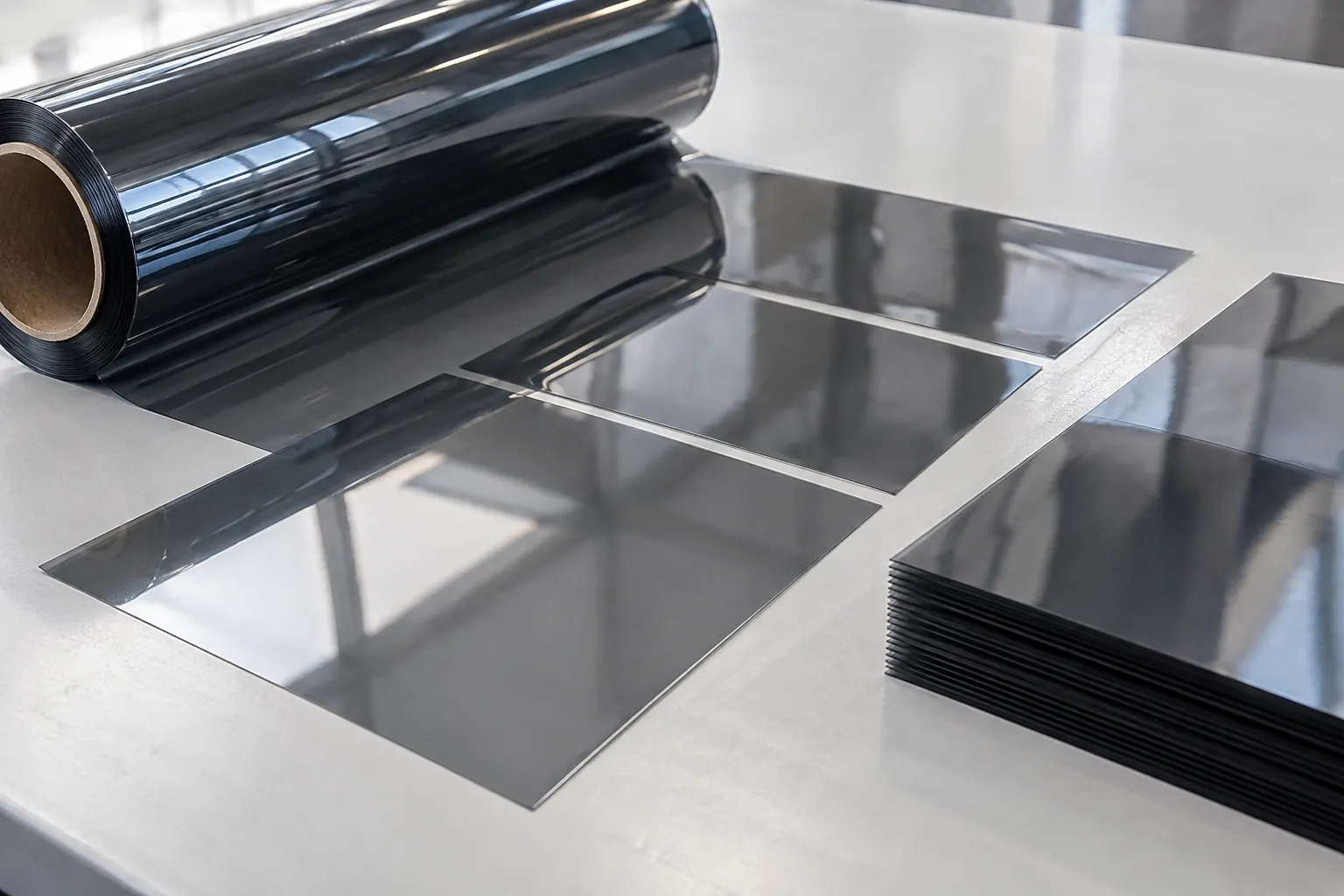
Cross cutting window tint film produces sheets or installation blanks from a coated adhesive web. The film can curl when released from roll tension, and the liner may respond differently from the carrier. Cutoff review should define which layer faces the support, how the sheet is restrained and how optical defects and dimensions are inspected.
Updated
Where This Cutting Application Appears
Installer sheet preparation
Cut rolls into manageable lengths while protecting adhesive and optical surfaces.
Architectural panel blanks
Prepare rectangular sheets for glazing sizes or subsequent plotting.
Sample-book material
Create consistent tint samples with clean edges and undamaged visible faces.
Transverse Cross Cutting process boundary
Transverse cross cutting separates material across the web into sheets or repeated lengths; it is distinct from longitudinal roll slitting.
Transverse Cross Cutting setup checkpoint
Confirm repeat length, registration reference, web speed, cut timing, support across the width and sheet transfer immediately after separation.
Transverse Cross Cutting acceptance checkpoint
Measure repeat length and squareness, then inspect leading and trailing edges, registration error, sheet curl and stacking consistency.
Define the Required Cut Result
- Maintain specified sheet length after curl relaxation.
- Keep film and liner aligned through the transverse edge.
- Avoid optical scratches, whitening and adhesive contamination.
- Collect lightweight sheets without static clinging or creasing.
Problems to Diagnose Before Changing the Knife
Cut sheets curl tightly
- Record winding orientation and roll age.
- Compare film and liner tension balance.
- Measure after defined conditioning.
Liner tears while film stretches
- Identify liner basis and release level.
- Check support and cut progression.
- Inspect layer alignment at the edge.
Visible face is marked during collection
- Map contact and stacking surfaces.
- Check particles and static.
- Protect the hard-coated face consistently.
Cut length varies with roll diameter
- Review feed measurement and slip.
- Check tension changes through the roll.
- Separate timing error from material recovery.
Knife Forms That May Be Considered
| Possible knife form | When it may be considered | What must be confirmed |
|---|---|---|
| Straight cross-cut arrangement | For roll-to-sheet lines using a defined moving knife and counter-edge or cutting surface. | Confirm motion, rake, support, holder, length, clearance and coated-face orientation. |
| Rotary cutoff arrangement | For repeated high-speed tint-sheet production on compatible rotary equipment. | Confirm repeat range, synchronization, cylinder interface, speed and sheet discharge. |
Information to Send for Technical Review
You do not need to know the exact blade name. Send the available workpiece, machine, current-knife and cut-result information so the application can be reviewed against a drawing or sample.
- Tint carrier, coatings, adhesive and liner layer details
- Coated and adhesive face orientation through cutoff and stacking
- Roll width, sheet length and relaxed dimensional tolerance
- Line speed, feed method, tension and roll-diameter range
- Cutting motion, support, holder drawing and current sample
- Curl direction, static level and sheet collection method
- Optical defect, liner alignment and adhesive cleanliness limits
- Downstream plotting, installation, packing and order quantity
Questions About This Cutting Application
Why do tint sheets curl after cutoff?
Roll memory and unequal stress between film, coating, adhesive and liner can become visible once web tension is removed.
Should dimensions be measured flat?
Yes, using an agreed restraint and conditioning method that does not stretch the sheet.
Which face should contact the support?
That depends on coating durability, liner orientation and line design; document contact and validate with samples.
Can static cause apparent cutting defects?
Static can attract particles, disturb sheet discharge and cause folds that are later mistaken for edge problems.
Is roll width enough to specify a cutoff?
No. Motion, support, layer stack, length tolerance, speed and collection method are also needed.
Related product and service information
- Decorative Furniture Veneer Cut To Size Blades - decorative furniture veneer · cut to size
- Holographic Transfer Film Cross Cutting - holographic transfer film · transverse cross cutting
- Laser-Printable Film Cross Cutting - laser-printable film · transverse cross cutting
Request a Custom Cutting-Knife Review
Send the workpiece details, machine or holder information, current knife photos or sample, required quantity and examples of the present cut problem. Final dimensions, material, edge geometry and tolerances are confirmed from the approved requirements.