
Blade Application Guides / Application Guide / Paperboard converting
Solid Bleached Sulfate Board Profile-Cutting Blades
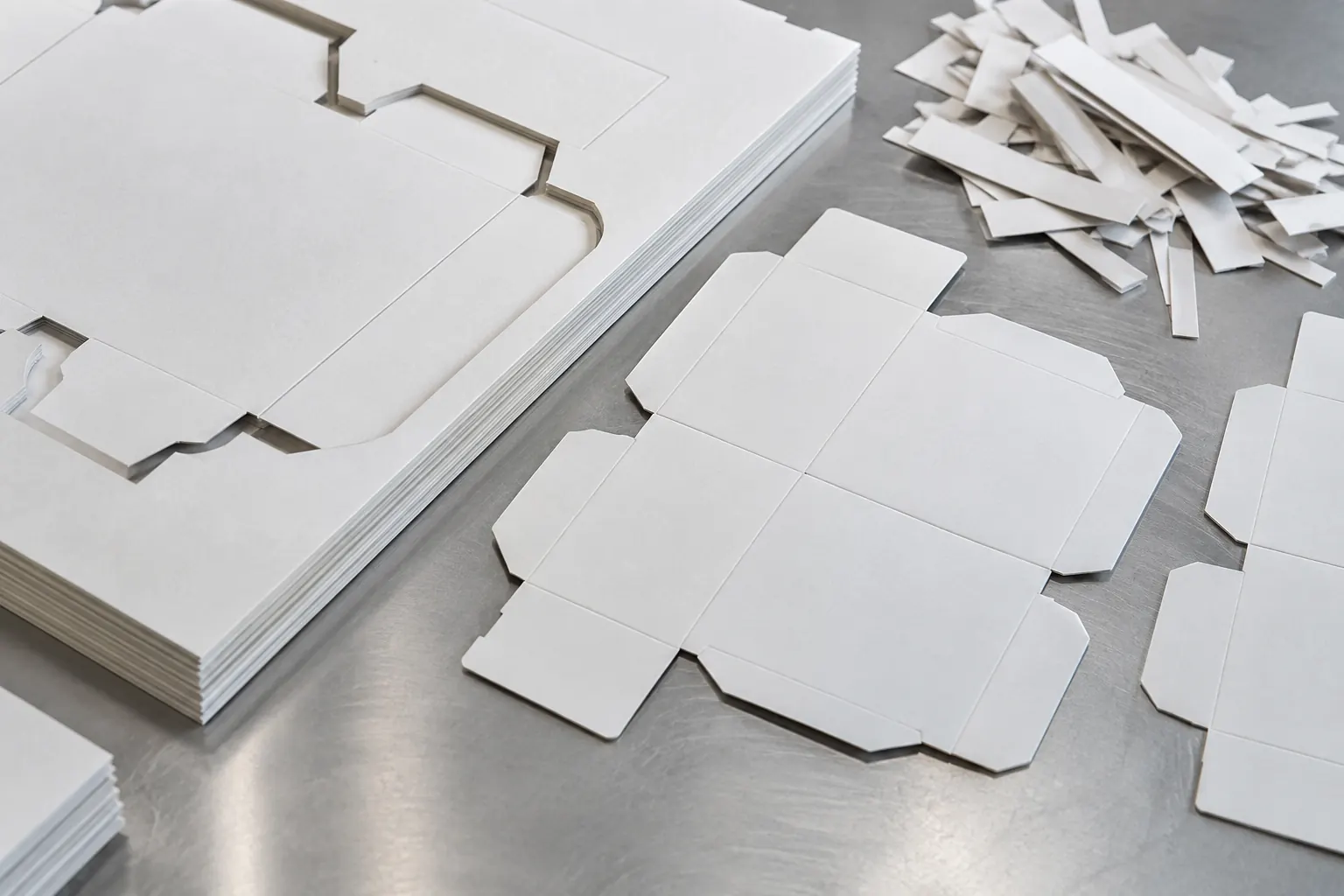
Profile cutting SBS board creates premium carton blanks, windows and promotional shapes. Coated surfaces make minor breakout visible, while fiber direction and tight geometry influence corner strength; production review should therefore use the final drawing, surface finish and functional fold zones.
Where This Cutting Application Appears
Premium folding-carton blanks
Cuts finished outlines that must register with graphics, creases and closure features.
Display-window preparation
Creates openings with controlled corners and clean coated edges for visible packaging.
Promotional card profiles
Produces shaped coated-board pieces where contour appearance is part of the product presentation.
Common Ways to Describe This Cutting Problem
- solid bleached sulfate board profile-cutting blades
- SBS carton blank contour knife
- coated paperboard shape cutting die
- bleached board window punching tool
- premium carton curved profile cutter
- SBS internal corner edge quality
- folding carton outline cutting blade
- custom profile die for SBS board
Define the Required Cut Result
- Contour accurately registered to artwork and crease lines
- Clean coated edge without flaking or white breakout
- Sound internal and external corners
- Complete stripping with no surface scuffing
Problems to Diagnose Before Changing the Knife
Coating flakes around curves
- Compare coating flexibility and board conditioning
- Inspect local support through the curve
- Map defect direction against fiber orientation
Internal corners contain fiber whiskers
- Review minimum radius and support
- Inspect completion at direction changes
- Compare top and bottom cut faces
Blank outline misses printed graphics
- Confirm artwork and drawing revisions
- Review sheet registration and skew
- Measure print-to-cut variation across the sheet
Stripping marks the visible face
- Inspect waste direction and contact points
- Review surface finish and protective coating
- Separate cutting defects from handling abrasion
Knife Forms That May Be Considered
| Possible knife form | When it may be considered | What must be confirmed |
|---|---|---|
| steel-rule profile die arrangement | May suit repeated carton or card contours on compatible flatbed equipment. | Confirm board caliper, profile, crease relationship, cutting base, ejection and press interface before specifying the form. |
| matched profile punch arrangement | May suit selected apertures where controlled guidance and support are available. | Confirm datum, opening geometry, clearance, stroke, support and mounting from approved drawings and trials. |
Information to Send for Technical Review
You do not need to know the exact blade name. Send the available workpiece, machine, current-knife and cut-result information so the application can be reviewed against a drawing or sample.
- SBS grade, caliper, coating and grain direction
- Finished profile and artwork revisions
- Crease, print and closure datums
- Minimum radii, windows, slots and tolerances
- Press motion, cutting base and sheet support
- Registration, ejection and stripping method
- Accepted blanks and mapped coating or corner defects
- Surface acceptance, production quantity and forming test
Questions About This Cutting Application
Why does coating damage appear mainly on curves?
Curves change fracture direction continuously and can expose weak support or brittle coating behavior.
Can a sharper-looking corner always be specified?
Minimum practical geometry depends on board construction, support and the required corner strength.
Why is the artwork file needed?
It helps verify the relationship among printed graphics, finished contour and crease datums.
How should visible-face damage be evaluated?
Use agreed lighting, distance and acceptance samples, then distinguish cutting damage from stripping and handling marks.
Can tooling dimensions be copied from a finished blank?
A blank helps, but approved drawings, equipment interfaces and process allowances are still required.
Request a Custom Cutting-Knife Review
Send the workpiece details, machine or holder information, current knife photos or sample, required quantity and examples of the present cut problem. Final dimensions, material, edge geometry and tolerances are confirmed from the approved requirements.