
Blade Application Guides / Application Guide / Precious metal converting
Silver Metal Foil Coil Slitting Blades
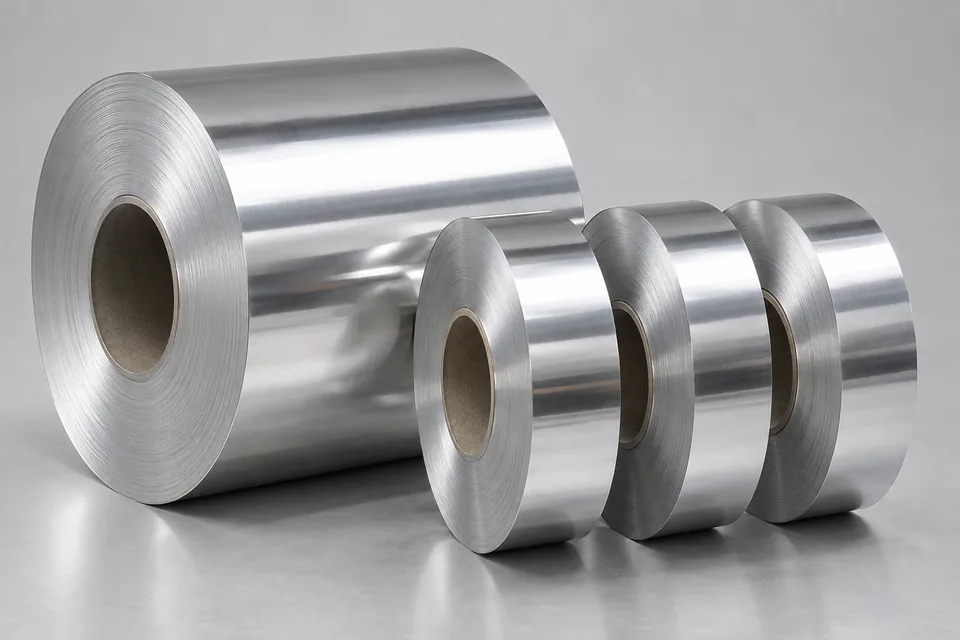
Slitting silver metal foil turns one master coil into continuous narrow strips that are rewound. For high-value stock, a usable edge is only part of acceptance: the buyer also needs each strip’s width, face finish and trim accounting to survive guiding and winding. Establish the foil grade, temper, thickness and approved cosmetic sample before discussing the circular knife pair. Trial the complete strip path, because a surface that leaves the knives clean can be marked later by separators or rewinding.
Updated
Where This Cutting Application Appears
Longitudinal strip conversion
Set out the master-coil width, finished strip schedule and outside-edge trim. Inspect widths by lane across the coil and at several points along the run; a single center strip does not validate the whole setup.
Mating rotary knife setup
Review knife pair, spacer stack, arbor seating and actual side clearance together. Compare overlap and runout records with the sampled edge; do not transfer a setup value from another foil grade or temper.
Finish through rewinding
Inspect both faces before the cut, after separation and on the rewound strip. Trace new scratches to the first contact point, including guides, separators or winding layers, before changing the knife.
Traceable trim recovery
Specify how edge trim and rejected strips are segregated and weighed or reconciled according to the buyer’s procedure. Recovery accounting does not replace edge inspection; both accepted strip and waste path belong in the trial record.
Define the Required Cut Result
- Meet the specified width range for every slit lane.
- Meet the buyer’s burr and edge-shape acceptance on both sides.
- Protect the specified foil finish through separation and rewinding.
- Keep edge trim and rejects identifiable for the buyer’s recovery process.
Problems to Diagnose Before Changing the Knife
A lane has recurring burr
- Map the lane to its matched knife pair and spacer position.
- Measure actual side clearance and runout, then inspect edge wear.
- Compare the foil lot and thickness profile with an accepted run.
Bright face scratches appear only on the wound strip
- Sample the foil at the knife exit and after each downstream contact.
- Inspect guides and separators for trapped particles.
- Review winding tension and strip-to-strip contact.
Trim contaminates an accepted coil
- Observe trim takeoff and separator routing.
- Check whether trim breaks or wraps at speed changes.
- Reconcile scrap bins to the slit-lane plan.
Knife Forms That May Be Considered
| Possible knife form | When it may be considered | What must be confirmed |
|---|---|---|
| Matched circular slitter knife pair | For continuous lengthwise cuts into rewound narrow coils. | Confirm diameters, bore, edge geometry, spacer stack and material trial results. |
| Outside-edge trim knife pair | Where the line removes a sacrificial outer edge. | Confirm trim width, takeoff route and whether the finished outside edge meets the same inspection rules. |
Information to Send for Technical Review
You do not need to know the exact blade name. Send the available workpiece, machine, current-knife and cut-result information so the application can be reviewed against a drawing or sample.
- Silver foil grade, temper and thickness range
- Master coil dimensions and winding direction
- Finished widths, lane plan and permitted variation
- Surface-finish and burr acceptance samples
- Slitter knife, arbor and spacer drawings
- Side clearance, overlap, runout and current setup record
- Guiding, separator and rewinding arrangement
- Trim segregation and reconciliation requirements
Questions About This Cutting Application
Why inspect the rewound coil as well as the knife exit?
Guiding, separator contact and winding can create marks after a clean cut. Acceptance should cover the delivered strip.
Can one clearance be used for every silver foil?
No. Grade, temper, thickness, line condition and accepted edge must be established for the actual order.
What does slitting produce?
It makes continuous longitudinal strips, usually wound as narrower coils. Separate enclosed pieces require a blanking operation.
What should the scrap plan contain?
Identify edge trim and rejected material by lane or lot, with the buyer’s handling and recovery method agreed before the trial.
Public references and scope
These public sources provide material, cutting-method or safety context for this guide. Supplier pages describe their own materials or equipment; they do not establish a MEIRENTE blade specification or performance claim. Confirm the actual grade, machine setup and required cut with a drawing or sample.
Related product and service information
- Membrane-Switch Spacer Film Razor Slitting Blades - membrane-switch spacer film · razor slitting
- Magnesium Alloy Foil Coil Slitting Blades - magnesium alloy foil · coil slitting
- Zinc Metal Foil Coil Slitting Blades - zinc metal foil · coil slitting
Request a Custom Cutting-Knife Review
Send the workpiece details, machine or holder information, current knife photos or sample, required quantity and examples of the present cut problem. Final dimensions, material, edge geometry and tolerances are confirmed from the approved requirements.