
Blade Application Guides / Application Guide / Advanced solar manufacturing
Perovskite Solar Barrier Film Cross Cutting Blades
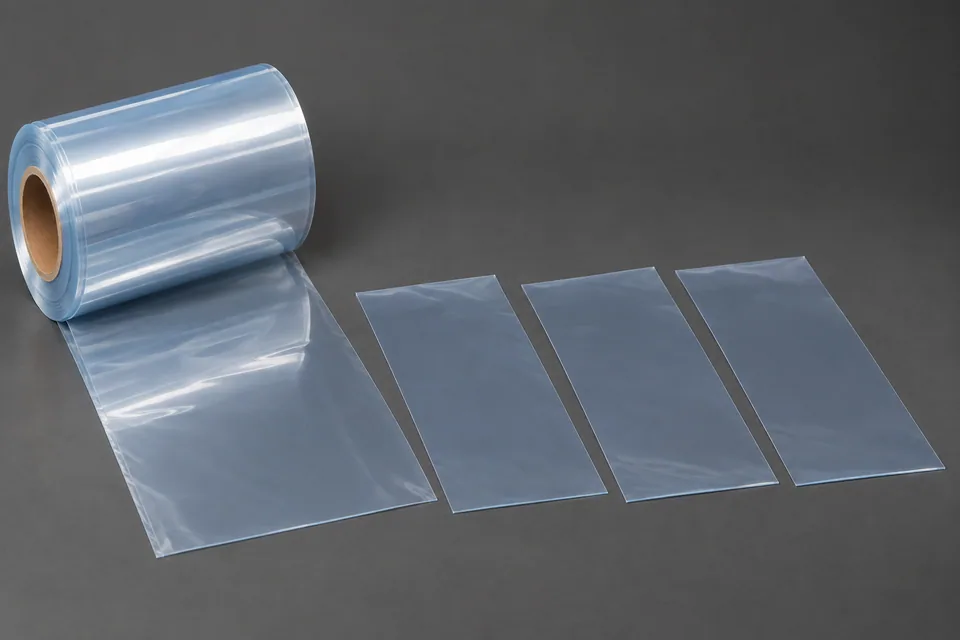
Cross cutting divides a continuous perovskite solar barrier film web across its travel direction into finite sheets. Barrier films can be multilayer structures intended to limit moisture and oxygen exposure of sensitive devices, but the exact stack and installation method are buyer-specific. A straight transverse cut sets sheet length; it does not create a sealed module edge or a shaped perimeter. Specify the incoming film, coated face, length and registration before selecting a knife. Inspect the cut for cracking, layer lift, particles and curl, then check whether the sheet remains fit for the buyer’s encapsulation process.
Updated
Where This Cutting Application Appears
Length from the web travel datum
Set the transverse cut pitch and finished sheet length from the module layout. Inspect leading and trailing edges at multiple web positions; a good first sheet does not reveal drift during continued feeding.
Protect the barrier stack
Identify which face contains the barrier coating or adhesive and how the film is supported. Inspect any visible cracking, delamination or scuffing at the cut, including corners formed by the cross cut and existing side edges.
Separate without blocking or curl
Observe how sheets leave the knife, stack and later unstack. Blocking, static or induced curl can mark a film after a clean edge; record the first handling step that changes its condition.
Hand off to encapsulation
Compare cut dimensions and face orientation with the buyer’s layup drawing. Edge sealing and long-term barrier performance require a separate module-level assessment; a knife trial only checks cutting and handling effects.
Define the Required Cut Result
- Produce the agreed transverse sheet length and squareness.
- Preserve the defined coating and adhesive faces.
- Avoid unacceptable edge delamination, particles and curl.
- Deliver sheets that can be oriented and handled for the specified layup.
Problems to Diagnose Before Changing the Knife
Barrier layer lifts at the transverse edge
- Confirm stack construction and coated side.
- Inspect blade condition, backing and cut support.
- Compare cut and uncut controls under the buyer’s method.
Sheet length or squareness drifts
- Check feed registration and web tension.
- Measure cutter timing and blade-to-anvil alignment.
- Compare left and right edge lengths along the run.
Sheets look good at knife exit but block in a stack
- Review face-to-face contact and any liner.
- Check static and collection pressure.
- Inspect after the actual storage or transfer interval.
Knife Forms That May Be Considered
| Possible knife form | When it may be considered | What must be confirmed |
|---|---|---|
| Rotary shear cross-cut pair | For transverse cuts in a compatible continuous web sheeter. | Confirm blade/anvil geometry, registration and film edge sample. |
| Straight guillotine-style cross-cut edge | For intermittent sheet cutting where the web is held flat. | Confirm backing, hold-down contact, length accuracy and multilayer integrity. |
Information to Send for Technical Review
You do not need to know the exact blade name. Send the available workpiece, machine, current-knife and cut-result information so the application can be reviewed against a drawing or sample.
- Barrier-film manufacturer construction and layer map
- Film width, thickness range and roll orientation
- Coated, adhesive and liner faces
- Target sheet length, squareness and registration datum
- Accepted cut-edge and cosmetic samples
- Cross-cutter, anvil and hold-down drawings
- Layup orientation and downstream edge-seal concept
- Trial handling and layer-inspection method
Questions About This Cutting Application
Does cross cutting seal a perovskite module edge?
No. It creates a transverse film edge. The encapsulation and edge-seal design must be validated separately.
Can the same blade be specified for every barrier film?
No. The polymer, barrier layers, adhesive and liner determine the trial and accepted edge.
How is this different from slitting?
Cross cutting sets finite sheet length across the web; slitting divides the web lengthwise into narrower lanes.
What should be checked after stacking?
Check curl, blocking, scuffs and any layer lift that was not evident immediately at the cutter.
Public references and scope
These public sources provide material, cutting-method or safety context for this guide. Supplier pages describe their own materials or equipment; they do not establish a MEIRENTE blade specification or performance claim. Confirm the actual grade, machine setup and required cut with a drawing or sample.
Related product and service information
- Perovskite Solar Barrier Film Rotary Die-Cutting Blades - perovskite solar barrier film · rotary die cutting
- Solar Ribbon Cover Film Cross Cutting Blades - solar ribbon cover film · cross cutting
- Solar Interconnect Copper Foil Cross Cutting Blades - solar interconnect copper foil · cross cutting
Request a Custom Cutting-Knife Review
Send the workpiece details, machine or holder information, current knife photos or sample, required quantity and examples of the present cut problem. Final dimensions, material, edge geometry and tolerances are confirmed from the approved requirements.