
Blade Application Guides / Application Guide / Flexible packaging
Nylon Retort Pouch Film Roll Slitting Blades: Tough-Layer Edge Control
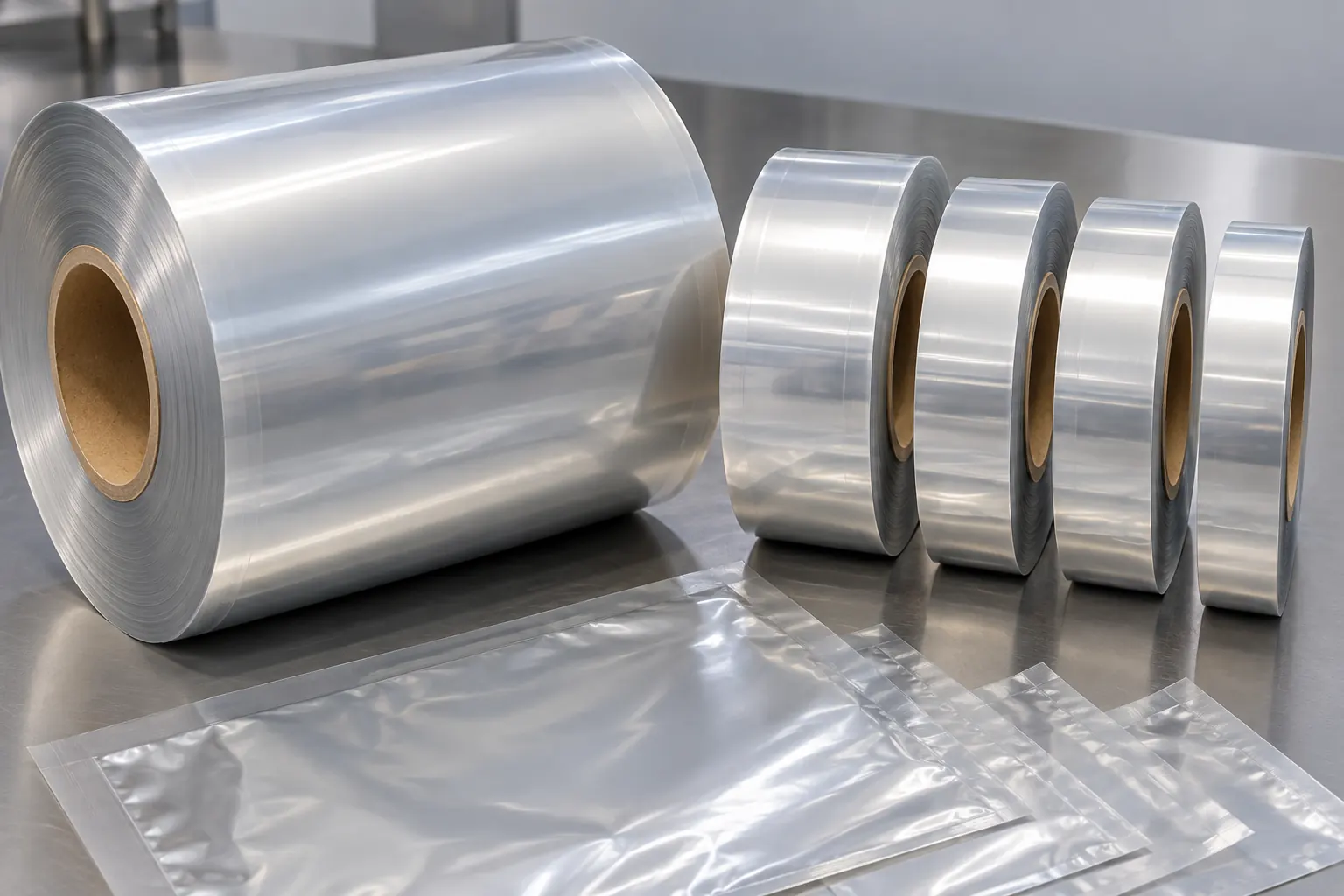
Nylon retort pouch film is a tough flexible laminate intended to withstand package processing, but its exact printed, barrier, adhesive and sealant layers depend on the approved structure. Elastic recovery, layer bonding and surface condition can all influence conversion, making production samples and post-retort acceptance data essential.
Updated
Where This Cutting Application Appears
Shelf-stable meal pouches
Retort laminates are converted for prepared foods, where edge geometry and layer integrity support forming, sealing and thermal processing. During roll slitting, a master roll is divided into narrower webs. Review edge condition, lane-to-lane width and rewind behavior for this end use.
Pet-food retort packaging
Tough pouch webs are sized for wet products, requiring stable winding and resistance to edge splitting during filling and retort handling. During roll slitting, a master roll is divided into narrower webs. Review edge condition, lane-to-lane width and rewind behavior for this end use.
Sauce and ingredient packs
Printed high-temperature pouches are prepared to repeat length or width, with registration and seal-area cleanliness controlled throughout conversion. During roll slitting, a master roll is divided into narrower webs. Review edge condition, lane-to-lane width and rewind behavior for this end use.
Roll Slitting process boundary
Roll slitting divides a master roll longitudinally into narrower rolls; it does not separate the web transversely into sheets or fixed lengths.
Roll Slitting setup checkpoint
Confirm unwind and rewind tension, slit widths, knife positions, core alignment, trim removal and the winding behavior of every daughter roll.
Roll Slitting acceptance checkpoint
Inspect roll width, edge condition, telescoping, interleaving, debris and whether each rewound roll remains stable at the required diameter.
Define the Required Cut Result
- Produce clean, continuous slit edges across the full roll length
- Hold slit width and lane position within the approved tolerance
- Protect layer bonds, printed surface and sealant zone
- Deliver converted material accepted for pouch forming, filling, sealing and retort processing
Problems to Diagnose Before Changing the Knife
Tough-layer stretching or ragged edge formation
Compare nylon layer orientation, total laminate gauge, web tension, temperature, cut direction and edge recovery. Inspect immediately and after relaxation to separate elastic deformation from permanent damage.
Adhesive-line lift or interlayer fraying
Review lamination cure, bond strength by layer, ink coverage, storage history and the exact layer where separation begins. Include post-retort samples when that condition defines acceptance.
Lane-width variation or wandering slit position
Review web guiding, unwind alignment, shaft runout, spacer or holder location, lateral loading and width measurements from start to end of the roll.
Telescoping, wrinkles or loose rewind
Separate the cutting result from winding effects by recording tension zones, roll hardness, core alignment, nip settings and the point where the reel build begins to change.
Knife Forms That May Be Considered
| Possible knife form | When it may be considered | What must be confirmed |
|---|---|---|
| Circular shear slitting | Consider when the existing line uses paired rotating edges and controlled overlap for continuous web conversion. | Confirm this form only from the nylon retort pouch film sample, installed equipment interface, operating motion, support condition and approved drawing. |
| Razor or supported slitting form | Consider only where the installed holder and web support are designed for this cutting action and the material trial confirms acceptable edges. | Confirm this form only from the nylon retort pouch film sample, installed equipment interface, operating motion, support condition and approved drawing. |
Information to Send for Technical Review
You do not need to know the exact blade name. Send the available workpiece, machine, current-knife and cut-result information so the application can be reviewed against a drawing or sample.
- Approved laminate structure, gauge and layer orientation
- Lamination adhesive, cure history and bond-strength criteria
- Printed-side orientation, sealant side and critical seal zones
- Retort cycle and post-process edge acceptance requirements
- Master-roll width, outside diameter, core size and roll hardness
- Required slit pattern, finished widths and width tolerances
- Line speed, unwind and rewind tension ranges and web direction
- Existing holder interface, cutting motion, setup drawing and used sample
Questions About This Cutting Application
Why should nylon retort film be inspected after relaxation during roll slitting?
Nylon-containing structures can recover after tension or compression. Measuring too early may overstate or hide width, curl and edge changes, so record both immediate and conditioned results.
Is a room-temperature cut trial enough for retort packaging during roll slitting?
It can establish conversion behavior, but final approval should include the customer's sealing and retort conditions because heat, pressure and moisture may reveal bond or edge weaknesses.
How should slit width be checked through a production roll during roll slitting?
Measure defined lanes near the start, middle and end after an agreed relaxation period. Record web-guide position and winding changes with each result.
Can poor reel build be attributed to the cutting edge alone during roll slitting?
No. Unwind alignment, tension taper, nip loading, core position and roll hardness can create telescoping or wrinkles even when the slit edge is acceptable.
What confirms a suitable roll-slitting form during roll slitting?
Confirm the installed motion, holder interface, support arrangement and approved sample. Material name alone cannot determine shear, razor, score or another configuration.
Related product and service information
- Nylon Retort Pouch Film Edge Trimming Blades: Tough-Layer Edge Control - nylon retort pouch film · width edge trimming
- EVOH Barrier Film Laminate Roll Slitting Blades: Layer and Barrier Integrity - EVOH barrier film laminate · roll slitting
- Metallized PET Packaging Film Roll Slitting Blades: Coating and Edge Protection - metallized PET packaging film · roll slitting
Request a Custom Cutting-Knife Review
Send the workpiece details, machine or holder information, current knife photos or sample, required quantity and examples of the present cut problem. Final dimensions, material, edge geometry and tolerances are confirmed from the approved requirements.