
Blade Application Guides / Application Guide / Flexible packaging
Metallized PET Packaging Film Roll Slitting Blades: Coating and Edge Protection
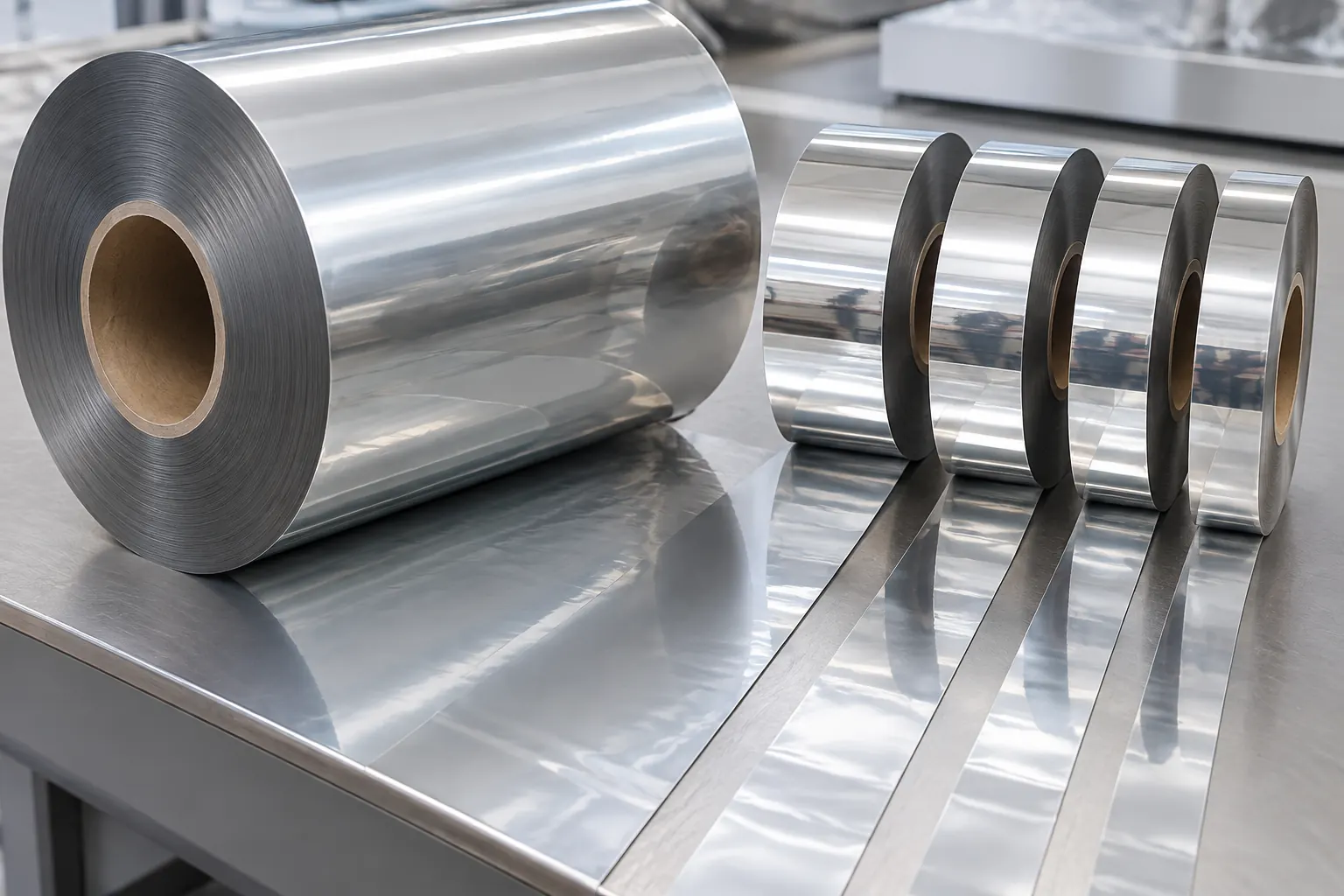
Metallized PET packaging film carries a thin deposited metal layer that provides appearance and functional properties specified by the package designer. Cutting and handling must limit scratches, flaking, static attraction and edge distortion while preserving the registration and winding needed for later lamination or pouch conversion.
Updated
Where This Cutting Application Appears
Snack and confectionery packaging
Reflective PET webs are converted for printed or laminated packs, where edge cleanliness and surface protection support appearance and line tracking. During roll slitting, a master roll is divided into narrower webs. Review edge condition, lane-to-lane width and rewind behavior for this end use.
Coffee and dry-food laminates
Metallized barrier webs are prepared for pouch structures, requiring controlled width and no avoidable coating debris in sealing areas. During roll slitting, a master roll is divided into narrower webs. Review edge condition, lane-to-lane width and rewind behavior for this end use.
Decorative packaging overwrap
High-gloss films are sized for visual presentation, where scratches, wrinkles and coating disturbance are readily visible. During roll slitting, a master roll is divided into narrower webs. Review edge condition, lane-to-lane width and rewind behavior for this end use.
Roll Slitting process boundary
Roll slitting divides a master roll longitudinally into narrower rolls; it does not separate the web transversely into sheets or fixed lengths.
Roll Slitting setup checkpoint
Confirm unwind and rewind tension, slit widths, knife positions, core alignment, trim removal and the winding behavior of every daughter roll.
Roll Slitting acceptance checkpoint
Inspect roll width, edge condition, telescoping, interleaving, debris and whether each rewound roll remains stable at the required diameter.
Define the Required Cut Result
- Produce clean, continuous slit edges across the full roll length
- Hold slit width and lane position within the approved tolerance
- Protect metallized coating, optical finish and web flatness
- Deliver converted material accepted for printing, lamination, pouch making and inspection
Problems to Diagnose Before Changing the Knife
Metallized-layer scratching or edge flaking
Inspect which surface carries the metal layer, contact and winding surfaces, debris pattern, web tension and cut-edge magnification. Separate cutting-origin flakes from scratches created during transport or rewinding.
Static attraction and conductive-looking debris
Measure or document static-control conditions, humidity, grounding provisions and particle location. Do not assume all visible debris is metallic without material identification.
Lane-width variation or wandering slit position
Review web guiding, unwind alignment, shaft runout, spacer or holder location, lateral loading and width measurements from start to end of the roll.
Telescoping, wrinkles or loose rewind
Separate the cutting result from winding effects by recording tension zones, roll hardness, core alignment, nip settings and the point where the reel build begins to change.
Knife Forms That May Be Considered
| Possible knife form | When it may be considered | What must be confirmed |
|---|---|---|
| Circular shear slitting | Consider when the existing line uses paired rotating edges and controlled overlap for continuous web conversion. | Confirm this form only from the metallized PET packaging film sample, installed equipment interface, operating motion, support condition and approved drawing. |
| Razor or supported slitting form | Consider only where the installed holder and web support are designed for this cutting action and the material trial confirms acceptable edges. | Confirm this form only from the metallized PET packaging film sample, installed equipment interface, operating motion, support condition and approved drawing. |
Information to Send for Technical Review
You do not need to know the exact blade name. Send the available workpiece, machine, current-knife and cut-result information so the application can be reviewed against a drawing or sample.
- PET thickness, orientation and metallized-side identification
- Metallization specification, topcoat and surface-treatment details
- Optical-density or barrier acceptance method where applicable
- Scratch, flake and visible-edge acceptance samples
- Master-roll width, outside diameter, core size and roll hardness
- Required slit pattern, finished widths and width tolerances
- Line speed, unwind and rewind tension ranges and web direction
- Existing holder interface, cutting motion, setup drawing and used sample
Questions About This Cutting Application
How should the metallized side be identified during a trial during roll slitting?
Use the supplier's roll label or approved construction record and mark orientation before sampling. Visual judgment alone can be unreliable on coated or laminated structures.
Does an intact-looking cut edge confirm barrier performance during roll slitting?
No. Appearance helps locate damage, but barrier acceptance must use the specified test method on the relevant laminate or finished package.
How should slit width be checked through a production roll during roll slitting?
Measure defined lanes near the start, middle and end after an agreed relaxation period. Record web-guide position and winding changes with each result.
Can poor reel build be attributed to the cutting edge alone during roll slitting?
No. Unwind alignment, tension taper, nip loading, core position and roll hardness can create telescoping or wrinkles even when the slit edge is acceptable.
What confirms a suitable roll-slitting form during roll slitting?
Confirm the installed motion, holder interface, support arrangement and approved sample. Material name alone cannot determine shear, razor, score or another configuration.
Related product and service information
- Metallized PET Packaging Film Edge Trimming Blades: Coating and Edge Protection - metallized PET packaging film · width edge trimming
- EVOH Barrier Film Laminate Roll Slitting Blades: Layer and Barrier Integrity - EVOH barrier film laminate · roll slitting
- Nylon Retort Pouch Film Roll Slitting Blades: Tough-Layer Edge Control - nylon retort pouch film · roll slitting
Request a Custom Cutting-Knife Review
Send the workpiece details, machine or holder information, current knife photos or sample, required quantity and examples of the present cut problem. Final dimensions, material, edge geometry and tolerances are confirmed from the approved requirements.