
Blade Application Guides / Application Guide / Cable manufacturing
Mica Fireproof Cable Tape Shear Slitting Blades
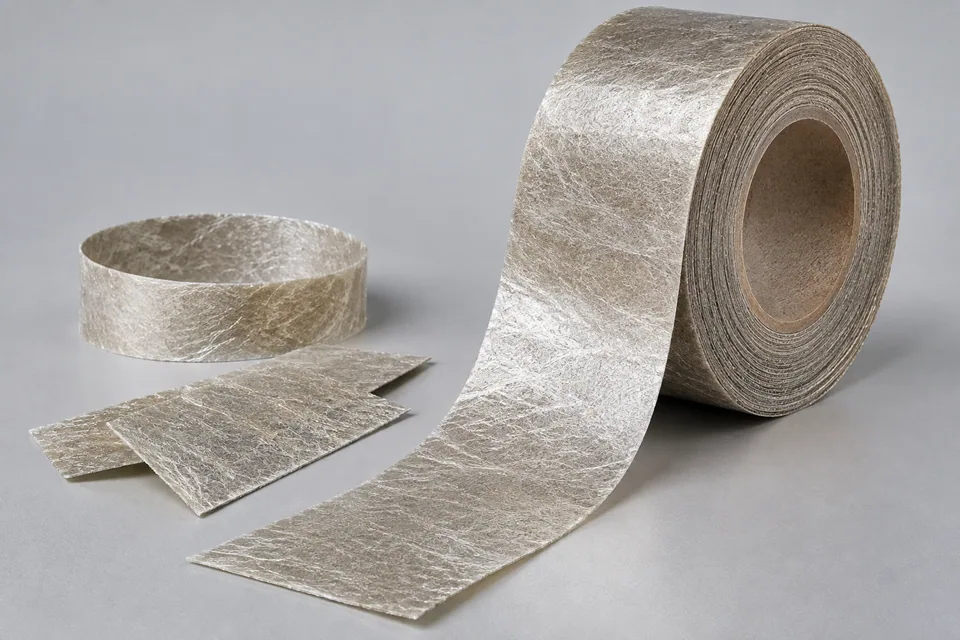
Fire-resistant cable mica tape may combine mica paper, glass reinforcement and a binder, but the side and number of backing layers vary by grade. Shear slitting converts a wide parent web into narrow continuous tapes for later conductor wrapping. The cut must retain mica and backing at both edges while avoiding flakes that contaminate wound rolls.
Updated
Where This Cutting Application Appears
Plan tapes for conductor wrapping
COGEBI documents glass-backed mica paper supplied as cable tape. Start with the parent web width, requested tape widths, mica/glass face and later wrapping orientation. Place longitudinal lanes so the finished tapes can be identified and wound without confusing the two faces.
Trial the paired shear knives on the actual grade
The glass backing, mica paper and binder must pass the paired knife edges together. Document arbor spacing, knife overlap and side contact on a short trial, then compare mica flake loss and broken glass yarns on both sides. Do not carry over a clearance from plain fabric.
Measure the edge after winding
Inspect each lane immediately after slitting and again on the reel for width, straightness, mica shedding, glass-fiber projection and layer lift. A clean cut at the nip may become a cracked or flaking edge at a tight guide or wound turn.
Manage narrow trim and wrap-face identity
Route the outside trim away from accepted tapes and record any break or wrap. Label reels with the intended mica or glass face and verify that the tape survives the buyer’s handling and winding route without edge telescoping.
Keep cable qualification separate
The slitting trial establishes tape geometry and edge quality for the stated mica grade. Any fire-resistance claim belongs to the complete cable assembly and its specified test; it cannot be inferred from a neat slit tape.
Define the Required Cut Result
- Meet each cable-tape width and winding orientation.
- Retain mica paper, binder and glass backing at both new edges.
- Limit mica flakes and loose glass yarns after rewinding.
- Keep trim clear of accepted wound tapes.
Problems to Diagnose Before Changing the Knife
Mica flakes leave a slit edge
- Compare mica/glass face and binder grade.
- Inspect overlap and the same edge after winding.
Glass backing yarn bridges the slit
- Check mating knife edges, side contact and support.
- Inspect both slit sides under the buyer fiber criterion.
Narrow tape telescopes on the reel
- Review lane tension, guide contact and reel geometry.
- Measure edge again after unwinding a sample.
Outside trim wraps or breaks
- Check trim allowance and takeoff direction.
- Confirm no flakes transfer to accepted tapes.
Knife Forms That May Be Considered
| Possible knife form | When it may be considered | What must be confirmed |
|---|---|---|
| Matched circular shear-slitter pair | For continuous longitudinal cutting on a compatible rotary line. | Confirm arbor fit, edge geometry, side clearance and overlap on the actual machine. |
| Circular edge-trim pair | When the line first removes an outside edge allowance. | Confirm trim width, collection path and retained-edge sample. |
Information to Send for Technical Review
You do not need to know the exact blade name. Send the available workpiece, machine, current-knife and cut-result information so the application can be reviewed against a drawing or sample.
- Mica type, glass backing side and binder grade
- Parent width, tape-lane layout and trim allowance
- Cable wrap face and finished tape widths
- Allowed mica flake, glass-yarn and layer-lift limits
- Arbor, spacer, knife and holder drawings
- Overlap, side contact and winding settings
- Accepted reel and rejected-edge samples
Questions About This Cutting Application
What does mica-tape shear slitting make?
It divides a wide mica/glass parent web lengthwise into narrow continuous cable-wrapping tapes.
Why label the tape faces?
The mica-paper and glass-backed sides are different; downstream wrapping must preserve the specified orientation.
What can a new slit edge shed?
Check mica flakes, broken glass yarns and any lifted binder on both sides and after winding.
How is a knife pair selected?
Match arbor and holder drawings, then trial overlap and contact on the actual tape grade rather than on plain cloth.
Does a clean tape slit prove cable fire resistance?
No. The completed cable assembly requires its own specified fire-resistance test.
Public references and scope
These public sources provide material, cutting-method or safety context for this guide. Supplier pages describe their own materials or equipment; they do not establish a MEIRENTE blade specification or performance claim. Confirm the actual grade, machine setup and required cut with a drawing or sample.
Related product and service information
- Braided Wire Sleeving End Trimming Blades - braided wire sleeving · end trimming
- Wire-Harness Cloth Tape Shear Slitting Blades - wire-harness cloth tape · shear slitting
- Cable Shielding Laminate Shear Slitting Blades - cable shielding laminate · shear slitting
Request a Custom Cutting-Knife Review
Send the workpiece details, machine or holder information, current knife photos or sample, required quantity and examples of the present cut problem. Final dimensions, material, edge geometry and tolerances are confirmed from the approved requirements.