
Blade Application Guides / Application Guide / Medical disposables manufacturing
Medical Collection Pouch Laminate Cross-Cutting Blades
A medical collection pouch can contain a soft film, a nonwoven facing, adhesive or other layers; the exact laminate varies by device. Cross cutting makes separate panels or web lengths before pouch forming. The cutter must preserve the intended skin-facing and fluid-facing orientation and leave the buyer’s specified seal margins intact.
Updated
Where This Cutting Application Appears
Define the transverse blank
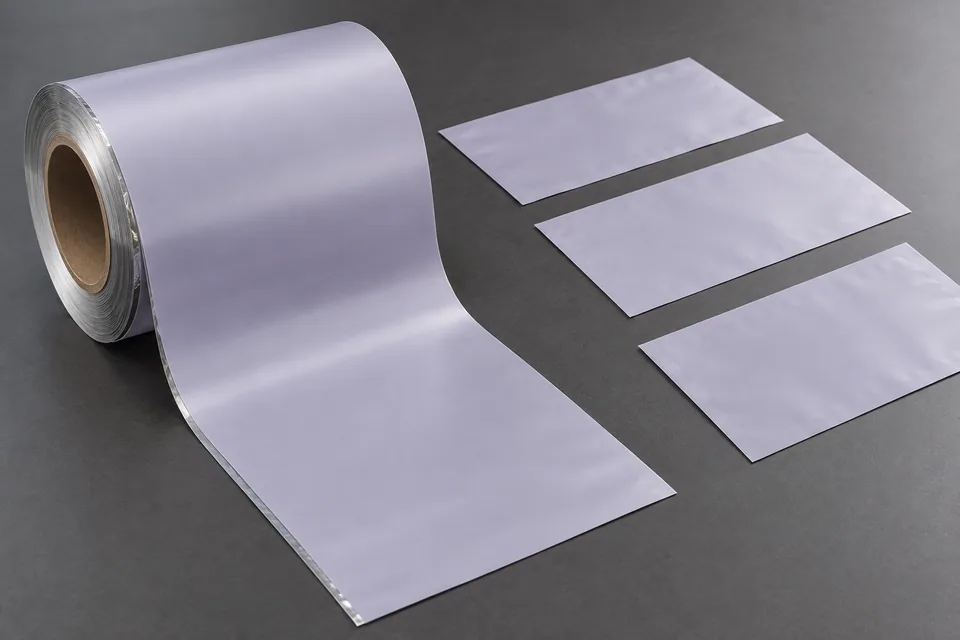
A medical collection pouch laminate is cross cut into finite blanks before the pouch outline, ports and welds are completed. Obtain the exact laminate stack and drawing: pouch styles differ in film, textile, adhesive and viewing-window placement. Register the transverse cut to the buyer’s printed datum and preserve the defined weld allowance at both ends.
Record web support and timing
A soft film face can advance differently from a textile-backed face when pulled through the feed. Record nip pressure, web tension, optical registration and hold-down method for the accepted trial. Check whether a change in roll diameter or splice position shifts the cut relative to the future port or viewing window.
Inspect the full new edge
Inspect the entire newly cut edge for fabric fuzz, adhesive threads, layer offset and loose fragments, with special attention to the intended skin-facing side. Compare edge quality before and after stacking because an initially neat laminate may scuff or shed material during transfer to the welding station.
Separate cutting from later assembly
Keep each cut blank and its offcut traceable to the source roll and trial setting. The pouch maker must validate weld strength, leak resistance and skin-contact suitability on the assembled product; a cross-cutting trial can document only the dimensions and condition of the converted laminate.
Material-specific acceptance
Inspect each layer at the transverse edge for offset, fabric fuzz, film strings and adhesive transfer. Map the cut against planned ports, viewing windows and weld zones. A neat laminate edge cannot verify pouch leak resistance, skin compatibility or any product certification.
Define the Required Cut Result
- Register each laminate blank to the intended port, window and weld layout.
- Keep film and textile-facing layers aligned at the transverse edge.
- Limit fabric fuzz, adhesive strings and transfer marks after stacking.
- Preserve the identified skin-facing and fluid-facing sides.
Problems to Diagnose Before Changing the Knife
Textile facing extends past the cut film
- Check layer tension and support at the transverse cut.
- Compare immediate and post-stacking layer alignment.
Blank register shifts relative to the window
- Compare optical trigger, web splice and feed slip.
- Measure the future weld allowance at both ends.
Adhesive strings enter the weld margin
- Inspect blade cleanliness and layer stack.
- Check transfer surfaces after the blank leaves the knife.
Skin-facing surface scuffs
- Locate the first contact point in takeoff or stacking.
- Compare accepted and rejected face samples.
Knife Forms That May Be Considered
| Possible knife form | When it may be considered | What must be confirmed |
|---|---|---|
| Straight cross-cut shear set | For transverse cutting on a compatible shear station. | Confirm blade length, holder, support and engagement from machine drawings. |
| Rotary cross-cut knife | For a compatible synchronized rotary cross-cutter. | Confirm cylinder geometry, timing and registration at production speed. |
Information to Send for Technical Review
You do not need to know the exact blade name. Send the available workpiece, machine, current-knife and cut-result information so the application can be reviewed against a drawing or sample.
- Exact film/facing/adhesive layer stack and face orientation
- Pouch-panel drawing with ports, window and weld allowance
- Printed datum and blank length
- Allowed layer offset, fuzz and adhesive strings
- Feed support, nip and cross-cutter drawings
- Stacking route and post-transfer inspection point
- Accepted panel sample and source-roll traceability
Questions About This Cutting Application
Does the pouch laminate have one standard layer stack?
No. Film, soft facing and possible adhesive or window layers vary; identify the supplied web before choosing the cutter.
Which side of a pouch blank needs special attention?
Record the intended skin-facing and fluid-facing sides and inspect both, including fabric fuzz and film strings at the cut.
How can the future weld be protected?
Register the transverse cut to the panel drawing and preserve the specified weld allowance around the port or window.
Why recheck after stacking?
The facing can scuff or lift and loose fibers can transfer during handling after an initially neat cut.
Does a neat cut prove leak resistance?
No. Weld strength, leakage and skin-contact suitability are evaluated on the assembled pouch by its manufacturer.
Public references and scope
These public sources provide material, cutting-method or safety context for this guide. Supplier pages describe their own materials or equipment; they do not establish a MEIRENTE blade specification or performance claim. Confirm the actual grade, machine setup and required cut with a drawing or sample.
Related product and service information
- Medical Collection Pouch Laminate Rotary Die-Cutting Blades - medical collection pouch laminate · rotary die cutting
- Blood Bag PVC Film Cross-Cutting Blades - blood bag PVC film · cross cutting
- Urine Drainage Bag Film Cross-Cutting Blades - urine drainage bag film · cross cutting
Request a Custom Cutting-Knife Review
Send the workpiece details, machine or holder information, current knife photos or sample, required quantity and examples of the present cut problem. Final dimensions, material, edge geometry and tolerances are confirmed from the approved requirements.