
Blade Application Guides / Application Guide / Medical disposables manufacturing
Blood Bag PVC Film Cross-Cutting Blades
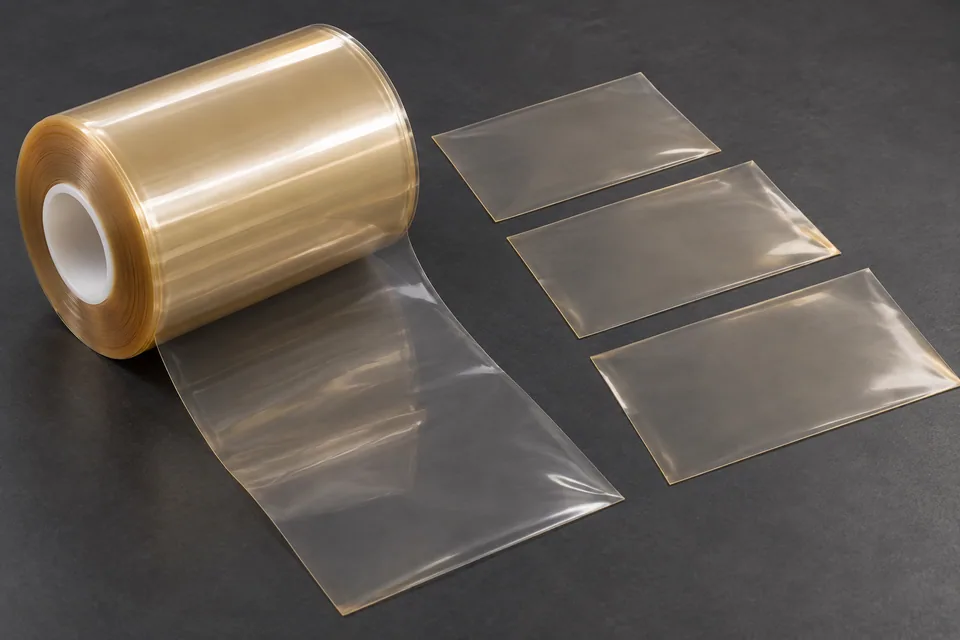
Blood bag systems commonly use plasticized PVC-based film, but the exact medical grade and plasticizer must be supplied by the device manufacturer. Cross cutting turns a film web into separate lengths for a later bag-making operation. The cutter must respect seal allowances and orientation; it does not itself create a sterile, leak-tight or biocompatible blood bag.
Updated
Where This Cutting Application Appears
Start with approved bag film
Terumo says blood-bag systems are commonly PVC-based and identifies changes in plasticizer choice. Obtain the device maker’s exact medical-film specification and approved contact face; a general PVC film cannot replace a qualified blood-contact material.
Cut panels to the sealing layout
A transverse cross cut makes a film panel length for later bag forming. Set its position from weld and port locations, printed lot information and any hanging feature. Keep a defined distance between the fresh edge and the future fluid-contact or seal area.
Control particle and surface transfer
Inspect for PVC strings, slivers, roller marks and particles on both faces. Separate finished panels cleanly so one edge does not scrape another panel’s contact surface. Record any material build-up on the shear or rotary blade.
Check stacked panels
Soft plasticized PVC can block or curl in a stack. Measure blank length and weld-zone position after the normal handling interval, not only on the first panel at the cutter. Check whether pieces remain easy to separate for the next station.
Keep device validation downstream
The bag maker must verify weld strength, leakage, blood compatibility, sterilization and device requirements. A cutting trial reports panel geometry, edge cleanliness and traceability; it does not approve a blood bag for clinical use.
Define the Required Cut Result
- Meet the buyer-specified blank length and registration to features.
- Complete the transverse cut without tearing or dragging the workpiece.
- Preserve the specified surface and edge condition on both faces.
- Keep blanks and scrap identified through collection.
- Apply the buyer’s material-specific acceptance plan for blood bag PVC film.
Problems to Diagnose Before Changing the Knife
Blank length changes during a run
- Measure index distance and web tension before and after the drift.
- Check encoder, nip slip and the cut trigger against registration marks.
- Compare dimensions before and after stacking.
The cut is clean at one side but ragged at the other
- Inspect blade parallelism, support and local pressure across the width.
- Check whether web skew or material thickness varies.
- Compare accepted and rejected edges from the same run.
A blank curls or creases after cutting
- Locate where the defect first appears.
- Review hold-down, takeoff, stacking and any release liner.
- Compare an untouched control from the same lot.
Particles appear on the newly cut edge
- Inspect blade condition and support contact.
- Distinguish cut debris from particles acquired during stacking.
- Apply the buyer inspection method at the point of use.
A film tail or sliver enters the planned seal area
- Check blade sharpness, support and cross-cut engagement.
- Compare takeoff handling with the accepted clean sample.
- Review the seal-zone setback on the buyer drawing.
Knife Forms That May Be Considered
| Possible knife form | When it may be considered | What must be confirmed |
|---|---|---|
| Cross-cut shear blade set | For transverse sheet or web cutting on a compatible shear station. | Confirm blade length, mounting, engagement and support from the line drawing. |
| Rotary cross-cut knife | For a compatible synchronized rotary cross-cut station. | Confirm cylinder geometry, timing and registration with a production-speed trial. |
Information to Send for Technical Review
You do not need to know the exact blade name. Send the available workpiece, machine, current-knife and cut-result information so the application can be reviewed against a drawing or sample.
- Medical film grade and plasticizer specification
- Bag blank drawing with seal allowance and port locations
- Cleanliness and visual defect criteria
- Traceability and handling requirements from the device owner
- Web or sheet width, thickness range and feed direction
- Target blank length and registration drawing
- Blade holder, shear or rotary cylinder drawing
- Line speed, indexing and tension records
- Accepted and rejected edge samples
- Takeoff, stacking and waste handling method
Questions About This Cutting Application
How does cross cutting differ from slitting?
Cross cutting separates sheets across web travel. Slitting divides the moving web lengthwise into continuous narrower lanes. Check sheet length and registration versus slit width.
Is overall blank length the only dimension to inspect?
No. Check panel width, squareness, edge cleanliness and registration to future weld and port zones against the bag-forming drawing.
Can a blade be selected from the material name alone?
Request approved film, roll orientation, weld layout, cleanliness limits, cutter drawings and accepted panel samples.
When should the edge be inspected?
Inspect both faces and the transverse edge at the cutter and after the normal stack interval for blocking or loose slivers.
Does a successful cut prove device performance?
No. The medical-device maker owns seal, sterility, blood-contact and regulatory validation of the final bag.
Does cross cutting certify a blood bag for use?
No. Sterility, seal integrity, compatibility and device compliance are validated by the medical-device manufacturer.
Public references and scope
These public sources provide material, cutting-method or safety context for this guide. Supplier pages describe their own materials or equipment; they do not establish a MEIRENTE blade specification or performance claim. Confirm the actual grade, machine setup and required cut with a drawing or sample.
Related product and service information
- Blood Bag PVC Film Rotary Die-Cutting Blades - blood bag PVC film · rotary die cutting
- Urine Drainage Bag Film Cross-Cutting Blades - urine drainage bag film · cross cutting
- Enteral Feeding Bag Film Cross-Cutting Blades - enteral feeding bag film · cross cutting
Request a Custom Cutting-Knife Review
Send the workpiece details, machine or holder information, current knife photos or sample, required quantity and examples of the present cut problem. Final dimensions, material, edge geometry and tolerances are confirmed from the approved requirements.