
Blade Application Guides / Application Guide / Medical disposables manufacturing
Urine Drainage Bag Film Cross-Cutting Blades
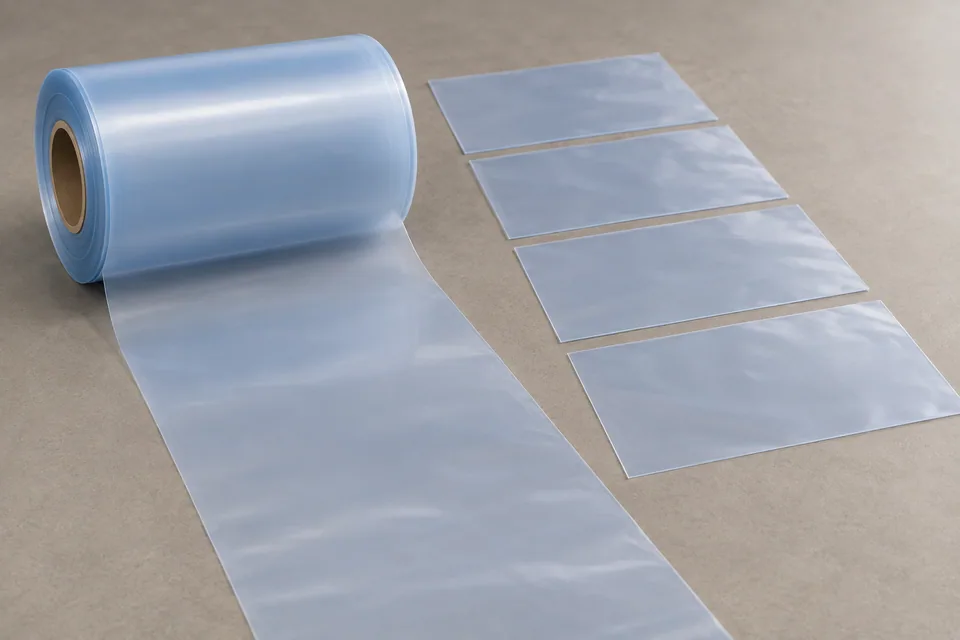
Urine drainage bags may use soft vinyl film, but finished bag constructions can also include other polymers, fabric, tubing and valves. Cross cutting prepares film panels for later sealing and assembly. The film grade, thickness, print orientation and weld layout must come from the buyer; a generic “urine bag film” label cannot determine blade geometry.
Updated
Where This Cutting Application Appears
Identify the soft-vinyl input
Hollister describes a soft-vinyl urinary leg bag and its anti-reflux, vent and drain features. The cutter handles an upstream film web, not the assembled bag. Obtain the buyer’s exact polymer grade, film thickness and whether printed graduations or viewing areas are already present.
Place cut clear of later welds
Cross cutting produces discrete panel lengths. Use the pouch and port drawing to set transverse position relative to side seams, bottom seam, inlet and outlet. A panel with the correct overall length may still misplace a weld or viewing window.
Keep valves out of the cutter model
Anti-reflux and drain valves are downstream components in the finished device. The film trial should check edge slivers, stretched corners and surface damage, while final valve and backflow function remain device tests.
Inspect printed registration
Where a graduated scale or brand print is present, measure cut-to-mark distance and skew across the web. Check for ink transfer or abrasion during hold-down. Do not assume every urinary bag film is preprinted.
Review stacking behavior
Soft vinyl panels can cling or curl after severing. Observe removal, stacking and separation at the next station and inspect both faces for particles. The bag maker must still test seals, leakage and user-facing performance.
Define the Required Cut Result
- Meet the buyer-specified blank length and registration to features.
- Complete the transverse cut without tearing or dragging the workpiece.
- Preserve the specified surface and edge condition on both faces.
- Keep blanks and scrap identified through collection.
- Apply the buyer’s material-specific acceptance plan for urine drainage bag film.
Problems to Diagnose Before Changing the Knife
Blank length changes during a run
- Measure index distance and web tension before and after the drift.
- Check encoder, nip slip and the cut trigger against registration marks.
- Compare dimensions before and after stacking.
The cut is clean at one side but ragged at the other
- Inspect blade parallelism, support and local pressure across the width.
- Check whether web skew or material thickness varies.
- Compare accepted and rejected edges from the same run.
A blank curls or creases after cutting
- Locate where the defect first appears.
- Review hold-down, takeoff, stacking and any release liner.
- Compare an untouched control from the same lot.
Particles appear on the newly cut edge
- Inspect blade condition and support contact.
- Distinguish cut debris from particles acquired during stacking.
- Apply the buyer inspection method at the point of use.
Clear film blanks stick or block after stacking
- Check whether the problem starts at blade heat, film surface or takeoff pressure.
- Separate cut-edge adhesion from whole-face blocking.
- Trial the approved stacking method and inspect weld-zone cleanliness.
Knife Forms That May Be Considered
| Possible knife form | When it may be considered | What must be confirmed |
|---|---|---|
| Cross-cut shear blade set | For transverse sheet or web cutting on a compatible shear station. | Confirm blade length, mounting, engagement and support from the line drawing. |
| Rotary cross-cut knife | For a compatible synchronized rotary cross-cut station. | Confirm cylinder geometry, timing and registration with a production-speed trial. |
Information to Send for Technical Review
You do not need to know the exact blade name. Send the available workpiece, machine, current-knife and cut-result information so the application can be reviewed against a drawing or sample.
- Actual bag-film polymer and surface treatment
- Print, weld and port registration drawing
- Blank length, edge-sliver and curl limits
- Approved stacking and handling method
- Web or sheet width, thickness range and feed direction
- Target blank length and registration drawing
- Blade holder, shear or rotary cylinder drawing
- Line speed, indexing and tension records
- Accepted and rejected edge samples
- Takeoff, stacking and waste handling method
Questions About This Cutting Application
How does cross cutting differ from slitting?
Cross cutting separates sheets across web travel. Slitting divides the moving web lengthwise into continuous narrower lanes. Check sheet length and registration versus slit width.
Is overall blank length the only dimension to inspect?
No. Check panel width, squareness, edge condition and registration to welds, ports and any printed graduations against the current drawing.
Can a blade be selected from the material name alone?
Provide the film grade, print state, weld map, panel tolerances, machine details and acceptable edge/cleanliness examples.
When should the edge be inspected?
Check directly after cutting and after stacking, when soft vinyl can block or transfer marks.
Does a successful cut prove device performance?
No. The device maker must test leakage, anti-reflux, drain function and the complete product.
Can a film blank be treated as a finished urine drainage bag?
No. Seals, tubing, valves and final device tests are downstream operations.
Public references and scope
These public sources provide material, cutting-method or safety context for this guide. Supplier pages describe their own materials or equipment; they do not establish a MEIRENTE blade specification or performance claim. Confirm the actual grade, machine setup and required cut with a drawing or sample.
Related product and service information
- Urine Drainage Bag Film Rotary Die-Cutting Blades - urine drainage bag film · rotary die cutting
- Blood Bag PVC Film Cross-Cutting Blades - blood bag PVC film · cross cutting
- Enteral Feeding Bag Film Cross-Cutting Blades - enteral feeding bag film · cross cutting
Request a Custom Cutting-Knife Review
Send the workpiece details, machine or holder information, current knife photos or sample, required quantity and examples of the present cut problem. Final dimensions, material, edge geometry and tolerances are confirmed from the approved requirements.