
Blade Application Guides / Application Guide / electrical equipment
Electrical Insulation Paper Cutting
Electrical insulation papers range from dense calendered sheets to laminated or creped constructions, each with different fiber pull and compression behavior. Cutting decisions should protect dimensional accuracy and edge integrity without presuming that papers of equal thickness share the same mechanical response.
Updated
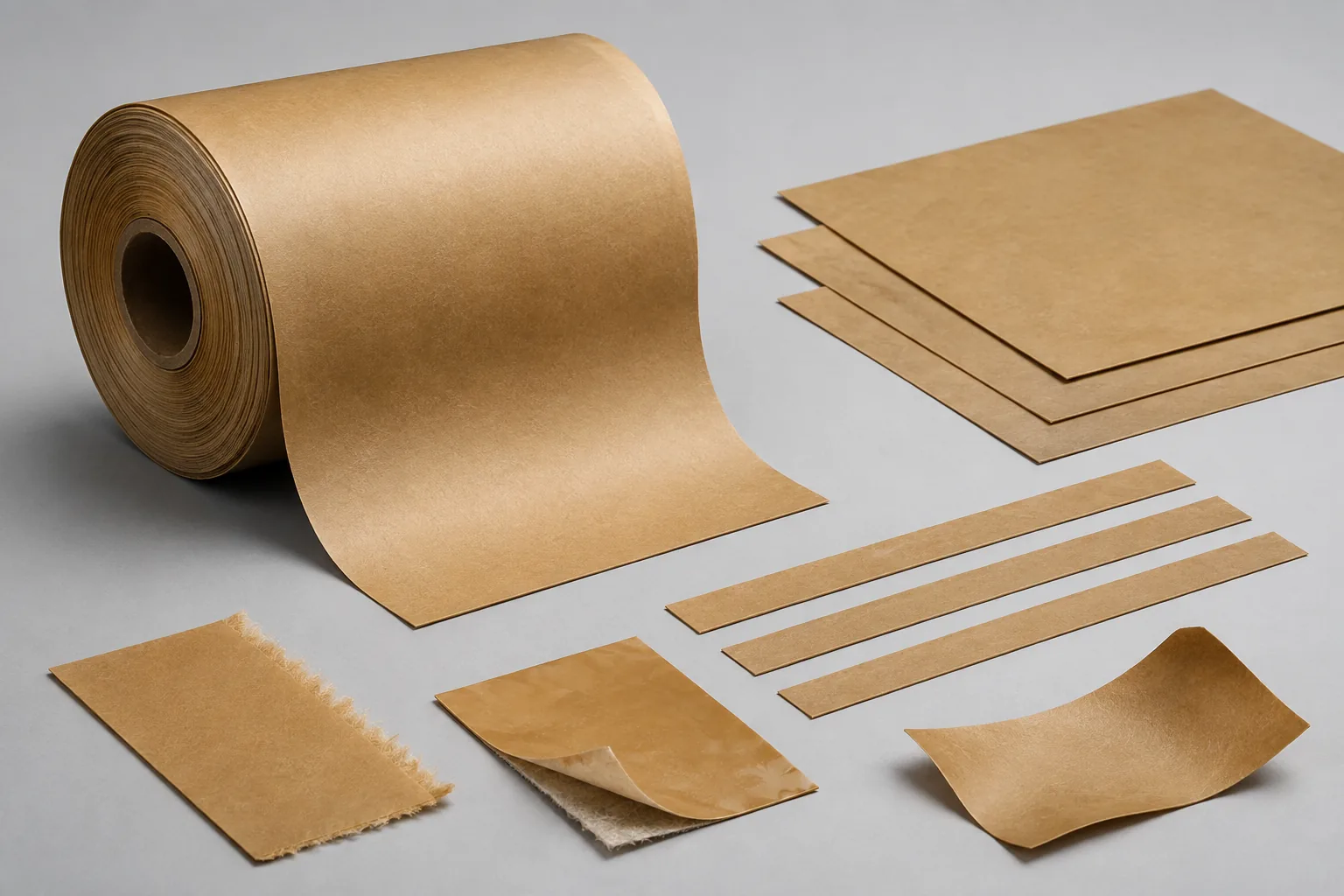
Where This Cutting Application Appears
Slitting insulation paper into strips
Convert master rolls for winding, slot insulation or layer separation with controlled width and edge lint.
Sheeting transformer insulation paper
Cross-cut roll stock into sheets used for fabrication or assembly preparation.
Cutting laminated insulation paper
Separate paper-film or bonded paper constructions without peeling the layers at the edge.
Sheet Cutting And Strip Slitting process boundary
sheet cutting and strip slitting for electrical insulation paper is a linked sequence: the output condition and datum from each operation become the controlled input for the next. It should not be evaluated as one generic cut or accepted only by the final dimension.
Sheet Cutting And Strip Slitting setup checkpoint
For electrical insulation paper, define the operation order, intermediate dimensions, registration transfer, material support, web or part handling and waste route for every stage of sheet cutting and strip slitting.
Sheet Cutting And Strip Slitting acceptance checkpoint
Verify both intermediate and final results from sheet cutting and strip slitting, including dimensions, registration, edge or feature quality, material damage, waste separation and stable transfer between stages.
Define the Required Cut Result
- Straight fiber edges with limited fuzz and lint
- Accurate strip width or sheet length at controlled moisture
- Complete separation without layer delamination
- Flat pieces without curl, crush lines or torn corners
Problems to Diagnose Before Changing the Knife
Fibers feather from the cut edge
Check fiber direction, edge sharpness, paper moisture, backing support and whether the knife drags after separation.
Laminated layers peel apart
Review bond quality, cutting direction, compression, shear clearance and bending immediately downstream.
Strip width changes with humidity or tension
Record conditioning and measurement method, then inspect web tension, guiding and material moisture.
Dense paper polishes or wears the edge rapidly
Compare paper fillers, surface treatment, heat, alignment and whether debris is trapped against the working face.
Knife Forms That May Be Considered
| Possible knife form | When it may be considered | What must be confirmed |
|---|---|---|
| circular slitter | A rotary slitter can suit continuous strip conversion when tension and edge support are controlled. | Confirm diameter, bore, bevel, cutting mode, lower interface, web direction and material conditioning. |
| straight guillotine knife | A straight knife may suit cross-sheeting or stack sizing when the paper is clamped close to a uniform bed. | Confirm cutting width, stack height, bevel, stroke, hold-down and backing surface from the equipment drawing. |
Information to Send for Technical Review
You do not need to know the exact blade name. Send the available workpiece, machine, current-knife and cut-result information so the application can be reviewed against a drawing or sample.
- Paper type, fiber furnish and density
- Thickness, basis weight and moisture-conditioning state
- Creped, calendered, coated or laminated construction
- Fiber and machine direction relative to each cut
- Master width, strip plan or sheet dimensions
- Line tension, speed, support and rewind or stacking method
- Current knife and lower-interface geometry
- Samples showing fuzz, delamination, curl, polished wear or dimensional change
Questions About This Cutting Application
Does fiber direction affect insulation paper cutting?
Yes. Cutting across or along the dominant fibers can change edge pull and tear behavior. Mark machine direction on samples.
Why should moisture condition be recorded?
Paper dimensions and toughness respond to humidity. Compare material under the same conditioning used for production and inspection.
Can ordinary paper-cutting tooling be assumed suitable?
No. Dense, filled or laminated electrical papers may load and wear edges differently; review the actual construction and machine.
What causes a laminate to peel only after rewinding?
A damaged bond line may open when bent or tensioned. Inspect the edge before and after the downstream path.
What belongs on an insulation-paper drawing?
Show finished dimensions, tolerances, fiber direction, layer construction, datum and any edge-quality or cleanliness criteria.
Related product and service information
- Battery-Pack Flame Barrier Laminate Edge-Trimming Blades - battery-pack flame barrier laminate · edge trimming
- Decorative Veneer Roll Slitting - decorative veneer rolls · continuous veneer slitting
- Fresh Noodle and Pasta Sheet Cutting - fresh noodles and pasta sheets · strand cutting and sheet trimming
Request a Custom Cutting-Knife Review
Send the workpiece details, machine or holder information, current knife photos or sample, required quantity and examples of the present cut problem. Final dimensions, material, edge geometry and tolerances are confirmed from the approved requirements.