
Blade Application Guides / Application Guide / Electric vehicle battery manufacturing
Ceramic Battery Insulation Pad Edge-Trimming Blades
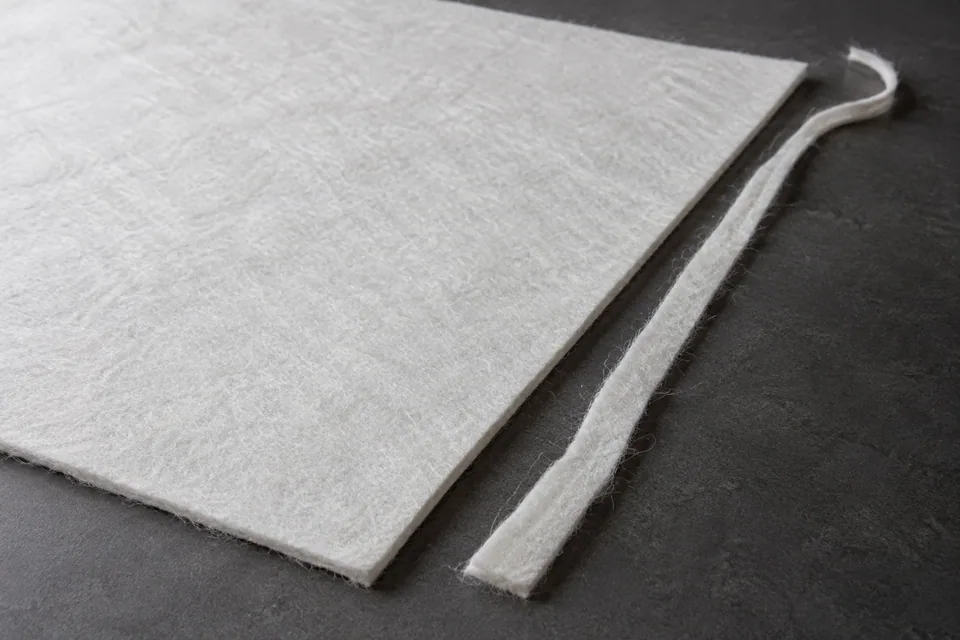
Trimming a ceramic battery insulation pad removes one narrow outside strip while preserving the full usable pad. The waste ribbon can tear or shed fibers, and a compressible mat can change apparent width under the guide or hold-down. Determine the trim allowance on the buyer’s actual grade, then inspect the retained edge after waste removal and thickness recovery. Assembly insulation performance remains a separate buyer qualification.
Updated
Where This Cutting Application Appears
Define the retained sheet
Compare the parent pad width with the required finished width and identify the edge intended for removal. Leave enough trim allowance for incoming variation without moving into the useful insulating area.
Control the waste ribbon
Trial the waste-strip takeoff at startup and steady feed. A fibrous ceramic ribbon may split, snag or leave dust on the retained pad; collect it without pulling the pad sideways.
Inspect the retained edge
Inspect the useful edge for loose fibers, crushed zones and a lifted scrim. Measure the finished width after the pad returns from guide pressure, using a stated contact force rather than a freehand reading.
Follow support and tension
Check pad samples at the knife, after the takeoff guide and after stacking. If the final edge is damaged but the knife-exit edge is intact, investigate downstream contact and waste tension.
Material-specific acceptance
Check loose fibers at the cut and on the pad faces using the buyer's method. Record the thickness measurement load and recovery interval if the pad is compressible. Inspect any scrim or facing for lift. Watch for a fibrous waste ribbon that tears intermittently and deposits material on the retained pad. If the supplied grade uses a facing, confirm that it remains attached to the trimmed edge.
Define the Required Cut Result
- Reach the finished width without sacrificing required barrier area.
- Maintain a straight, intact retained edge.
- Remove the waste ribbon without contaminating the useful sheet.
- Avoid skew, wrinkles and edge damage during takeoff.
- Check the supplied grade for fiber shedding, local compression or facing damage after normal handling.
Problems to Diagnose Before Changing the Knife
Finished width drifts along the retained sheet
- Check incoming width and lateral guide position.
- Inspect blade-holder movement.
- Compare width before and after waste takeoff.
The narrow waste breaks or wraps
- Record where the break first occurs.
- Review trim width, knife condition and waste tension.
- Check whether the ribbon catches on a guide or shaft.
The retained edge has loose debris
- Inspect blade engagement and the support beneath the cut.
- Distinguish particles created by cutting from those transferred by waste removal.
- Apply the buyer inspection method after normal handling.
The retained sheet wrinkles
- Check guide contact and tension balance.
- Locate the first wrinkle along the path.
- Compare with an untrimmed control from the same stock lot.
A cut pad sheds fibers or loses its facing
- Identify whether particles originate at the blade, support or handling path.
- Inspect blade condition and local compression at the cut.
- Ask whether the approved process requires edge sealing; do not assume every grade does.
Knife Forms That May Be Considered
| Possible knife form | When it may be considered | What must be confirmed |
|---|---|---|
| Circular edge-trim knife pair | For continuous outside-edge removal on a compatible rotary line. | Confirm pair geometry, holder fit and waste path from the line drawing. |
| Supported straight trim blade | For intermittent edge removal on a compatible sheet trimmer. | Confirm blade length, hold-down and support against the installed machine. |
Information to Send for Technical Review
You do not need to know the exact blade name. Send the available workpiece, machine, current-knife and cut-result information so the application can be reviewed against a drawing or sample.
- Ceramic fiber, filler and facing construction
- Pad thickness at the specified compression load
- Finished dimensions under the buyer measurement condition
- Loose-fiber and particle limits
- Approved pad sample and any edge-sealing requirement
- Starting width, finished width and trim allowance
- Which outside edge is removed
- Blade holder and guide drawings
- Waste takeoff and collection plan
- Retained-edge acceptance sample
Questions About This Cutting Application
What is the useful result of pad edge trimming?
A retained pad at the specified width, with an accepted outside fiber edge after normal collection.
Why does waste takeoff matter for a fiber mat?
A torn waste ribbon can pull fibers from the retained edge or deposit debris on the pad face.
Which width measurement should be reported?
Report the finished width under the buyer’s defined measurement method after the stated recovery interval.
Can the blade position cure pad compression?
No. Review hold-down, guide pressure and recovery separately from the trim line.
Does trimming qualify the pad for a battery pack?
No. The buyer must assess the specified material and assembly under its thermal and electrical requirements.
What does the tooling supplier need?
Send the pad grade, facing condition, trim side and allowance, waste route, and retained-edge fiber criteria.
Public references and scope
These public sources provide material, cutting-method or safety context for this guide. Supplier pages describe their own materials or equipment; they do not establish a MEIRENTE blade specification or performance claim. Confirm the actual grade, machine setup and required cut with a drawing or sample.
Related product and service information
- Ceramic Battery Insulation Pad Sheet Slitting Blades - ceramic battery insulation pad · sheet slitting
- Mica Battery Barrier Sheet Edge-Trimming Blades - mica battery barrier sheet · edge trimming
- Battery-Pack Flame Barrier Laminate Edge-Trimming Blades - battery-pack flame barrier laminate · edge trimming
Request a Custom Cutting-Knife Review
Send the workpiece details, machine or holder information, current knife photos or sample, required quantity and examples of the present cut problem. Final dimensions, material, edge geometry and tolerances are confirmed from the approved requirements.