
Blade Application Guides / Application Guide / Electrical insulation material converting
Aramid Insulation Paper Slitting Blades
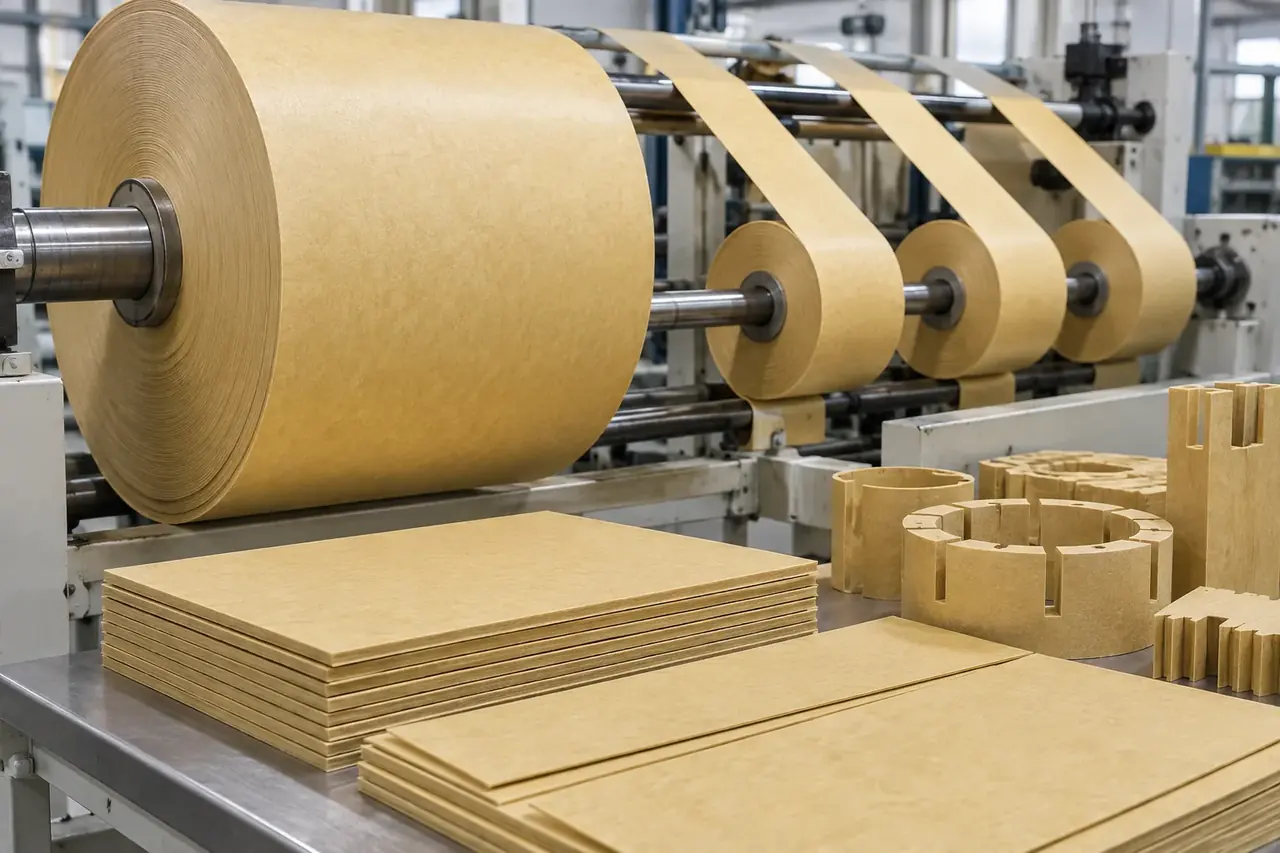
Aramid insulation paper slitting blades convert master rolls into strips or narrower rolls used in electrical insulation preparation. This topic focuses specifically on aramid paper roll slitting rather than general insulation-sheet cutting, with attention to fibrous edge behavior, narrow-lane stability, roll hardness variation, web tracking and the finished roll condition required by the next process.
Updated
Where This Cutting Application Appears
Narrow insulation strip conversion
Aramid paper master rolls are slit into narrow strips for organized feeding into later insulation-component processes.
Reel width preparation
Finished roll widths are prepared to suit a downstream winding, wrapping, forming or laminating operation.
Outer-edge trimming
Damaged or inconsistent outer margins are removed before usable lanes are rewound.
Roll Slitting process boundary
Roll slitting for Aramid insulation paper is planned around longitudinal width conversion of a moving roll, web, sheet or strip into controlled lanes or daughter rolls; it is not transverse length cutting, profile formation or removal of only a narrow damaged margin.
Roll Slitting setup checkpoint
For Aramid insulation paper, confirm unwind and rewind tension, lane widths, knife positions, edge guidance, core alignment, trim removal and discharge behavior.
Roll Slitting acceptance checkpoint
For Aramid insulation paper, evaluate lane width, edge condition, camber or wandering, debris, telescoping, interleaving and stable winding or downstream transfer.
Define the Required Cut Result
- Continuous slit edges with controlled fuzz, loose fibers and edge feathering.
- Consistent strip width across narrow and wider production lanes.
- Stable web tracking without wrinkles, fold-over or strip wandering.
- Neatly wound finished rolls with aligned faces and no trapped fiber debris.
Problems to Diagnose Before Changing the Knife
Fuzzy slit edge or fiber whiskers
- Confirm the exact aramid paper grade or supplied construction without assuming unknown properties.
- Compare edge appearance by web direction, roll side and lane position.
- Inspect support and separation where loose fibers first become visible.
Narrow strips wander or fold over
- Review the full path from cutting through separation to each rewind position.
- Confirm whether instability is limited to specific strip widths or roll locations.
- Record web alignment and roller contact during steady operation and changes in speed.
Width variation between lanes
- Confirm the customer's measurement method and reference condition.
- Check the cutting-position layout and movement of the web across the station.
- Compare lane results at the beginning, middle and end of the finished rolls.
Loose fibers trapped in the finished roll
- Identify whether debris is generated at the slit edge or introduced by handling.
- Review cleaning, extraction and web-contact surfaces before rewinding.
- Inspect roll faces and selected unwind sections using the agreed method.
Knife Forms That May Be Considered
| Possible knife form | When it may be considered | What must be confirmed |
|---|---|---|
| Machine-matched rotary slitting arrangement | For continuous aramid insulation paper roll conversion using an existing rotary station. | Holder interface, web support, roll condition, lane widths, rewind arrangement and approved edge sample. |
| Narrow-strip slitting arrangement | When multiple narrow insulation strips require controlled separation and individual winding. | Strip widths, lane spacing, separation path, rewind positions and acceptable strip handling. |
| Edge-trim slitting arrangement | When outer margins are removed before the main roll is used or converted further. | Trim width, waste collection, usable-web reference, edge condition and downstream roll format. |
Information to Send for Technical Review
You do not need to know the exact blade name. Send the available workpiece, machine, current-knife and cut-result information so the application can be reviewed against a drawing or sample.
- Aramid insulation paper product description and a representative roll or sample.
- Master-roll format, finished strip widths, lane count and edge-trim plan.
- Web direction, roll-face photographs and supplied roll condition.
- Machine slitting position, holder interface, web path and rewind arrangement.
- Close-up accepted and rejected slit-edge photographs.
- Examples of strip wandering, fold-over, width variation or trapped fibers.
- Inspection method and downstream handling or winding requirements.
- Trial quantity, repeat-production expectation and current tooling details if available.
Questions About This Cutting Application
How is this topic different from general electrical insulation paper cutting?
This guide addresses continuous roll slitting of aramid paper, including narrow-strip behavior, lane width and rewind quality.
Why should finished strip width be reviewed with the rewind path?
A strip may be cut correctly but become unstable during separation or winding, so the complete path affects the usable result.
What edge samples should be supplied?
Provide acceptable and defective slit edges from identified lane positions, together with the original master-roll edge when possible.
Can fiber debris be judged from the roll face alone?
Not always. Inspect close-up edges and selected unwind sections to determine whether fibers are loose, trapped or transferred.
Should an unavailable paper property be estimated?
No. Mark it as unknown and provide the actual material identification, sample and observed cutting behavior.
Related product and service information
- Chip Heat-Spreader Graphite Foil Matrix-Trimming Blades - chip heat-spreader graphite foil · matrix trimming
- Kraft Paper Roll Slitting: Edge Quality and Dust - kraft paper rolls · roll slitting
- Printed Paper Web Edge Trimming and Register Protection - printed paper webs · web edge trimming
Request a Custom Cutting-Knife Review
Send the workpiece details, machine or holder information, current knife photos or sample, required quantity and examples of the present cut problem. Final dimensions, material, edge geometry and tolerances are confirmed from the approved requirements.