
Blade Application Guides / Application Guide / Photovoltaic module material converting
Photovoltaic EVA Encapsulant Film Slitting Blades
Photovoltaic EVA encapsulant film slitting blades convert master rolls into widths required for module-material preparation and downstream sheeting. The review should focus on the actual film condition, surface tack, liner or interleaf arrangement, storage and handling state, web path, finished roll requirement and accepted edge result rather than relying on the material name alone.
Updated
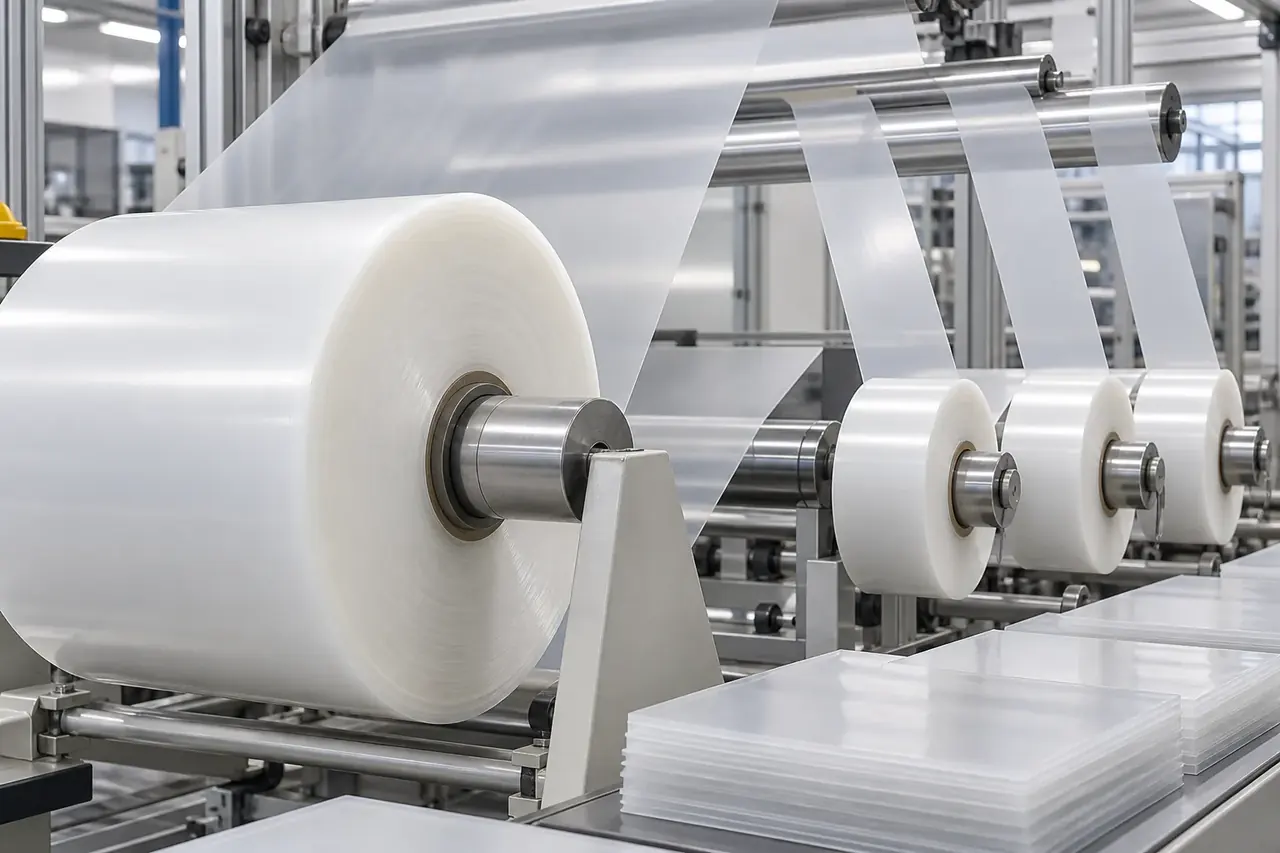
Where This Cutting Application Appears
Master-roll width conversion
Wide encapsulant film is converted into narrower rolls sized for later sheeting or module-material preparation.
Damaged-edge removal
Outer web margins are trimmed when edge condition must be controlled before the film continues downstream.
Encapsulant roll preparation
Finished rolls are wound and identified according to the converter's lane plan, handling method and accepted roll-face condition.
Roll Slitting And Edge Trimming process boundary
Roll slitting and edge trimming for Photovoltaic EVA encapsulant film is a linked sequence: the output condition and datum from each operation become the controlled input for the next. It should not be evaluated as one generic cut or accepted only by the final dimension.
Roll Slitting And Edge Trimming setup checkpoint
For Photovoltaic EVA encapsulant film, define the operation order, intermediate dimensions, registration transfer, material support, web or part handling and waste route for every stage of Roll slitting and edge trimming.
Roll Slitting And Edge Trimming acceptance checkpoint
Verify both intermediate and final results from Roll slitting and edge trimming, including dimensions, registration, edge or feature quality, material damage, waste separation and stable transfer between stages.
Define the Required Cut Result
- Continuous film edges without stretching, necking, attached strands or local tears.
- Stable slit width and web tracking across the approved production lane plan.
- Neat finished rolls without avoidable telescoping, blocking or damaged roll faces.
- Controlled surface contact and minimal transfer of tacky residue around the cutting zone.
Problems to Diagnose Before Changing the Knife
Film stretches or narrows at the slit edge
- Record the supplied roll condition and the film state during the production trial.
- Review web support and tension behavior immediately before and after the cut.
- Compare edge shape during steady running, starting and stopping.
Tacky residue transfers near the cut
- Identify all film-contact surfaces and where residue first becomes visible.
- Document whether a liner or interleaf is present and how it is separated.
- Compare cleaning intervals with roll condition and observed edge quality.
Wrinkled or wandering web
- Review unwind alignment, roller contact and the complete web path.
- Confirm whether wrinkles enter the cutting station or develop after it.
- Record changes by lane and by position across the master roll.
Finished rolls block or telescope
- Inspect finished roll faces and record where layers shift or adhere.
- Review rewind alignment, edge condition and downstream roll handling together.
- Separate slitting-related effects from storage or packaging conditions.
Knife Forms That May Be Considered
| Possible knife form | When it may be considered | What must be confirmed |
|---|---|---|
| Machine-matched rotary slitting arrangement | For continuous master-roll conversion on equipment with an existing rotary slitting station. | Machine interface, web path, film condition, lane widths, support and accepted roll samples. |
| Supported-web edge trimming arrangement | When the encapsulant film needs controlled support while damaged or excess edge material is removed. | Trim width, support location, liner arrangement, waste path and downstream winding. |
| Slit-and-sheet converting arrangement | When width conversion is coordinated with a later sheet-length preparation process. | Slit widths, sheet sequence, web registration, transfer method and finished packing format. |
Information to Send for Technical Review
You do not need to know the exact blade name. Send the available workpiece, machine, current-knife and cut-result information so the application can be reviewed against a drawing or sample.
- EVA encapsulant film product description and representative roll samples.
- Master-roll format, finished widths, lane plan and edge-trim requirement.
- Liner or interleaf arrangement and the order in which layers are handled.
- Machine slitting position, web path, support and rewind layout.
- Photographs of the master roll, finished roll faces and close-up slit edges.
- Examples of stretching, residue transfer, wrinkles, blocking or telescoping.
- Customer inspection, handling, storage and packaging requirements.
- Trial quantity, production pattern and current knife-holder information if available.
Questions About This Cutting Application
Can EVA encapsulant film slitting blades be selected from film thickness alone?
No. Film condition, tack, liner arrangement, web support, finished width and accepted roll quality should be reviewed together.
Why should the supplied roll condition be documented?
Wrinkles, blocking, edge damage or storage effects may already be present and should not be confused with defects created during slitting.
What should be compared in an EVA film slitting trial?
Compare slit width, edge continuity, web tracking, residue transfer and finished winding using the customer's normal inspection method.
Is liner information necessary?
Yes. A liner or interleaf changes the web path and contact sequence and may affect support, separation and winding.
Should an unknown film property be estimated?
No. Keep unknown values unconfirmed and provide actual film samples and process observations.
Related product and service information
- Chitosan Biodegradable Film Roll Slitting Blades - chitosan biodegradable film · roll slitting
- Photovoltaic Backsheet Film Slitting Blades - Photovoltaic backsheet film · Roll slitting and edge trimming
- Alkaline Electrolyzer Diaphragm Cutting Blades - Alkaline electrolyzer diaphragm · Sheet and profile cutting
Request a Custom Cutting-Knife Review
Send the workpiece details, machine or holder information, current knife photos or sample, required quantity and examples of the present cut problem. Final dimensions, material, edge geometry and tolerances are confirmed from the approved requirements.