
Tecnologia de lâminas / Guia de aplicações / Embalagens flexíveis
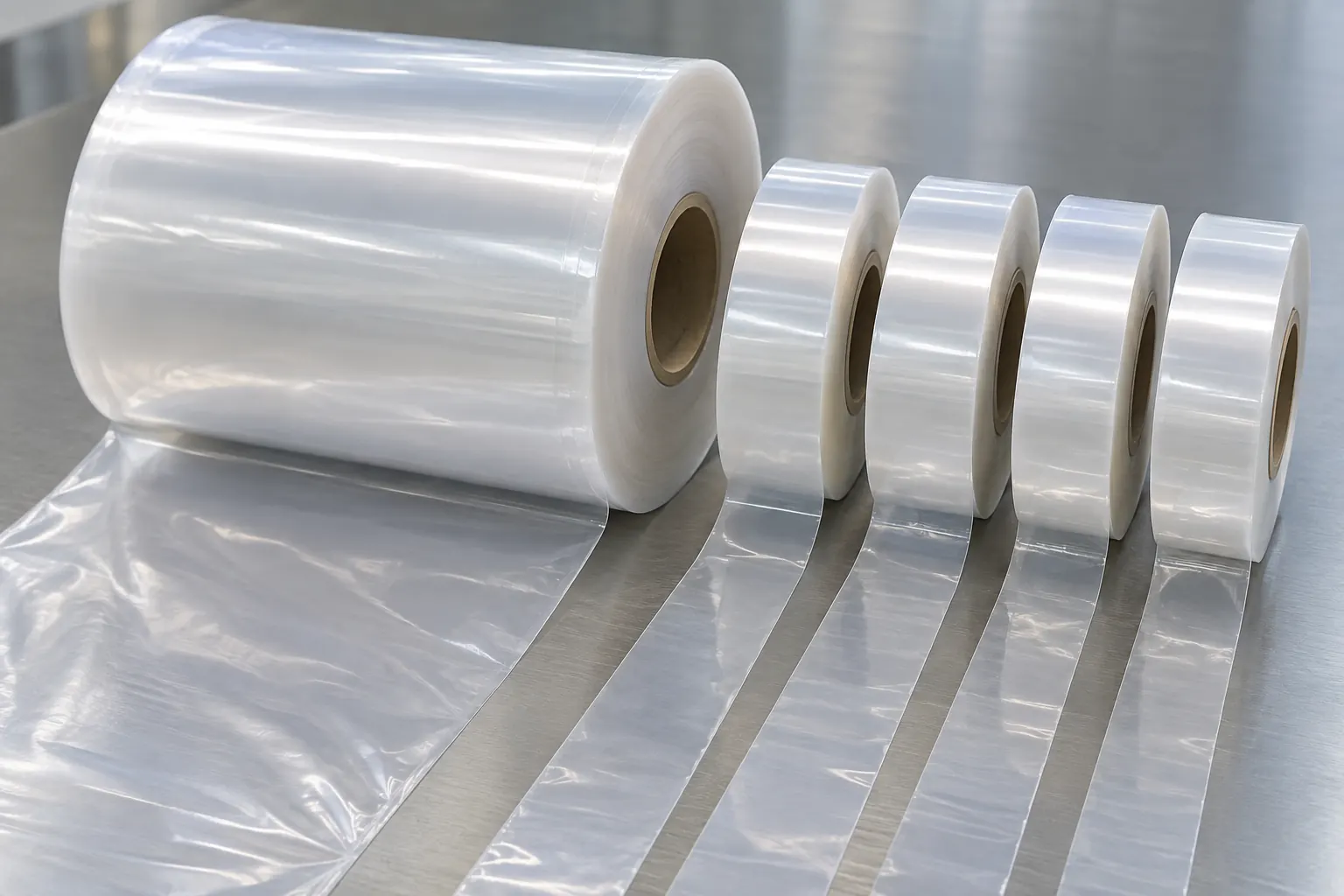
Corte Longitudinal de Filme para Pouch em PE Monomaterial
As estruturas de filme para pouch em PE monomaterial podem combinar camadas de polietileno orientadas, impressas, revestidas com barreira e selantes, embora permaneçam mecanicamente mais macias e extensíveis do que os laminados à base de PET. Por isso, o corte longitudinal de rolos deve ser analisado considerando a composição real das camadas, o perfil de espessura, o histórico de tensão, a pegajosidade do selante e o comportamento da bobina exigido pela linha de produção de pouches.
Atualizado
Onde esta aplicação de corte é utilizada
Material para pouches pré-fabricados
Cortar longitudinalmente bobinas-mãe impressas totalmente em PE em bobinas com larguras adequadas à formação e selagem dos pouches.
Preparação de banda para formar, encher e selar
Preparar bandas estreitas e estáveis para embalagem contínua, na qual a qualidade da borda afeta o guiamento e as selagens.
Conversão de PE com revestimento de barreira
Converter a largura de estruturas de polietileno revestidas, monitorando a integridade do revestimento e da camada selante.
Defina o resultado de corte necessário
- Manter a largura de corte sem estirar a banda macia.
- Produzir bordas de bobina planas, com o mínimo de ressalto, curvatura ou estreitamento.
- Limitar géis, filamentos e fragmentos soltos de borda.
- Entregar uma qualidade de bobinamento adequada à impressão, selagem e formação de pouches.
Problemas a diagnosticar antes de trocar a lâmina
A borda cortada se curva ou forma um ressalto
- Medir a assimetria das camadas e o perfil de espessura.
- Comparar a tensão e a direção de bobinamento.
- Inspecionar a deformação da borda imediatamente e após o relaxamento.
A banda se estreita e a largura final varia
- Registrar a tensão por zona e a velocidade real.
- Verificar a temperatura e o estiramento entre os rolos.
- Medir a largura após relaxamento controlado.
A camada selante forma filamentos na borda
- Identificar a resina, os aditivos e a pegajosidade superficial.
- Comparar a temperatura do material e o apoio da borda.
- Inspecionar contaminação ou acúmulo localizado.
A bobina bloqueia ou apresenta telescopagem após o corte longitudinal de rolos
- Analisar a tensão de bobinamento e as condições do rolo de contato.
- Verificar os aditivos deslizantes, o calor de armazenamento e a dureza da bobina.
- Distinguir os efeitos da borda cortada da instabilidade de bobinamento.
Tipos de lâmina que podem ser considerados
| Possível tipo de lâmina | Quando pode ser considerado | O que deve ser confirmado |
|---|---|---|
| Configuração de corte longitudinal por cisalhamento circular | Para separação controlada quando há arestas rotativas pareadas e apoio para a banda. | Confirmar a interface do eixo, a sobreposição, a carga lateral, a rotação, o percurso da banda e a amostra aprovada. |
| Configuração de corte longitudinal com lâmina tipo navalha | Para bandas finas de PE compatíveis, em equipamentos projetados para corte com navalha apoiado ou no ar. | Confirmar a composição do filme, o modo de apoio, o porta-lâmina, a exposição, a velocidade e os requisitos de segurança da linha de corte longitudinal de rolos. |
Informações necessárias para a análise técnica
Você não precisa saber o nome exato da lâmina. Envie as informações disponíveis sobre a peça, a máquina, a lâmina atual e o resultado de corte necessário para que a aplicação seja analisada com base em um desenho ou uma amostra.
- Composição completa das camadas de PE, orientação, revestimentos e espessura nominal
- Perfil de espessura e variação transversal da espessura
- Dimensões da bobina-mãe, tubete, direção de bobinamento e dureza da bobina
- Larguras de corte necessárias, tolerância e amostras de aceitação da borda
- Velocidade da linha e faixas de tensão nas zonas de desbobinamento, corte e rebobinamento
- Temperatura da banda, controle de estática, aditivos e tendência ao bloqueio
- Modo de corte longitudinal de rolos existente, interface do porta-lâmina e amostra do componente usado
- Requisitos posteriores de impressão, selagem ou da máquina de pouches e volume do pedido
Perguntas sobre esta aplicação de corte
Por que o filme totalmente em PE estira durante o corte longitudinal de rolos?
O baixo módulo, a temperatura da banda e a tensão ou o estiramento excessivos podem alongar a estrutura. A largura deve ser verificada após um período de relaxamento definido.
É possível copiar uma configuração usada para laminado de PET?
Não é seguro partir dessa suposição. Uma estrutura totalmente em PE pode responder de maneira diferente à tensão, ao calor, ao atrito e ao bobinamento.
O que causa um ressalto na borda cortada?
Entre os possíveis fatores estão o perfil de espessura, as camadas assimétricas, a compressão localizada, a tensão e a deformação da borda.
A camada selante deve ser identificada?
Sim. O tipo de resina, a pegajosidade, os aditivos e a orientação podem afetar a formação de filamentos, o acúmulo e o bloqueio.
Quais amostras são mais úteis?
Forneça a bobina sem corte, bobinas refiladas aprovadas e rejeitadas, medições de largura após relaxamento e amostras após o processo de fabricação do pouch.
Informações relacionadas sobre produtos e serviços
- Lâminas de corte para filme de cobertura do solo — corte longitudinal de bobina - filme de cobertura do solo · corte longitudinal de bobina
- Refile de filme para embalagens de alimentos com área de selagem limpa - bobinas de filme para embalagens de alimentos · refile longitudinal de bordas
- Corte longitudinal de fita adesiva médica - rolos de fita adesiva médica · corte longitudinal de rolos
Solicite uma análise de faca de corte sob medida
Envie os dados da peça, as informações da máquina ou do porta-faca, fotos ou uma amostra da lâmina atual, a quantidade necessária e exemplos do problema de corte. As dimensões finais, o material, a geometria do fio e as tolerâncias são confirmados conforme os requisitos aprovados.