
Tecnologia de lâminas / Guia de aplicações / Filmes técnicos
Corte e Vinco Rotativo de Filme Protetor Antiestático
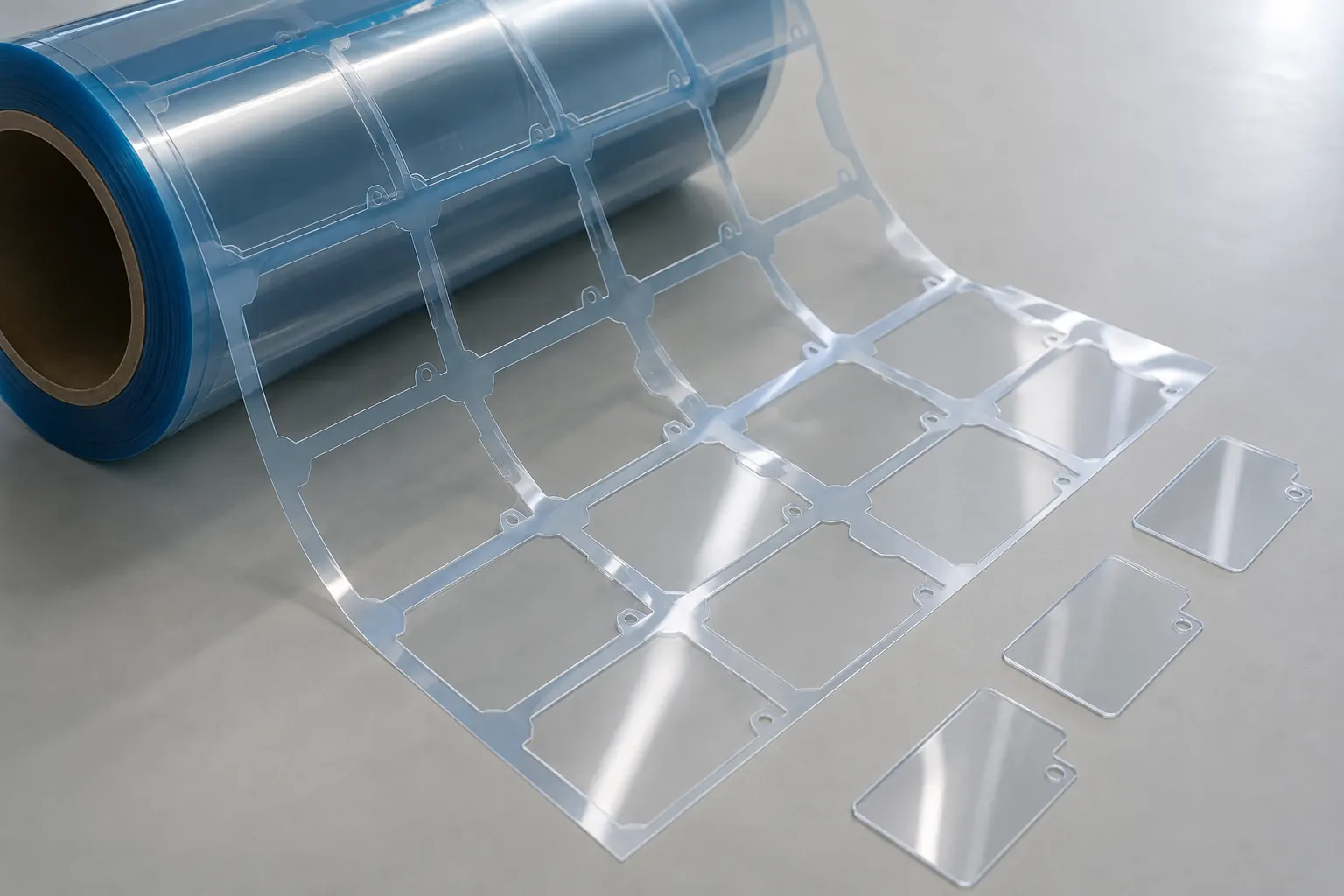
O corte e vinco rotativo de filme protetor antiestático produz máscaras, remendos protetores, janelas e componentes de processo para produtos sensíveis. O corte pode precisar parar no liner de liberação ou atravessar toda a estrutura de camadas. A eletricidade estática, o adesivo de baixa aderência e os recortes leves influenciam a remoção dos resíduos; por isso, o desempenho elétrico e a limpeza devem ser testados após a conversão.
Atualizado
Onde esta aplicação de corte é utilizada
Máscaras para displays e componentes eletrônicos
Criar formatos protetores e janelas registrados em relação à geometria dos componentes sensíveis.
Remendos adesivos antiestáticos
Fazer o meio-corte de peças reutilizáveis ou de proteção de processo, mantendo-as sobre um liner.
Componentes protetores para sala limpa
Converter peças individuais de filme com controle de partículas, carga e liberação.
Defina o resultado de corte necessário
- Manter as dimensões e o registro do perfil após a liberação.
- Preservar o desempenho antiestático da superfície ao redor do perímetro.
- Controlar a profundidade no liner, os filamentos de adesivo e o levantamento das peças.
- Remover a matriz residual e os recortes sem redistribuir partículas.
Problemas a diagnosticar antes de trocar a lâmina
Pequenos recortes aderem às peças utilizáveis
- Medir a eletricidade estática e analisar a ionização.
- Verificar a retenção e a extração dos recortes.
- Inspecionar a densidade e a geometria dos elementos.
O formato protetor levanta junto com a matriz residual
- Analisar o nível de liberação e o ângulo de remoção.
- Verificar o adesivo de baixa aderência e a orientação dos cantos.
- Controlar a tensão e a carga do filme contínuo.
O liner é atravessado pelo corte de forma intermitente
- Mapear a variação de espessura do liner e da estrutura completa.
- Definir a marca aceitável no liner.
- Inspecionar a uniformidade do suporte.
A resistência superficial muda após a conversão
- Padronizar o condicionamento e a medição.
- Verificar o atrito, a contaminação e a face tratada.
- Comparar os resultados no centro e no perímetro.
Tipos de lâmina que podem ser considerados
| Possível tipo de lâmina | Quando pode ser considerado | O que deve ser confirmado |
|---|---|---|
| Sistema de faca rotativa para meio-corte | Para formatos adesivos antiestáticos que devem permanecer sobre um liner de liberação. | Confirmar todas as camadas, a profundidade exigida, a marca no liner, a liberação, a repetição, o suporte e o método de teste. |
| Sistema rotativo de corte total do perfil | Para peças antiestáticas individuais separadas por toda a estrutura de camadas. | Confirmar o perfil, a retenção das peças, o controle dos recortes, a entrega, a interface da estação e o desenho aprovado. |
Informações necessárias para a análise técnica
Você não precisa saber o nome exato da lâmina. Envie as informações disponíveis sobre a peça, a máquina, a lâmina atual e o resultado de corte necessário para que a aplicação seja analisada com base em um desenho ou uma amostra.
- Substrato, espessura, tratamento antiestático e propriedade elétrica-alvo
- Adesivo, liner de liberação e compatibilidade com a superfície protegida
- Relação entre as camadas exigida para meio-corte ou corte total
- Perfil, raios, sentido do filme contínuo, repetição e tolerância dimensional
- Velocidade, tensão, umidade, aterramento, ionização e limpeza
- Interface da estação rotativa, suporte e amostra cortada atual
- Disposição da matriz residual, sentido de remoção, retenção e coleta dos recortes
- Testes de aceitação de partículas, liner, adesivo, propriedades elétricas e aplicação
Perguntas sobre esta aplicação de corte
Uma borda convertida pode permanecer antiestática?
Isso depende da cobertura do tratamento e do manuseio; após o condicionamento, teste as posições definidas no perímetro e na face.
Por que os recortes aderem apesar do tratamento antiestático?
O tratamento reduz o acúmulo de carga, mas não elimina todas as forças eletrostáticas, especialmente durante uma separação rápida.
Como especificar com segurança a profundidade do meio-corte?
Defina as camadas que devem se separar, a marca aceitável no liner e o teste funcional de liberação, em vez de presumir uma profundidade numérica.
Um adesivo de baixa aderência ainda pode levantar durante a remoção da matriz residual?
Sim. O nível de liberação, a geometria, o sentido de remoção, a tensão e a eletricidade estática podem levantar a peça acabada.
O que deve constar no relatório de um teste em sala limpa?
Relate a qualidade do perfil, os resultados de partículas, a carga ou resistência, a liberação da matriz residual, a condição do liner e o desempenho de proteção no uso final.
Informações relacionadas sobre produtos e serviços
- Corte e Vinco Rotativo de Filme Imprimível a Laser - laser-printable film · rotary die cutting
- Corte e Vinco Rotativo de Filme de Embalagem Antiembaçante - filme antiembaçante · rotary die cutting
- Corte de folhas de celulose prensada para enfardamento - folhas de celulose prensada · corte para dimensionamento
Solicite uma análise de faca de corte sob medida
Envie os dados da peça, as informações da máquina ou do porta-faca, fotos ou uma amostra da lâmina atual, a quantidade necessária e exemplos do problema de corte. As dimensões finais, o material, a geometria do fio e as tolerâncias são confirmados conforme os requisitos aprovados.