
Tecnologia de lâminas / Guia de aplicações / Filmes técnicos
Corte e Vinco Rotativo de Filme Imprimível a Laser
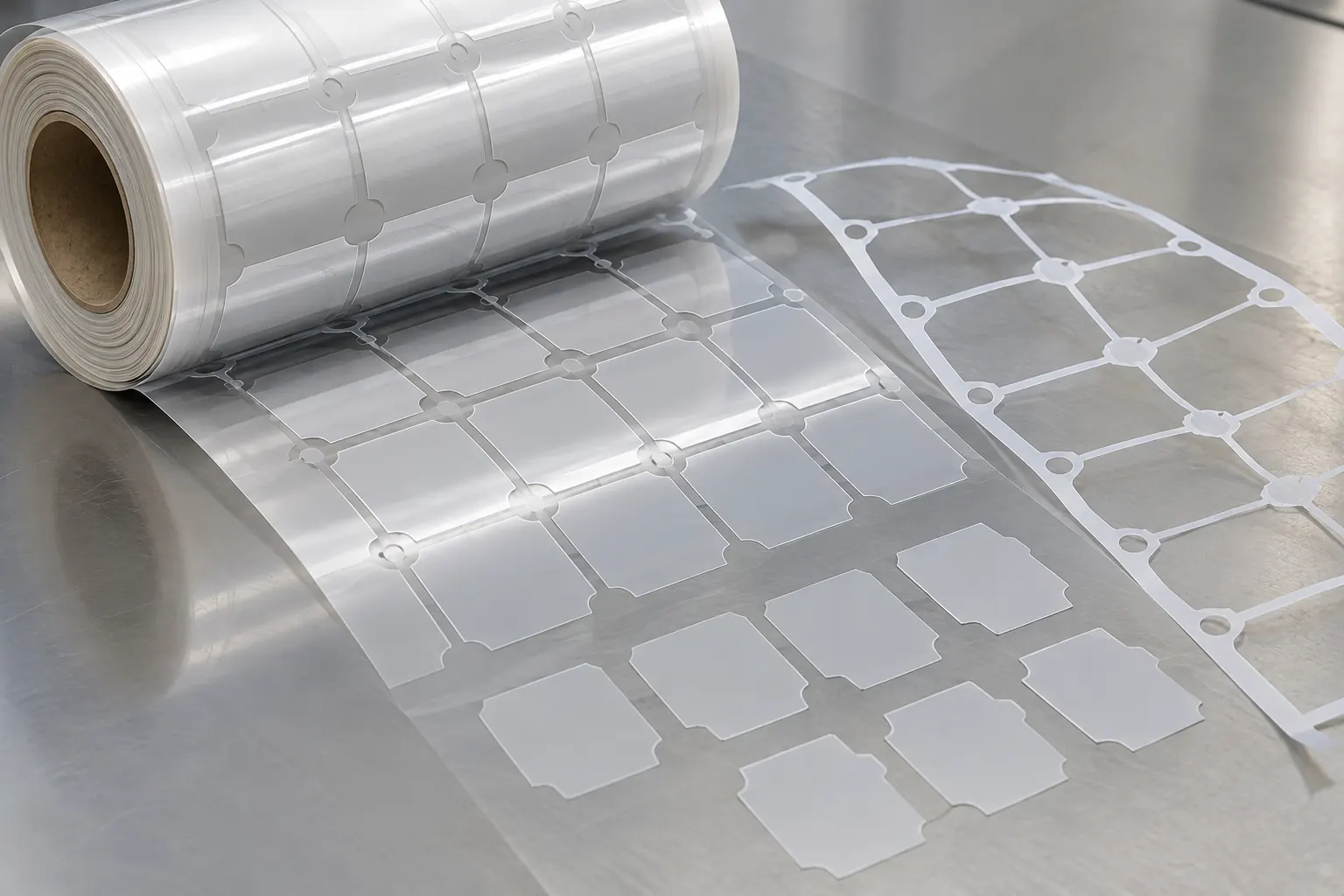
Laser-printable film is rotary die cut into labels, durable identifiers or imaging components either before or after printing. Toner-receptive coatings can chip, printed toner can crack at a tight perimeter and adhesive versions require controlled liner retention. The process stage, printed condition and finished layer relationship must be defined before review.
Onde esta aplicação de corte é utilizada
Durable identification labels
Convert printable adhesive film into labels while retaining the release liner.
Printed equipment markers
Profile-cut toner-imaged film without cracking visible print at the perimeter.
Laser media components
Produce repeated film shapes requiring clean release and dimensional control.
Formas comuns de descrever este problema de corte
- laser-printable film rotary die-cutting blades
- rotary kiss cut laser label film
- die cut toner receptive polyester labels
- durable laser identifier profile cutting
- prevent printable coating chips around die cut
- matrix stripping adhesive laser film
- post print rotary cutting synthetic laser media
- custom die review for laser printable label stock
Defina o resultado de corte necessário
- Protect receptive coating and printed toner at the perimeter.
- Control cut depth relative to adhesive and liner.
- Hold profile registration to printed information.
- Strip matrix without lifting labels or leaving adhesive strings.
Problemas a diagnosticar antes de trocar a lâmina
Toner or coating cracks around the profile
- Identify whether cutting occurs before or after printing.
- Review toner coverage and feature radii.
- Inspect fracture under magnification.
Release liner is marked or cut through
- Map liner thickness and support variation.
- Define allowable liner witness.
- Review actual cut-depth consistency.
Labels lift during matrix stripping
- Check release balance and adhesive tack.
- Review stripping angle and corner orientation.
- Control static and web tension.
Small slugs contaminate printed faces
- Review slug retention and extraction.
- Check static and part geometry.
- Inspect collection after repeated production.
Tipos de lâmina que podem ser considerados
| Possível tipo de lâmina | Quando pode ser considerado | O que deve ser confirmado |
|---|---|---|
| Rotary kiss-cut die arrangement | For adhesive printable film labels retained on a release liner. | Confirm layer stack, liner witness limit, repeat, support, matrix layout and approved trial. |
| Rotary through-cut profile arrangement | For discrete film components separated through the complete construction. | Confirm profile, part retention, slug control, delivery, press interface and drawing. |
Informações necessárias para a análise técnica
Você não precisa saber o nome exato da lâmina. Envie as informações disponíveis sobre a peça, a máquina, a lâmina atual e o resultado de corte necessário para que a aplicação seja analisada com base em um desenho ou uma amostra.
- Carrier, receptor coating, adhesive and liner layer stack
- Whether material is unprinted or toner-imaged before cutting
- Profile, radii, repeat, print datum and registration tolerance
- Required kiss-cut or through-cut layer relationship
- Speed, tension, web temperature, static and cleanliness
- Rotary interface, support and current tooling or cut sample
- Matrix geometry, stripping direction and slug-control method
- Limits for coating cracks, liner marks, adhesive strings and print damage
Perguntas sobre esta aplicação de corte
Should film be die cut before or after laser printing?
Either workflow may be used, but post-print cutting must account for toner coverage, registration and perimeter cracking.
How much liner marking is acceptable?
That is product-specific and must be defined by release, handling and downstream dispensing tests.
Why do labels lift with the matrix?
Release level, corner geometry, adhesive tack, stripping direction and static all influence lifting.
Can coating chips affect printing later?
Yes. Loose particles may contaminate rollers or the printable surface even when the profile is dimensionally correct.
What must be tested after conversion?
Check matrix release, label removal, print condition, adhesion, dimensions and the intended application process.
Solicite uma análise de faca de corte sob medida
Envie os dados da peça, as informações da máquina ou do porta-faca, fotos ou uma amostra da lâmina atual, a quantidade necessária e exemplos do problema de corte. As dimensões finais, o material, a geometria do fio e as tolerâncias são confirmados conforme os requisitos aprovados.