
Blade Application Guides / Application Guide / Roofing and building-envelope material manufacturing
Synthetic Roofing Underlayment Slitting Blades
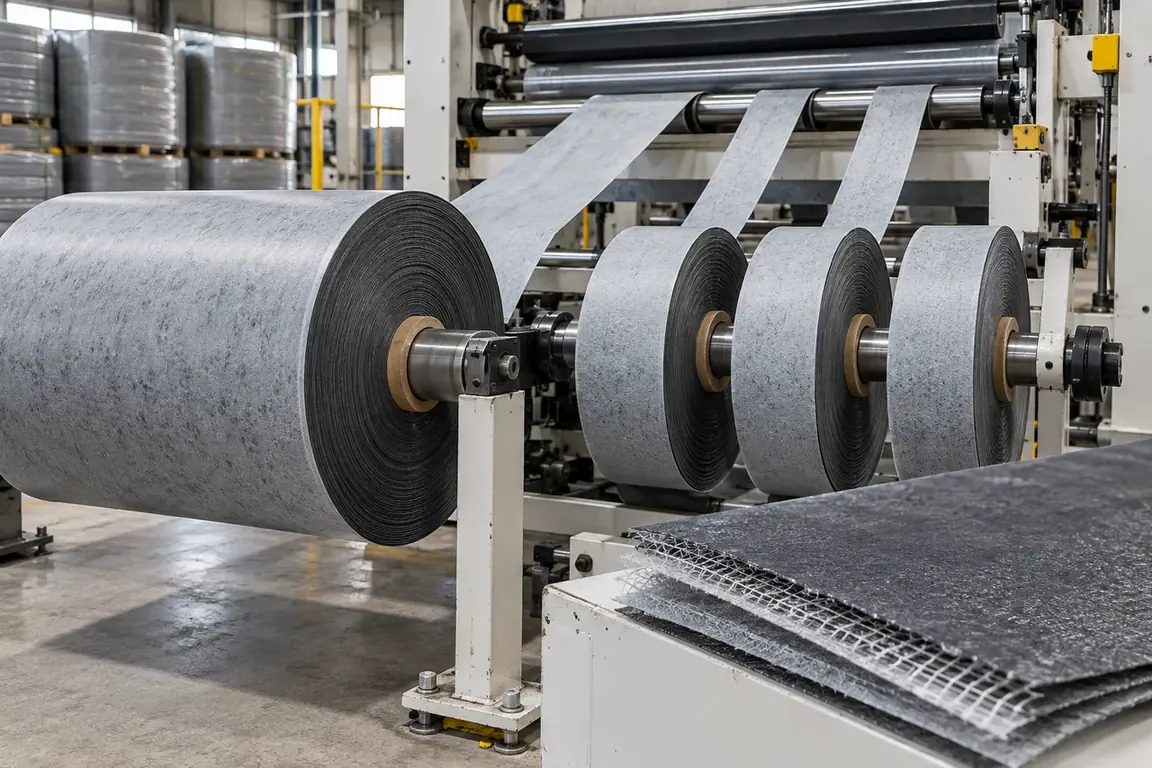
Synthetic roofing underlayment slitting blades convert wide multilayer building-envelope webs into finished roll widths and remove unsuitable outer margins. These materials may combine films, woven reinforcement, nonwoven surfaces, coatings or release liners, so a technical review should define the supplied construction, functional face, printed reference, web path, trim handling and approved finished-roll condition instead of treating the product as a generic plastic film.
Updated
Where This Cutting Application Appears
Finished roll width conversion
Wide underlayment webs are slit into planned roll widths for building-material distribution and installation.
Outer margin removal
Inconsistent, damaged or process-related outer edges are trimmed before the usable material is rewound.
Liner-backed membrane preparation
Self-adhered constructions are converted while maintaining the required relationship between membrane and release liner.
Roll Slitting And Edge Trimming process boundary
Roll slitting and edge trimming for Multilayer synthetic roofing underlayment rolls is a linked sequence: the output condition and datum from each operation become the controlled input for the next. It should not be evaluated as one generic cut or accepted only by the final dimension.
Roll Slitting And Edge Trimming setup checkpoint
For Multilayer synthetic roofing underlayment rolls, define the operation order, intermediate dimensions, registration transfer, material support, web or part handling and waste route for every stage of Roll slitting and edge trimming.
Roll Slitting And Edge Trimming acceptance checkpoint
Verify both intermediate and final results from Roll slitting and edge trimming, including dimensions, registration, edge or feature quality, material damage, waste separation and stable transfer between stages.
Define the Required Cut Result
- Continuous multilayer edges without reinforcement pullout, coating flake or visible delamination.
- Stable finished width and web tracking across planned roll positions.
- Functional and printed surfaces protected from avoidable scoring, transfer marks or contamination.
- Orderly finished rolls with aligned faces and controlled edge-trim removal.
Problems to Diagnose Before Changing the Knife
Reinforcement strands pull from the slit edge
- Confirm the complete supplied layer construction and reinforcement orientation.
- Compare edge behavior across different web positions and roll faces.
- Review support and waste separation where strand pullout starts.
Layers separate along the finished edge
- Identify the interface that opens and whether separation is continuous or local.
- Compare master-roll edges, newly slit edges and edges after rewinding.
- Distinguish cutting-related opening from pre-existing laminate condition.
Trim waste breaks or wraps in the line
- Map the complete trim path from separation to collection.
- Record where the waste begins to stretch, fold or break.
- Confirm that trim behavior does not pull the usable web from its reference.
Finished rolls telescope or have uneven faces
- Review web alignment, slit-edge condition and individual winding positions together.
- Record whether the condition changes across the master roll or production sequence.
- Separate slitting effects from storage and later roll handling.
Knife Forms That May Be Considered
| Possible knife form | When it may be considered | What must be confirmed |
|---|---|---|
| Machine-matched circular slitting arrangement | For continuous conversion of reinforced synthetic underlayment on an existing roll line. | Holder interface, layer construction, web support, width plan, winding and accepted edge sample. |
| Supported edge-trimming arrangement | When outer process margins or damaged edges must be removed before final winding. | Trim boundaries, reinforcement layout, support point, waste route and finished-width reference. |
| Liner-controlled slitting arrangement | When a self-adhered roofing membrane includes a release liner that must remain aligned and usable. | Layer order, liner position, target edge result, web path and roll packaging method. |
Information to Send for Technical Review
You do not need to know the exact blade name. Send the available workpiece, machine, current-knife and cut-result information so the application can be reviewed against a drawing or sample.
- Roofing underlayment product description, layer construction and representative roll samples.
- Identification of woven, nonwoven, film, coating and release-liner layers.
- Master-roll format, finished widths, slit plan and edge-trim requirement.
- Functional or printed face, feed direction and reference marks.
- Machine station, holder interface, web support, waste path and winding layout.
- Accepted and rejected edges showing pullout, flaking or separation.
- Inspection, roll handling, storage and packaging requirements.
- Trial quantity, repeat production expectation and current tooling details if available.
Questions About This Cutting Application
Can synthetic roofing underlayment be treated as ordinary PE film?
No. Many products have reinforced or multilayer constructions, textured faces or liners that change edge and web behavior.
Why should every layer be identified?
The slit crosses the full construction, and pullout or separation must be traced to the actual layer interface.
What roll photographs are most useful?
Show the master-roll edge, close slit edges, finished roll faces, functional surface and any unstable trim waste.
Should printed guide marks be used as dimensional data?
Only when the customer confirms them as a controlled production reference.
Why is trim removal part of blade review?
Unstable trim can break, wrap or pull the usable web, changing both edge quality and finished width.
Related product and service information
- Aerospace Structural Adhesive Film Slitting Blades - Liner-backed aerospace epoxy structural adhesive film · Roll slitting, sheeting and kiss-cutting
- Photovoltaic EVA Encapsulant Film Slitting Blades - Photovoltaic EVA encapsulant film · Roll slitting and edge trimming
- Photovoltaic Backsheet Film Slitting Blades - Photovoltaic backsheet film · Roll slitting and edge trimming
Request a Custom Cutting-Knife Review
Send the workpiece details, machine or holder information, current knife photos or sample, required quantity and examples of the present cut problem. Final dimensions, material, edge geometry and tolerances are confirmed from the approved requirements.