
Blade Application Guides / Application Guide / Polymer production and compounding
Strand Pelletizer Rotor-to-Bed-Knife Clearance Review
Clearance is a machine setting, not a universal number. The correct review compares the approved adjustment procedure with edge condition, axial consistency, operating temperature and the resulting pellets. A replacement knife should reproduce the drawing and seating references that make that adjustment possible.
Updated
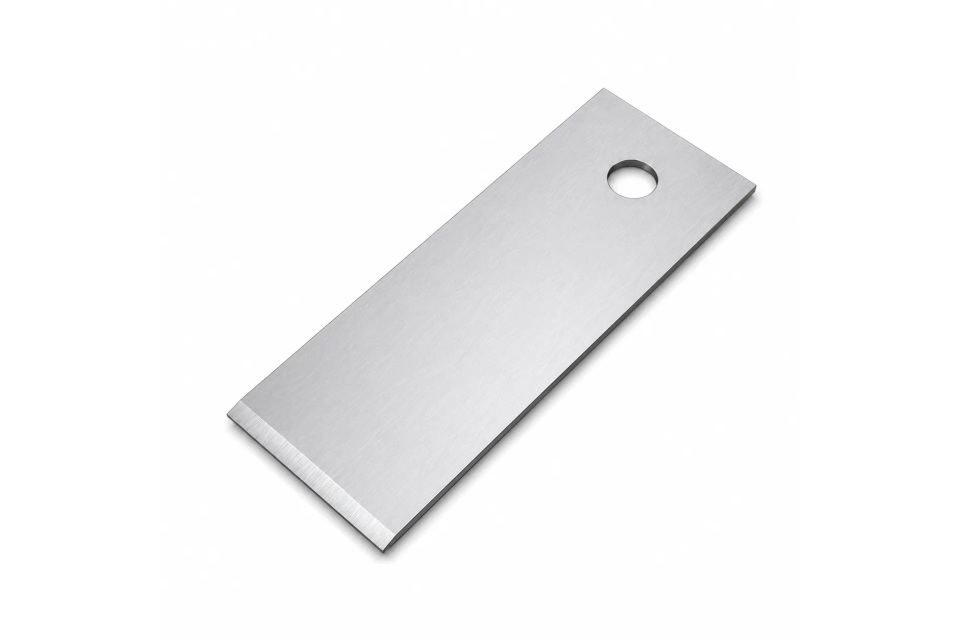
Where This Cutting Application Appears
Cold setup confirmation
Document how the machine maker or approved plant procedure establishes the initial rotor-to-bed-knife relationship.
Axial consistency check
Compare the setting and contact evidence at both ends and the center rather than relying on one gauge point.
Hot-condition review
Observe whether vibration, sound, pellet defects or wear bands change after the cutter reaches stable operating temperature.
Replacement repeatability
Use reference faces, straightness and mounting dimensions from the approved drawing so later adjustments start from the same geometry.
Define the Required Cut Result
- Maintain the intended shearing relationship without uncontrolled contact
- Keep the effective setting consistent across the working width
- Produce stable pellets after thermal conditions settle
- Make setup results traceable to measured parts and recorded adjustments
Problems to Diagnose Before Changing the Knife
One end cuts cleanly while the other leaves tails
Check bed-knife straightness, seat debris, rotor axis, bearing condition and holder deflection across the width.
Metallic sound or heat after tightening the setting
Stop and follow the machine procedure; inspect for unintended contact, local high spots and thermal movement.
Setting changes after clamp tightening
Measure movement between the loose and clamped condition and inspect the seat, clamp sequence and reference surfaces.
New knife cannot reach the previous setting
Compare thickness, reference-face location, bevel orientation, holder range and the opposing component with the approved drawing.
Separate global setting from local geometry
A single clearance reading cannot reveal taper, runout or clamp-induced movement.
Difference from side to side
Map the setting across the full width and inspect alignment, straightness and seating.
Difference cold versus hot
Record temperature, elapsed time and the same gauge or pellet measurements after stabilization.
Difference before versus after clamping
Check the seat, clamp order, burrs and part thickness at the reference locations.
Acceptance Criteria for a Controlled Trial
Agree how the trial will be judged before changing the knife or machine setting.
- Verify the setting at defined points with the approved method.
- Run the same polymer and operating condition for each comparison.
- Inspect sound, temperature, pellets and edge marks after stabilization.
- Retain the final setting record with knife and machine identification.
Knife Forms That May Be Considered
| Possible knife form | When it may be considered | What must be confirmed |
|---|---|---|
| Adjustable straight bed knife | Use only where the machine provides a controlled stationary-knife adjustment. | Confirm adjustment direction, reference points, clamp sequence, straightness and the allowable machine setting. |
| Fixed-location counter-edge | Use where the machine controls the relationship through machined seats or shims rather than an adjustable holder. | Confirm datum faces, shim practice, tolerance stack and rotor geometry from the machine documentation. |
Information to Send for Technical Review
You do not need to know the exact blade name. Send the available workpiece, machine, current-knife and cut-result information so the application can be reviewed against a drawing or sample.
- Machine adjustment procedure and permitted setting range
- Measurements from drive side, center and operator side
- Cold and stabilized operating-condition records
- Rotor runout and bearing-condition observations
- Bed-knife straightness, thickness and reference-face dimensions
- Clamp sequence and photographs of the cleaned seat
- Pellet samples before and after adjustment
- Approved drawing, material requirement, quantity and inspection method
Related Pelletizer Knife Pages
Questions About This Cutting Application
What is the correct strand pelletizer knife clearance?
It depends on the machine design and approved procedure. Use the manufacturer or plant specification, then verify the result across the working width and under operating conditions.
Can a new bed knife correct rotor runout?
No. Runout, bearings, holder alignment and the rotor itself must be evaluated separately.
Why measure after clamping?
Clamping can move a thin knife or expose an uneven seat, changing the effective relationship from the loose measurement.
Which dimensions matter on a replacement?
Overall geometry, thickness, straightness, mounting features, reference faces and working-edge orientation all affect whether the machine can be adjusted correctly.
Public references and scope
These public sources provide material, cutting-method or safety context for this guide. Supplier pages describe their own materials or equipment; they do not establish a MEIRENTE blade specification or performance claim. Confirm the actual grade, machine setup and required cut with a drawing or sample.
Related product and service information
- Recycled Polymer Pelletizer Knife Chipping and Contamination Review - recycled polymer feed with possible hard contamination · recycled polymer pelletizing
- Strand Pelletizer Knife Selection: Rotor, Bed Knife and Feed Conditions - cooled polymer strands entering a strand pelletizer · strand pelletizing
- Strand Pelletizer Long Tails: Diagnose the Cut Before Replacing Knives - polymer pellets with long tails or incomplete separation · strand pellet cutting defect diagnosis
Request a Custom Cutting-Knife Review
Send the workpiece details, machine or holder information, current knife photos or sample, required quantity and examples of the present cut problem. Final dimensions, material, edge geometry and tolerances are confirmed from the approved requirements.