
Blade Application Guides / Application Guide / Polymer production and compounding
Strand Pelletizer Knife Selection: Rotor, Bed Knife and Feed Conditions
A strand pelletizer does not cut the polymer in isolation: the feed rolls, cooled strand condition, rotor, stationary knife and discharge path work as one system. Knife selection should begin with the existing cutter arrangement and the defects visible on accepted and rejected pellets, not with a steel grade alone.
Updated
Where This Cutting Application Appears
Extrusion and compounding lines
Cooled strands are pulled into the cutter after extrusion; strand diameter, cooling condition and feed stability affect how the rotor and stationary knife meet the material.
Machine-interface review
Confirm the installed rotor construction, bed-knife seat, clamp, reference faces, rotation direction and adjustment method before selecting a replacement profile.
Knife-pair review
Evaluate the rotating and stationary components together because a sharp new part cannot correct holder movement, damaged seats or an incompatible opposing edge.
Trial acceptance
Approve the setup from pellet-length distribution, tails, crushed ends, fines, temperature and stability over a defined production interval.
Define the Required Cut Result
- Produce the required cylindrical pellet length without long tails
- Maintain a stable cut across all strand positions
- Avoid crushing, smearing or pulling strands through the nip
- Make the replacement repeatable from an approved drawing and trial record
Problems to Diagnose Before Changing the Knife
Long tails on otherwise complete pellets
Compare the working-edge condition, rotor-to-bed-knife setting, strand support and whether the defect is concentrated at one axial position.
Strands pulled or flattened before the cut
Separate feed-roll pressure, strand temperature and strand diameter variation from knife sharpness or clearance.
Uneven pellet length across the rotor
Check feed speed, rotor speed, helix or tooth condition, runout and whether every strand enters the cutting zone at the same angle.
Rapid change after installing a new knife
Inspect seating faces, clamp loading, initial setting, opposing-edge condition and the first wear marks before changing material or hardness.
A practical strand-pelletizer selection sequence
Use the defect pattern to decide whether the next action belongs to feeding, alignment, clearance or the knife pair.
Defect follows one strand lane
Inspect strand cooling, lane guidance and local rotor or bed-knife condition at the matching axial position.
All lanes change together
Review feed speed, rotor speed, global clearance, temperature and holder stability before isolating one blade.
Fresh edge degrades immediately
Confirm seat cleanliness, clamp condition, opposing edge and whether hard contamination is entering with the strands.
Acceptance Criteria for a Controlled Trial
Agree how the trial will be judged before changing the knife or machine setting.
- Define the pellet-length sampling method and permitted distribution before the trial.
- Record tails, doubles, fines and crushed ends by strand lane and elapsed run time.
- Inspect the rotor and stationary edge after the same measured production interval.
- Approve the drawing only after machine fit and cut direction match the installed parts.
Knife Forms That May Be Considered
| Possible knife form | When it may be considered | What must be confirmed |
|---|---|---|
| Segmented or integral cutting rotor | Use the construction already defined by the strand pelletizer and approved rotor drawing. | Confirm outside geometry, working direction, replaceable segments, fasteners, balance and allowable runout. |
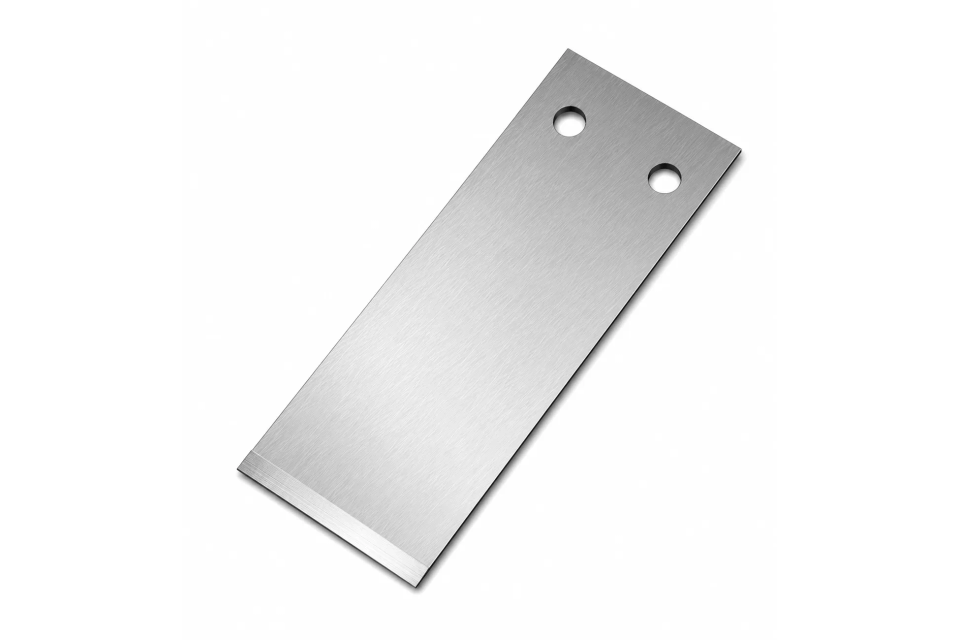
| Straight stationary bed knife | Use where the machine cuts strands between a rotating cutter and an adjustable fixed counter-edge. | Confirm length, thickness, mounting pattern, reference face, adjustment range and working-edge orientation. |
Information to Send for Technical Review
You do not need to know the exact blade name. Send the available workpiece, machine, current-knife and cut-result information so the application can be reviewed against a drawing or sample.
- Pelletizer manufacturer, model and cutter-head photographs
- Rotor and stationary-knife drawings or measured samples
- Polymer grade, additives, filler content and strand diameter range
- Cooling bath length, strand temperature and feed-roll arrangement
- Rotor speed, feed speed and target pellet length
- Accepted and rejected pellet samples with defect counts
- Current knife material, edge geometry and observed wear pattern
- Required quantity, identification marking and inspection records
Related Pelletizer Knife Pages
Questions About This Cutting Application
Can a strand pelletizer knife be selected from the polymer name alone?
No. The cutter construction, strand diameter, temperature, feed condition, rotor speed, stationary edge and acceptance requirement must be reviewed together.
Should the rotor and bed knife be replaced together?
That depends on their measured condition and machine practice. Inspect both working edges, seats and adjustment range before deciding whether one or both parts require replacement.
What sample is most useful for a quotation?
Send the current knives or approved drawings plus pellets from accepted production and from the present defect condition.
Does a harder knife always reduce strand-cutting problems?
No. Hardness alone does not correct feed instability, poor support, runout, clearance or an incompatible edge geometry.
Public references and scope
These public sources provide material, cutting-method or safety context for this guide. Supplier pages describe their own materials or equipment; they do not establish a MEIRENTE blade specification or performance claim. Confirm the actual grade, machine setup and required cut with a drawing or sample.
Related product and service information
- Filled Polymer and Masterbatch Pelletizer Knife Wear Review - filled polymer and masterbatch pellets · abrasive compound pelletizing
- Strand Pelletizer Long Tails: Diagnose the Cut Before Replacing Knives - polymer pellets with long tails or incomplete separation · strand pellet cutting defect diagnosis
- Strand Pelletizer Rotor-to-Bed-Knife Clearance Review - polymer strands cut between a rotor and stationary bed knife · strand pelletizer clearance setting
Request a Custom Cutting-Knife Review
Send the workpiece details, machine or holder information, current knife photos or sample, required quantity and examples of the present cut problem. Final dimensions, material, edge geometry and tolerances are confirmed from the approved requirements.