
Blade Application Guides / Application Guide / Paperboard converting
Solid Bleached Sulfate Board Cut-to-Size Blades
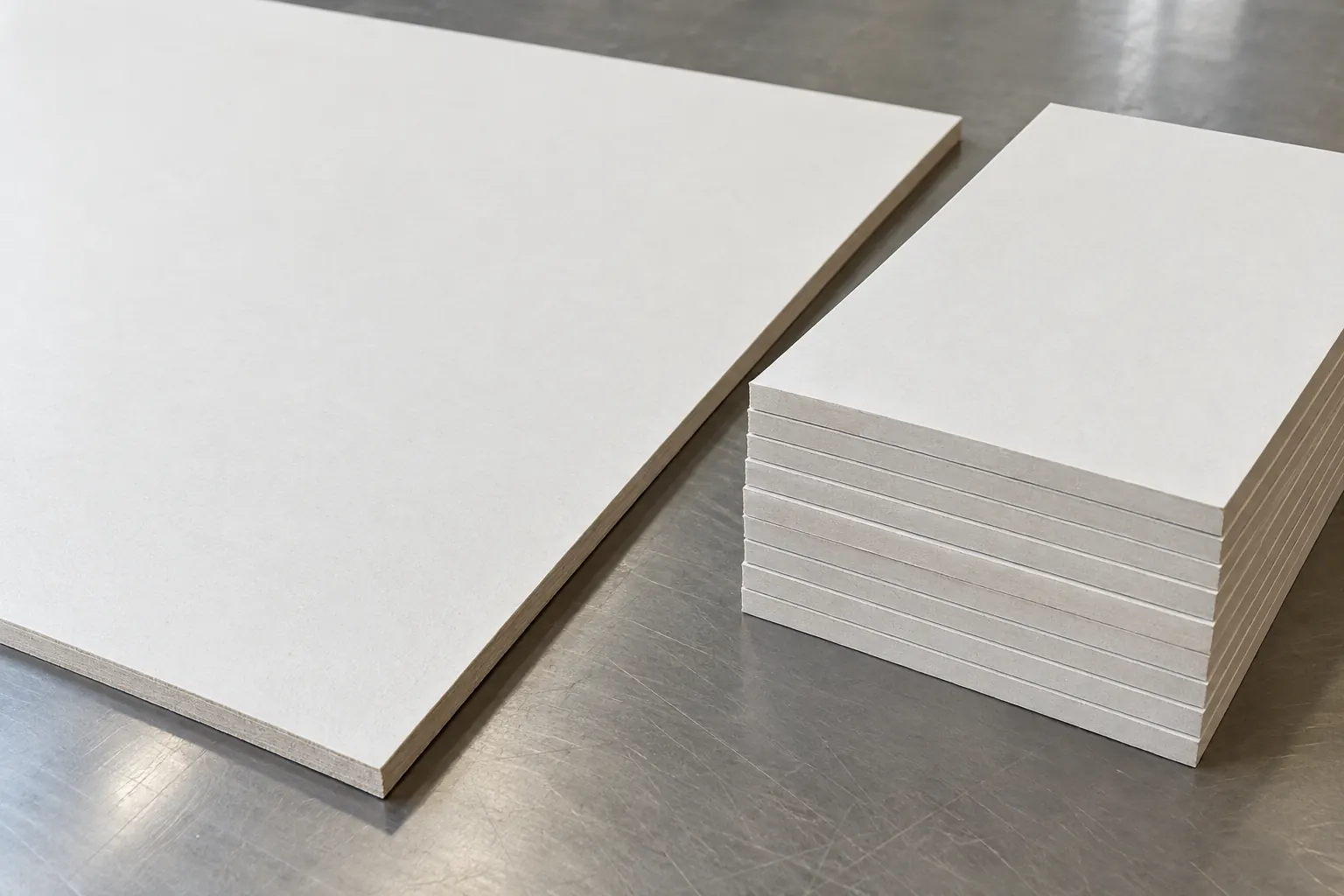
Cut-to-size SBS board is often destined for high-quality cartons, cards or printed components where both dimensions and visible surfaces matter. Review should connect sheeting accuracy with coating condition, fiber direction, curl and the registration needs of the next operation.
Where This Cutting Application Appears
Printed carton sheet sizing
Cuts sheets to dimensions that align with subsequent printing, creasing and die-cutting datums.
Premium card and cover stock
Produces square coated-board pieces with protected visual surfaces.
Short-run packaging samples
Prepares repeatable SBS sheets for prototype and material qualification work.
Common Ways to Describe This Cutting Problem
- solid bleached sulfate board cut-to-size blades
- SBS carton board sheeting knife
- coated paperboard length cutoff
- bleached board square sheet cutter
- premium folding carton board sizing
- SBS sheet edge chipping prevention
- virgin fiber board cross cutting
- custom cutoff blade for SBS sheets
Define the Required Cut Result
- Repeatable length with square, parallel sheet geometry
- Smooth white edge with minimal coating breakout
- No marking or scratching on coated faces
- Controlled curl and reliable downstream registration
Problems to Diagnose Before Changing the Knife
Trailing corner breaks during cutoff
- Inspect corner support and grain direction
- Compare coating brittleness and moisture
- Map whether fracture starts at the entry or exit face
Cut length changes with production speed
- Review feed synchronization and sheet slip
- Measure registration marks against cut position
- Separate dynamic feed error from board expansion
Coated face shows clamp marks
- Inspect contact cleanliness and pressure distribution
- Compare printed and unprinted surfaces
- Review protective interleaving and handling
Sheets curl after stacking
- Record two-side coating and humidity
- Compare curl before cutting
- Review stack temperature, pressure and conditioning time
Knife Forms That May Be Considered
| Possible knife form | When it may be considered | What must be confirmed |
|---|---|---|
| straight cutoff arrangement | May suit indexed or stacked SBS sheets where linear guidance and surface-safe hold-down are provided. | Confirm width, stroke, clamp, support, clearance, interface and acceptable surface contact from actual equipment data. |
| rotary cross-cut arrangement | May suit continuous sheeting where cutoff registration is synchronized to the moving board. | Confirm cylinder geometry, rotation, timing, web path, mating surface and maximum caliper before selection. |
Information to Send for Technical Review
You do not need to know the exact blade name. Send the available workpiece, machine, current-knife and cut-result information so the application can be reviewed against a drawing or sample.
- SBS grade, basis weight, caliper and grain direction
- Coating, printing, varnish and surface-protection details
- Web or sheet dimensions and stack height
- Cut length, squareness and tolerance
- Speed, feed registration and hold-down method
- Current cutoff motion, support and mounting
- Surface-mark, corner-chip and curl samples
- Downstream process, order volume and inspection plan
Questions About This Cutting Application
Why does the trailing corner chip?
Local support, grain direction, coating brittleness and the final stage of separation can concentrate stress at that corner.
Can high-gloss SBS use the same handling as uncoated board?
Surface sensitivity may differ, so contact pressure, cleanliness and acceptable marking should be defined.
How is cutoff registration evaluated?
Measure the cut against a stable print or feed datum at several speeds and positions across the run.
Does curl originate only during cutting?
No. Moisture, coating imbalance, storage and stacking can produce or reveal curl.
What information prevents an incorrect knife assumption?
Provide equipment model, motion, interfaces, existing sample or drawing and actual board construction.
Request a Custom Cutting-Knife Review
Send the workpiece details, machine or holder information, current knife photos or sample, required quantity and examples of the present cut problem. Final dimensions, material, edge geometry and tolerances are confirmed from the approved requirements.