
Blade Application Guides / Application Guide / Pharmaceutical packaging
Pharmaceutical Desiccant Lidding Film Cross-Cutting Blades
Desiccant-containing lidding does exist: Bilcare describes a foil with a desiccant polyethylene seal layer, while other blister systems put the moisture absorber in the forming web instead. Identify which construction the buyer supplies before selecting a cross-cutting blade. Cross cutting separates registered lid lengths for a subsequent packaging operation; the lid edge, active layer and seal land must be checked on the actual material. The cutter trial cannot qualify moisture protection or pharmaceutical suitability.
Updated
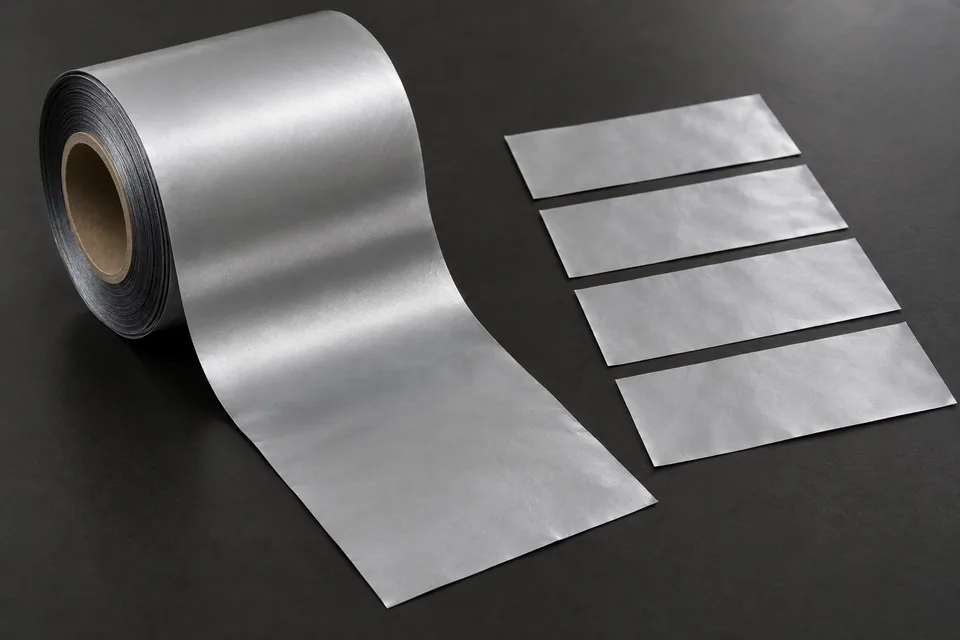
Where This Cutting Application Appears
Define the transverse blank
First confirm that the supplied web is a desiccant-containing lid rather than a standard lid paired with a desiccant forming web. Bilcare documents foil/desiccant-PE lidding, whereas Amcor describes a separate active blister-forming structure. The buyer drawing must identify the lid stack, active-layer face, cut length, cavity or print register and seal land before a transverse blank is specified.
Record web support and timing
Thin foil and polymer layers may feed differently through a start-stop cross cutter. Record web support, tension and trigger timing against the printed registration mark. Retain first and later blanks from the same roll to reveal creep, curl or a splice-related shift instead of judging one isolated cut.
Inspect the full new edge
Inspect foil or coating cracks, burr-like metal projections, adhesive strings and particulate at both ends of each blank. Check the new edge under the buyer’s specified inspection method and record whether any exposed active layer is permitted; a visually square blank alone says nothing about moisture-barrier performance.
Separate cutting from later assembly
Protect accepted blanks from the storage and handling conditions specified for the packaging construction and keep trim segregated by material. The drug-packaging owner must qualify seal integrity, moisture protection and product compatibility at package level; a knife trial supports only cut geometry and observable edge condition.
Material-specific acceptance
Inspect aluminum or polymer layer burrs, cracked coating, adhesive stringing and particles at the new transverse edge. Record whether the active desiccant is actually in the lid, the forming web or another component. Moisture protection, seal integrity and pharmaceutical suitability require package-level validation.
Define the Required Cut Result
- Register desiccant-lid blanks to blister repeat and seal land.
- Avoid foil projections, cracked coatings or exposed active-layer debris.
- Keep the active-layer face identified through takeoff and storage.
- Document only cut geometry and visible edge condition, leaving barrier claims to package qualification.
Problems to Diagnose Before Changing the Knife
Active layer is exposed at the lid end
- Confirm the actual lidding stack and active-face orientation.
- Inspect edge damage under the buyer method.
Foil cracks or projects at the transverse edge
- Check blade support, engagement and foil condition.
- Compare both ends of blanks from early and late trial positions.
Print or cavity registration drifts
- Check trigger against repeat marks and web tension.
- Measure seal land at the first and last blank.
Coating or adhesive strings transfer to blanks
- Inspect knife deposits and takeoff surfaces.
- Segregate suspect blanks from qualified package material.
Knife Forms That May Be Considered
| Possible knife form | When it may be considered | What must be confirmed |
|---|---|---|
| Straight cross-cut shear set | For transverse cutting on a compatible shear station. | Confirm blade length, holder, support and engagement from machine drawings. |
| Rotary cross-cut knife | For a compatible synchronized rotary cross-cutter. | Confirm cylinder geometry, timing and registration at production speed. |
Information to Send for Technical Review
You do not need to know the exact blade name. Send the available workpiece, machine, current-knife and cut-result information so the application can be reviewed against a drawing or sample.
- Desiccant lid supplier grade and full foil/polymer stack
- Location and orientation of active and seal layers
- Blister repeat, print datum and seal-land drawing
- Allowed foil projections, coating cracks and active-layer particles
- Specified handling and storage condition for cut blanks
- Cross-cutter support, timing and blade drawings
- Buyer edge samples and package-qualification owner
Questions About This Cutting Application
Does desiccant always sit in the blister base?
No. Supplier examples include desiccant-containing lidding as well as active forming webs. Confirm the actual buyer stack.
Which side of a desiccant lid must be marked?
Identify the active/seal-layer face and keep that orientation with each registered blank.
What defects should be checked at a cross cut?
Check foil projections, cracked coatings, adhesive strings and any exposed active-layer particles on both ends.
Can one foil thickness set the blade?
No. The layer stack, support, registration and accepted seal-land condition determine the trial.
Does cut-edge quality establish moisture protection?
No. The pharmaceutical packager qualifies barrier performance, sealing and product compatibility on the finished package.
Public references and scope
These public sources provide material, cutting-method or safety context for this guide. Supplier pages describe their own materials or equipment; they do not establish a MEIRENTE blade specification or performance claim. Confirm the actual grade, machine setup and required cut with a drawing or sample.
Related product and service information
- Pharmaceutical Desiccant Lidding Film Rotary Die-Cutting Blades - pharmaceutical desiccant lidding film · rotary die cutting
- Suppository Strip-Pack Foil Cross Cutting Blades - suppository strip-pack foil · cross cutting
- Effervescent Tablet Sachet Laminate Razor Slitting Blades - effervescent tablet sachet laminate · razor slitting
Request a Custom Cutting-Knife Review
Send the workpiece details, machine or holder information, current knife photos or sample, required quantity and examples of the present cut problem. Final dimensions, material, edge geometry and tolerances are confirmed from the approved requirements.