
Blade Application Guides / Application Guide / Electronics recycling
Mixed Copper Cable Scrap Secondary Shredder Knives
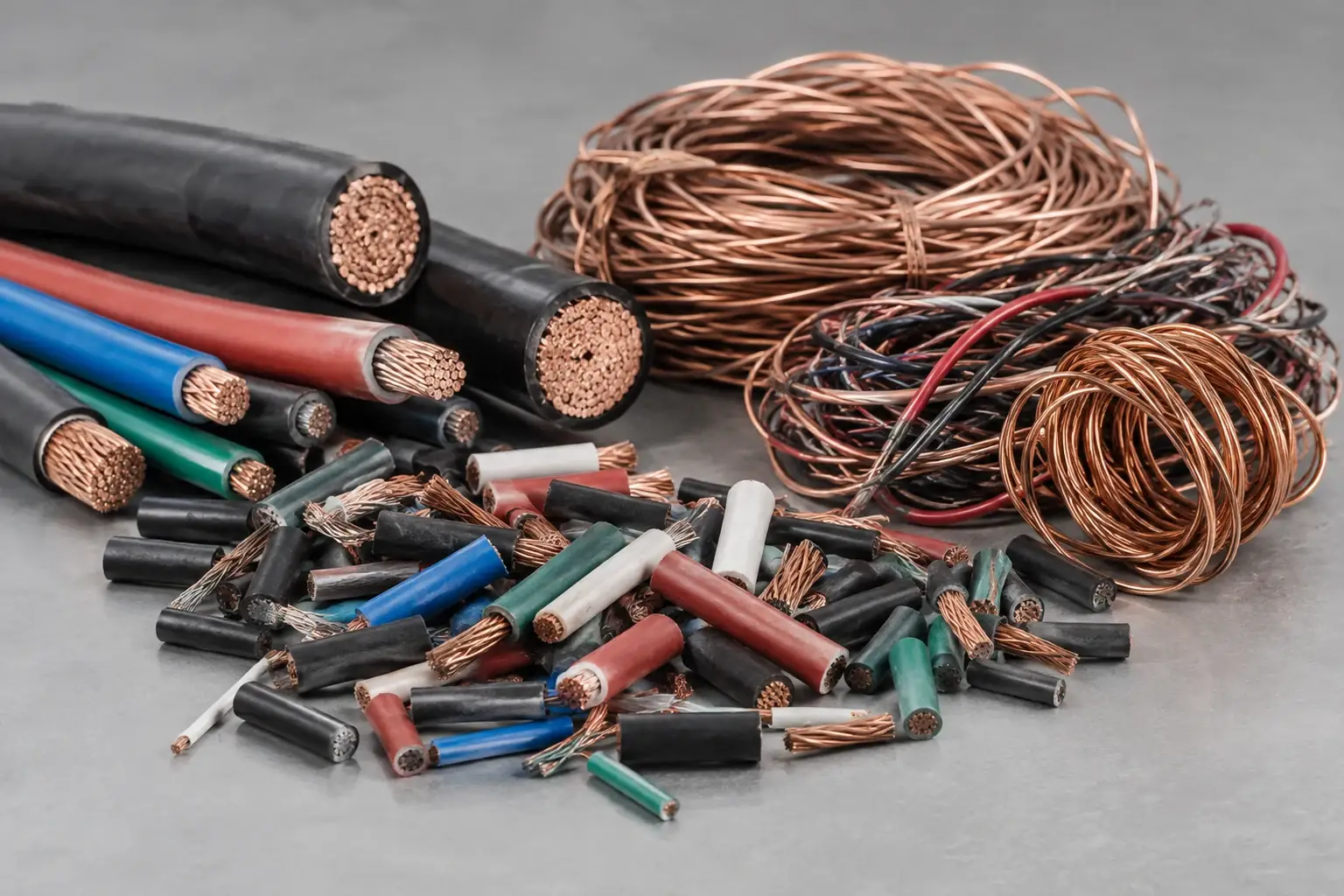
Mixed cable feed may combine different conductor sizes, strand constructions, insulation systems, connectors and foreign attachments. The knife review should therefore start from a sorted feed description and the separation result that must be achieved, rather than assuming one cable diameter represents the lot. In secondary shredding, the immediate objective is to narrow the size range of already opened material before granulation or separation. Knife selection must be verified from the machine interface, labeled samples and an agreed downstream acceptance method.
Updated
Where This Cutting Application Appears
Electronics recycling production
Mixed Copper Cable Scrap is processed by secondary shredding to support controlled size reduction, downstream sorting and recovery of reusable fractions. The finished result must remain compatible with downstream handling, inspection and assembly.
Cut-quality control
Production teams compare accepted and rejected samples for fragment-size distribution, liberation, dust level, temperature rise and contamination between fractions, then relate the result to knife overlap, screen opening, rotor speed, feed rate and counterknife gap.
Stable material and waste handling
Metered feeding, anti-wrap geometry, dust extraction and stable discharge help the product and waste leave the cut zone consistently without creating a second defect after separation.
Secondary Shredding process boundary
Secondary shredding receives already opened material and narrows its size distribution; it differs from coarse primary opening and final granulation.
Production setup checkpoint
Record the starting setup for knife overlap, screen opening, rotor speed, feed rate and counterknife gap, then change one controlled variable at a time and retain samples from each trial condition.
Cut-quality acceptance checkpoint
Approve the result against measured fragment-size distribution, liberation, dust level, temperature rise and contamination between fractions after the sample has reached the same handling or conditioning state used by the next production step.
Define the Required Cut Result
- Achieve repeatable secondary fragments with controlled fines and improved liberation for mixed copper cable scrap
- Prevent shaft wrapping, bridging, heat buildup, excessive fines or incomplete material liberation
- Maintain the required geometry for controlled size reduction, downstream sorting and recovery of reusable fractions
- Deliver a cut condition accepted by the next electronics recycling operation
Problems to Diagnose Before Changing the Knife
The processed material shows shaft wrapping, bridging, heat buildup, excessive fines or incomplete material liberation
- Compare blade condition and clearance.
- Check knife overlap, screen opening, rotor speed, feed rate and counterknife gap.
- Separate material-lot effects from machine effects.
Finished dimensions drift during a production run
- Check feed registration and tension or hold-down.
- Measure runout, temperature and support condition.
- Record when dimensions are measured after cutting.
The workpiece shifts, curls or loses functional surface quality
- Review metered feeding, anti-wrap geometry, dust extraction and stable discharge.
- Confirm material direction and contact-face cleanliness.
- Identify the first point where deformation appears.
Product and waste do not separate consistently
- Check cut completeness and waste width.
- Review exit angle, static and extraction.
- Inspect downstream transfer and collection tension.
Mixed copper cable scrap secondary shredding: diagnostic order
Preserve feed, machine and output evidence so a material change is not mistaken for a knife problem.
Long conductor strands, insulation tubes or connector pieces remain after size reduction
Sort rejected pieces by cable construction and source. Compare conductor pull-out, insulation tearing and hard attachments with the knife path, clearance and feed presentation to identify which sub-stream drives the defect.
The secondary fraction contains both long strips and excessive small pieces
Compare the mixed fraction with knife overlap, counterknife gap, screen condition, rotor speed and feed surges. Check whether variation entered from primary shredding before changing the secondary knife.
Copper remains attached to insulation or reports to the wrong separation fraction
Compare a labeled granulate sample with separator settings and the required liberation size. Determine whether rework originates from incomplete cutting, incoming cable mix or the downstream separator before changing the knife.
Acceptance Criteria for a Controlled Trial
Agree how the trial will be judged before changing the knife or machine setting.
- Use the agreed representative cable mix and record the share of connectors, armoring and other hard attachments in the sample.
- Measure unliberated conductor/insulation pieces and misplaced material in the agreed downstream sample, not granule size alone.
- Sieve or otherwise classify a fixed-mass sample into agreed size bands and record oversize, target and fines fractions.
- Inspect and photograph the same labeled knife positions before and after the controlled interval; record seating, edge marks and unexplained local damage.
Knife Forms That May Be Considered
| Possible knife form | When it may be considered | What must be confirmed |
|---|---|---|
| Multi-edge secondary shredder knife | Considered when secondary shredding requires repeatable secondary fragments with controlled fines and improved liberation under stable support and guidance. Review a multi-edge rotor knife or rotor/bed-knife set against the actual overlap adjustment, screen, mounting faces and desired handoff size; the upstream shredder knife is not an interchangeable substitute. | Confirm only after reviewing a real mixed copper cable scrap sample, the equipment interface, mounting drawing, operating direction and an accepted cut reference. |
| Bed knife and rotor knife set | Considered when the equipment interface and material response require an alternative geometry or cutting motion. | Confirm only after reviewing a real mixed copper cable scrap sample, the equipment interface, mounting drawing, operating direction and an accepted cut reference. |
Information to Send for Technical Review
You do not need to know the exact blade name. Send the available workpiece, machine, current-knife and cut-result information so the application can be reviewed against a drawing or sample.
- Cable mix by type, approximate conductor range, insulation construction and allowable lot variation
- Presence and proportion of plugs, terminals, steel armor, shielding, jelly-filled cable or other hard attachments
- Pretreatment and sorting already completed before this size-reduction stage
- Required downstream copper, nonferrous and insulation fractions with the customer’s inspection method
- Incoming size distribution from primary shredding and the required handoff range for the next stage
- Secondary shredder make or model, rotor layout, knife overlap and counterknife adjustment method
- Current rotor knife, bed knife, spacer and screen drawings with used-part photographs
- Feed rate, rotor speed, recirculation route and locations where strips wrap or bridge
Related Recycling Knife and Service Pages
Questions About This Cutting Application
Why must mixed copper cable scrap be reviewed as a complete material construction?
Its layers, surface condition and mechanical response can react differently to pressure, friction, heat and bending, so nominal thickness alone does not predict secondary shredding performance.
Can the blade be selected from the material name alone?
No. Confirm knife overlap, screen opening, rotor speed, feed rate and counterknife gap, the holder interface, production speed, support and accepted samples before fixing blade material or edge geometry.
What commonly causes defects during secondary shredding?
Material variation, unstable support, alignment error, contamination, inappropriate clearance and blade wear can interact to create shaft wrapping, bridging, heat buildup, excessive fines or incomplete material liberation.
When should the finished result be measured?
Record both immediate and conditioned results when recovery, residual stress, temperature, moisture or adhesive flow can change the workpiece after cutting.
What should be recorded during a production trial?
Record the mixed copper cable scrap lot, setup, speed, support, blade condition, dimensions, edge observations, waste behavior and downstream acceptance.
Public references and scope
These public sources provide material, cutting-method or safety context for this guide. Supplier pages describe their own materials or equipment; they do not establish a MEIRENTE blade specification or performance claim. Confirm the actual grade, machine setup and required cut with a drawing or sample.
Related product and service information
- Photovoltaic Backsheet Scrap Fine-Crusher Knives - photovoltaic backsheet scrap · fine crushing
- Lithium Battery Separator Scrap Secondary Shredder Knives - lithium battery separator scrap · secondary shredding
- Flexible Printed Circuit Scrap Secondary Shredder Knives - flexible printed circuit scrap · secondary shredding
Request a Custom Cutting-Knife Review
Send the workpiece details, machine or holder information, current knife photos or sample, required quantity and examples of the present cut problem. Final dimensions, material, edge geometry and tolerances are confirmed from the approved requirements.