
Blade Application Guides / Application Guide / Flexible packaging
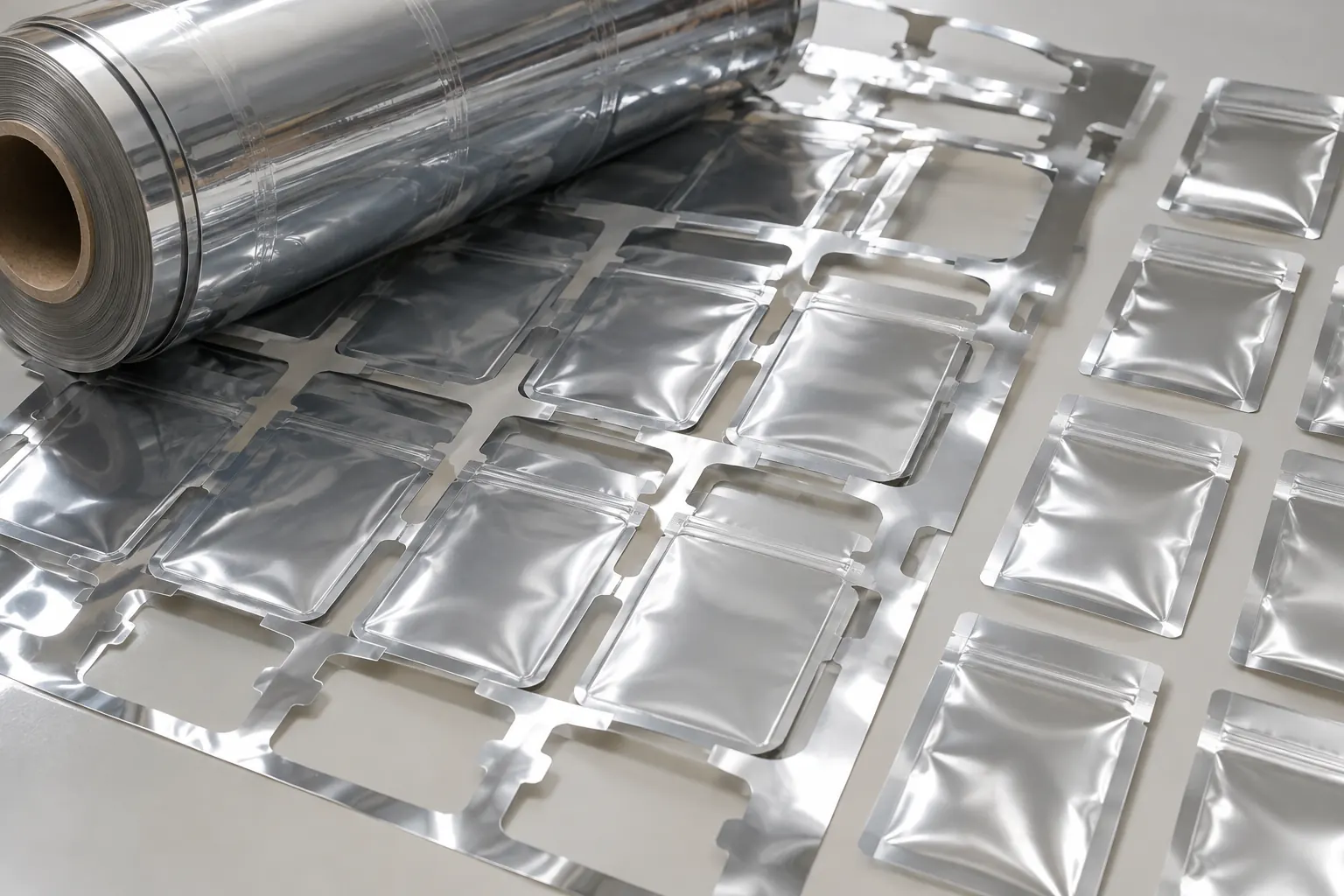
Metallized PET Packaging Film Rotary Die Cutting
Metallized PET combines a dimensionally stable polyester carrier with an extremely thin deposited metal layer that can show scratches, flaking or whitening around a converted feature. A useful rotary die-cutting review separates film fracture from metallized-layer damage and defines registration, release, waste removal and downstream barrier requirements before any tooling detail is proposed.
Updated
Where This Cutting Application Appears
Registered packaging windows
Cut repeated windows or openings while holding their position to printed and metallized graphics.
Decorative labels and inserts
Convert reflective film into shaped pieces without visible scuffing or ragged perimeter edges.
Barrier packaging features
Create vents, access features or discrete parts where cut cleanliness and surrounding barrier integrity matter.
Rotary Die Cutting process boundary
Rotary die cutting repeats registered profiles with a rotating tool across a moving web; it differs from straight slitting, cross cutting and simple edge trimming.
Rotary Die Cutting setup checkpoint
Confirm repeat pitch, registration marks, anvil condition, web tension, cutting depth and the waste path for every profile and internal feature.
Rotary Die Cutting acceptance checkpoint
Inspect registration, profile dimensions, corner quality, complete separation or controlled depth, liner condition and continuous waste removal.
Define the Required Cut Result
- Hold feature registration to the printed or optical datum.
- Limit burrs, whitening and metallized-layer flaking at the cut.
- Avoid surface scratching, blocking and static-related debris.
- Release parts and remove the waste matrix without stretching the carrier.
Problems to Diagnose Before Changing the Knife
Metallic layer flakes beside the profile
- Identify coating side and deposition or topcoat construction.
- Compare flaking direction with web and cutting direction.
- Inspect tension, support and local feature radii.
Feature registration drifts
- Record print-mark control and web-tension range.
- Check repeat length, web temperature and roll build.
- Separate steady offset from cyclic pitch error.
Film wrinkles or lifts during waste removal
- Review matrix geometry and stripping direction.
- Check narrow bridges, tension differential and static.
- Retain samples showing the first point of distortion.
Reflective face becomes scratched or hazy
- Map contact surfaces and winding orientation.
- Check loose particles and coating hardness.
- Compare damage before and after conversion.
Knife Forms That May Be Considered
| Possible knife form | When it may be considered | What must be confirmed |
|---|---|---|
| Rotary profile die arrangement | For repeated registered shapes converted from a supported web. | Confirm web construction, repeat, press interface, support, release and approved drawing before defining geometry. |
| Rotary perforating arrangement | For tear-open or vent patterns that intentionally retain bridges. | Confirm perforation function, bridge pattern, opening force, repeat and downstream test method. |
Information to Send for Technical Review
You do not need to know the exact blade name. Send the available workpiece, machine, current-knife and cut-result information so the application can be reviewed against a drawing or sample.
- PET thickness and metallized, lacquered and printable layer construction
- Metallized face orientation through the converting station
- Web width, repeat length, feature drawing and dimensional tolerances
- Print-mark location and registration-control method
- Line speed, web tension, temperature and static-control conditions
- Backing, release surface and waste-matrix stripping direction
- Accepted limits for flaking, haze, burrs and loose particles
- Representative uncut, accepted and rejected rolls plus production quantity
Questions About This Cutting Application
Why can the metallic appearance whiten around a cut?
Local fracture, coating separation or fine debris can scatter light. Compare magnified samples from both faces and identify the coating stack before assigning one cause.
Does the metallized side need special handling?
Yes. Its orientation and contact path should be documented because rubbing, particles and winding pressure can damage the appearance independently of cutting.
Can tooling be selected from PET thickness alone?
No. Coating stack, feature geometry, support, registration, stripping and press interface are also required.
What should a rotary trial measure?
Record feature position, pitch, edge debris, coating damage, part release, matrix behavior and downstream sealing or barrier acceptance.
Is a drawing enough for quotation?
A drawing defines the profile, but representative material, web direction, repeat, machine interface and accepted defect samples are still needed.
Related product and service information
- Metallized PET Packaging Film Cross Cutting Blades: Coating and Edge Protection - metallized PET packaging film · transverse cross cutting
- EVOH Barrier Film Laminate Rotary Die Cutting Blades: Layer and Barrier Integrity - EVOH barrier film laminate · rotary die cutting
- Nylon Retort Pouch Film Rotary Die Cutting Blades: Tough-Layer Edge Control - nylon retort pouch film · rotary die cutting
Request a Custom Cutting-Knife Review
Send the workpiece details, machine or holder information, current knife photos or sample, required quantity and examples of the present cut problem. Final dimensions, material, edge geometry and tolerances are confirmed from the approved requirements.