
Blade Application Guides / Application Guide / Absorbent hygiene product manufacturing
Hygiene Acquisition Distribution Layer Cutting Blades
Hygiene acquisition and distribution layer cutting blades form the fluid-management layer used beneath the topsheet in absorbent products. Unlike topsheet, backsheet or absorbent-core cutting, this topic focuses on ADL rollstock, its orientation and loft, registered placement, shaped or length-cut formats, edge fibers and transfer into the product assembly without assuming a fixed material construction.
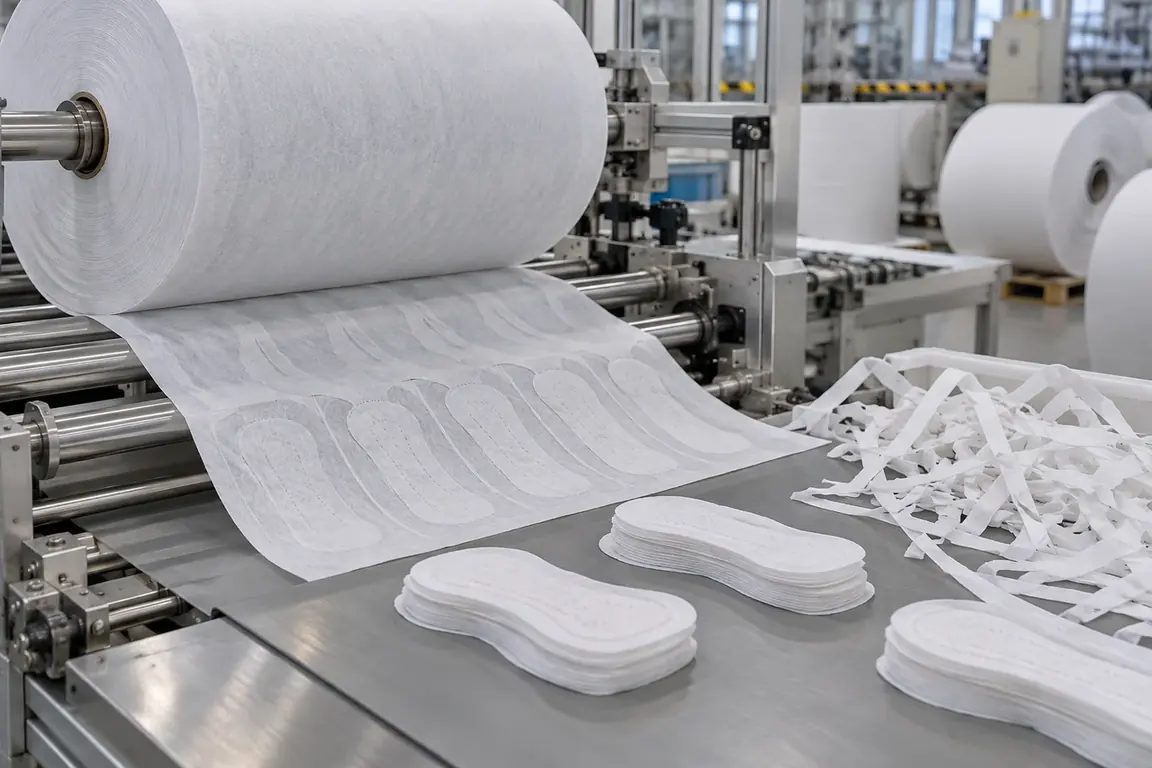
Where This Cutting Application Appears
Diaper ADL profile preparation
Acquisition-layer rollstock is shaped and positioned for integration beneath the topsheet in diaper assembly.
Feminine-care distribution-layer cutting
Defined pieces are cross-cut or profiled to match the approved layered construction of the hygiene product.
Adult-incontinence ADL conversion
Wider or longer fluid-management components are prepared for registered transfer into incontinence products.
Common Ways to Describe This Cutting Problem
- hygiene acquisition distribution layer cutting blades
- diaper ADL nonwoven profile cutting knife
- sanitary pad acquisition layer cutter blade
- incontinence product distribution layer cutoff knife
- airlaid ADL shape cutting blades
- hygiene fluid management layer die cutter
- ADL nonwoven registered cross cutting blade
- absorbent product acquisition layer trimming knife
Define the Required Cut Result
- Complete ADL profiles without loose fibers, pulled webs or connected waste.
- Stable component geometry and placement relative to the production registration reference.
- Preserved loft and surface condition without avoidable compression or stretching.
- Reliable high-cycle separation and transfer without folding or contaminating the component.
Problems to Diagnose Before Changing the Knife
Fibers remain connected at the cutoff edge
- Confirm the supplied ADL formation and any bonded or laminated layers.
- Compare straight edges, curves and transition zones on the same component.
- Review support and separation where connected fibers first become visible.
Lofty material compresses or changes profile
- Record the support and hold-down condition used during cutting.
- Inspect geometry immediately after separation and after normal recovery.
- Distinguish temporary compression from permanent fiber or layer damage.
ADL component shifts during registered transfer
- Confirm the datum used to coordinate cutting and downstream placement.
- Observe the component from separation through pickup and release.
- Record whether shift is linked to feed direction, lane position or material joints.
Trim waste wraps or fails to clear
- Map the point where waste changes direction or remains attached.
- Review waste-strip continuity around narrow features and curved profiles.
- Confirm the intended waste path and collection method on the production machine.
Knife Forms That May Be Considered
| Possible knife form | When it may be considered | What must be confirmed |
|---|---|---|
| Registered rotary profile-cutting die | For repeated ADL components cut and transferred continuously on an absorbent-hygiene production line. | Controlled profile, repeat layout, registration datum, nonwoven support, waste path and transfer interface. |
| Flying cross-cut knife arrangement | For rectangular ADL pieces separated to length from a continuously moving nonwoven web. | Finished length reference, line interface, web orientation, support, synchronization, collection and accepted edge condition. |
| Flatbed nonwoven profile die | For sheet-fed trials or shaped ADL components produced outside the main continuous assembly process. | Controlled geometry, supplied material condition, compression and support, part removal, fiber control and approved sample. |
Information to Send for Technical Review
You do not need to know the exact blade name. Send the available workpiece, machine, current-knife and cut-result information so the application can be reviewed against a drawing or sample.
- ADL material identification, formation method and representative roll samples.
- Layer construction, orientation, functional face and supplied loft condition.
- Controlled component profile or length drawing with revision and datum.
- Parent-roll format, lane plan, feed direction and registration reference.
- Machine station, tooling interface, support, waste path and transfer method.
- Accepted and rejected samples showing fibers, compression, shift and incomplete cuts.
- Inspection, cleanliness, contact, collection and packaging requirements.
- Trial quantity, product assembly sequence and current tooling information if available.
Questions About This Cutting Application
How is ADL cutting different from hygiene topsheet cutting?
The ADL is a distinct fluid-management component with its own structure, loft, profile and placement requirements.
Should ADL loft be considered during blade review?
Yes. Record the supplied condition and how support or compression changes the visible edge and finished geometry.
Why is registration important for an internal layer?
The cut ADL must be positioned according to the customer's controlled product construction and assembly reference.
What defect samples are most useful?
Provide parts showing connected fibers, compressed areas, profile movement, folded transfer and waste-clearing problems.
Can the ADL material be inferred from the finished product name?
No. Request the actual rollstock description and sample because acquisition layers can use different supplied constructions.
Request a Custom Cutting-Knife Review
Send the workpiece details, machine or holder information, current knife photos or sample, required quantity and examples of the present cut problem. Final dimensions, material, edge geometry and tolerances are confirmed from the approved requirements.