
Blade Application Guides / Application Guide / Polymer production and compounding
Hot-Cut Pelletizer Knife-to-Die Contact and Wear Review
The cutter hub, blades and die face form one controlled interface. Uneven loading can create local wear, heat and unstable pellets, while too little effective engagement can leave incomplete separation. Use the equipment procedure and wear evidence rather than a universal contact-force value.
Updated
Where This Cutting Application Appears
Contact-pattern inspection
Compare wear and polish marks across every blade and relate them to die sectors and hub positions.
Blade-advance review
Record the machine-specific advance method, adjustment history and response after stabilization.
Die-face condition check
Inspect grooves, local damage and flatness evidence because a new blade follows the surface it meets.
Pellet-correlation trial
Link changes in pellet size, smear or doubles to the same time and cutter-position observations.
Define the Required Cut Result
- Distribute the intended cutting relationship consistently around the hub
- Avoid local overload that accelerates blade or die-face damage
- Maintain pellet separation and size uniformity through the run
- Keep adjustment evidence traceable to the installed blade set
Problems to Diagnose Before Changing the Knife
One blade shows heavier wear
Check blade seating, hub slot, fastener, blade projection and corresponding die sector.
All blades wear more on one side
Review hub alignment, shaft condition, die-face geometry and cutter positioning.
Pellets change after the cutter warms
Record blade advance, die temperature, shaft movement and water or air conditions after stabilization.
New blades mark the die immediately
Stop and verify profile, installation direction, hub seating, advance procedure and die-face condition.
Read the wear pattern as an interface map
The distribution of marks across blades and die sectors is more useful than average wear.
One blade only
Inspect that blade, its hub slot, fastener and projection against the other positions.
One die sector
Inspect the local die face, heating and hub path at that angular position.
All blades change after stabilization
Review the blade-advance method, thermal condition and machine control history.
Acceptance Criteria for a Controlled Trial
Agree how the trial will be judged before changing the knife or machine setting.
- Confirm every blade seats and projects according to the approved assembly method.
- Record wear marks by blade position after a defined interval.
- Compare pellet-size distribution and incomplete cuts at the same checkpoints.
- Release the set only when adjustment remains stable after operating temperature is reached.
Knife Forms That May Be Considered
| Possible knife form | When it may be considered | What must be confirmed |
|---|---|---|
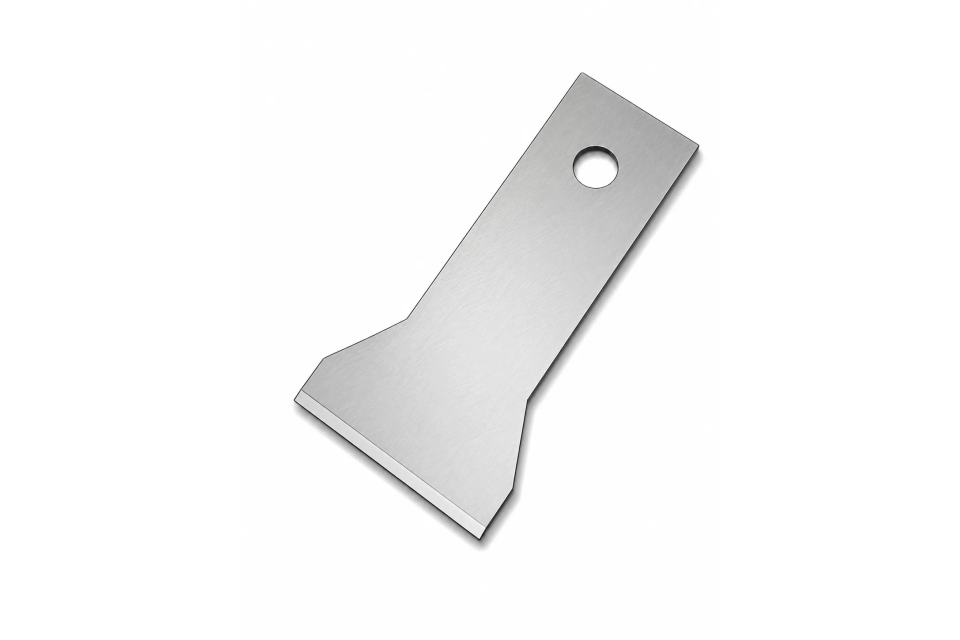
| Straight cutter-hub blade | Use where the approved hub and die arrangement specifies a straight blade. | Confirm projection, thickness, working face, mounting pattern, edge preparation and direction. |
| Angled cutter-hub blade | Use only where the hub slot and die design specify an angled presentation. | Confirm angle, handedness, hub seat, fastener and the complete cutter assembly drawing. |
Information to Send for Technical Review
You do not need to know the exact blade name. Send the available workpiece, machine, current-knife and cut-result information so the application can be reviewed against a drawing or sample.
- Pelletizer model, die plate and cutter-hub drawings
- Blade count, position labels and installed orientation
- Machine-specific blade-advance procedure and history
- Wear photographs from every blade position
- Die-face photographs and maintenance record
- Temperature, pressure and operating-condition trend
- Pellet samples tied to time and cutter position
- Replacement drawing, material requirement, quantity and inspection plan
Related Pelletizer Knife Pages
Questions About This Cutting Application
What knife pressure should be used against the die?
Use the pelletizer manufacturer or approved operating procedure. There is no safe universal value because cutter designs and materials differ.
Can new knives run on a grooved die face?
The die-face condition must be evaluated. Grooves or irregularities can change contact and wear, so the repair decision should follow the equipment procedure.
Why label each blade position?
Position labels reveal whether a wear pattern follows one blade, one hub slot or one die sector.
Which blade dimensions are critical for the hub?
Thickness, projection geometry, mounting features, working-face orientation and any angle or locating surface should match the approved assembly drawing.
Public references and scope
These public sources provide material, cutting-method or safety context for this guide. Supplier pages describe their own materials or equipment; they do not establish a MEIRENTE blade specification or performance claim. Confirm the actual grade, machine setup and required cut with a drawing or sample.
Related product and service information
- Underwater Pelletizer Blade Pressure, Positioning and Alignment Review - polymer pellets formed at an underwater die face · underwater pelletizer blade positioning
- Strand Pelletizer Knife Selection: Rotor, Bed Knife and Feed Conditions - cooled polymer strands entering a strand pelletizer · strand pelletizing
- Strand Pelletizer Long Tails: Diagnose the Cut Before Replacing Knives - polymer pellets with long tails or incomplete separation · strand pellet cutting defect diagnosis
Request a Custom Cutting-Knife Review
Send the workpiece details, machine or holder information, current knife photos or sample, required quantity and examples of the present cut problem. Final dimensions, material, edge geometry and tolerances are confirmed from the approved requirements.