
Tecnologia de lâminas / Guia de aplicações / Filmes técnicos
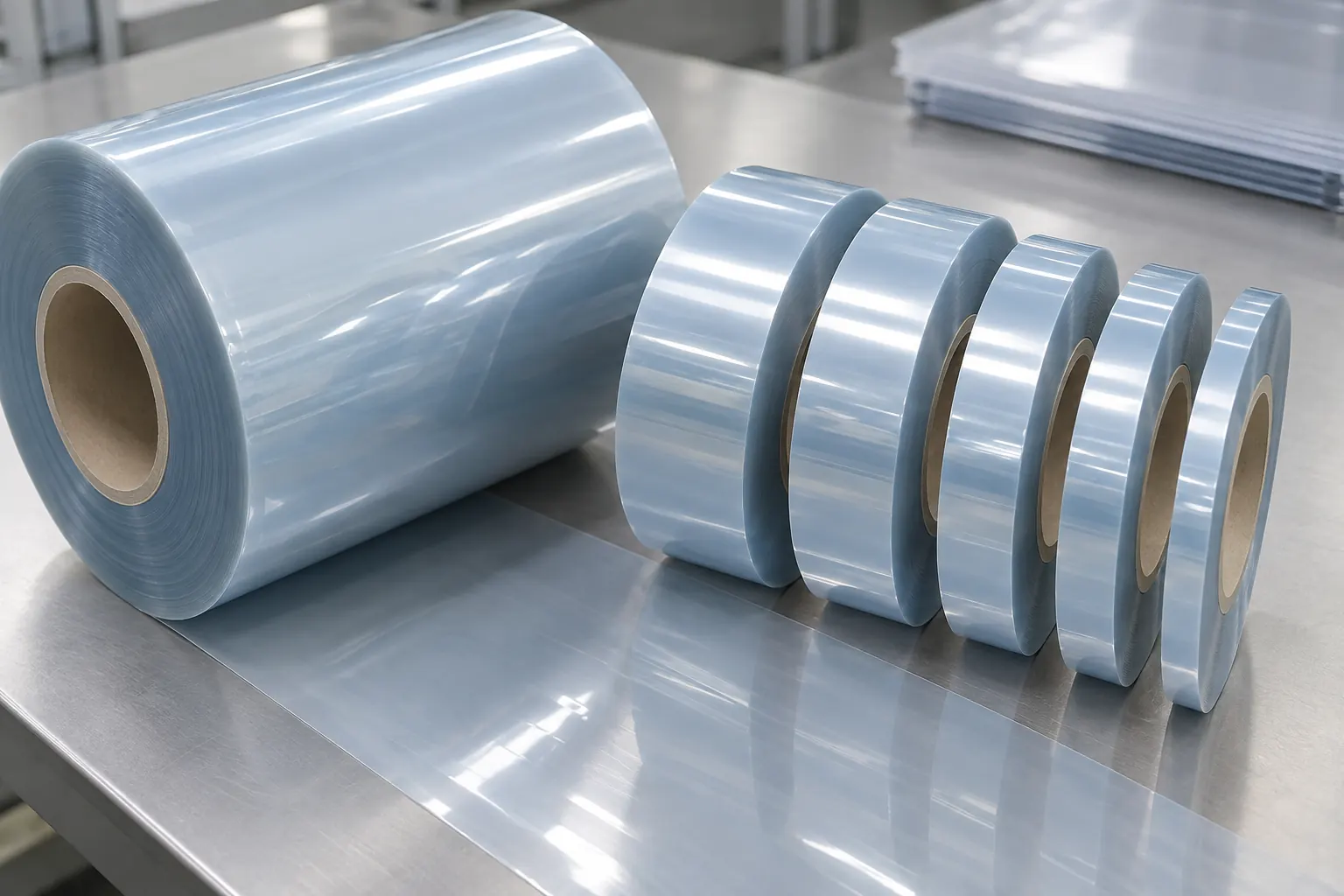
Corte Longitudinal de Filme Protetor Antiestático
O filme protetor antiestático é usado para proteger componentes eletrônicos, displays, metais ou superfícies sensíveis, reduzindo o acúmulo de carga. Ele pode combinar um substrato de PE ou PET, tratamento antiestático, adesivo de baixa aderência e liner de liberação. A análise do corte longitudinal de rolos deve proteger tanto o desempenho elétrico da superfície quanto as bordas adesivas sensíveis à contaminação.
Atualizado
Onde esta aplicação de corte é utilizada
Proteção de superfícies eletrônicas
Cortar longitudinalmente filme limpo e de baixa carga nas larguras exigidas para displays, painéis e componentes de dispositivos.
Mascaramento de chapas metálicas e plásticas
Preparar bobinas protetoras que sejam aplicadas em linha reta e removidas sem bordas contaminadas.
Proteção de processos em sala limpa
Converter filme antiestático controlando partículas e atração eletrostática.
Defina o resultado de corte necessário
- Preservar o desempenho especificado de resistência superficial ou dissipação de carga.
- Manter bordas adesivas limpas, sem extravasamento nem partículas.
- Manter a largura e a retidão da bobina, bem como o alinhamento das camadas.
- Evitar a atração de resíduos por eletricidade estática e o rebobinamento instável.
Problemas a diagnosticar antes de trocar a lâmina
O filme contínuo cortado atrai partículas
- Medir a carga e o aterramento ao longo da linha.
- Verificar a umidade e o lado tratado.
- Comparar as bobinas de entrada e acabadas.
O adesivo forma uma borda pegajosa na bobina
- Identificar o adesivo e o peso do revestimento.
- Registrar a temperatura e a pressão de bobinamento.
- Inspecionar o alinhamento entre o substrato e o liner.
O desempenho antiestático difere próximo à borda
- Mapear a resistência superficial ao longo da largura do filme contínuo.
- Verificar a cobertura do tratamento e o contato durante o manuseio.
- Definir o condicionamento para a medição.
A bobina protetora apresenta telescopagem ou rugas
- Analisar a tensão e a dureza da bobina.
- Verificar o perfil de espessura e o alinhamento do tubete.
- Distinguir os defeitos de bobinamento do ressalto na borda cortada.
Tipos de lâmina que podem ser considerados
| Possível tipo de lâmina | Quando pode ser considerado | O que deve ser confirmado |
|---|---|---|
| Sistema de corte longitudinal por cisalhamento circular | Para estruturas de filme protetor antiestático, adesivo ou com liner devidamente apoiadas. | Confirmar a estrutura de camadas, a sobreposição, a carga lateral, o porta-lâmina, a rotação, o aterramento e os requisitos de limpeza. |
| Sistema de corte longitudinal com lâmina de barbear | Para filme fino compatível e sem liner, em equipamento limpo projetado especificamente para corte longitudinal com lâmina de barbear. | Confirmar o suporte, a face tratada, o porta-lâmina, a exposição, a velocidade, o controle de eletricidade estática e a extração. |
Informações necessárias para a análise técnica
Você não precisa saber o nome exato da lâmina. Envie as informações disponíveis sobre a peça, a máquina, a lâmina atual e o resultado de corte necessário para que a aplicação seja analisada com base em um desenho ou uma amostra.
- Resina e espessura do substrato, tratamento antiestático e faixa-alvo da propriedade
- Adesivo, liner de liberação e compatibilidade com a superfície protegida
- Orientação das faces tratada e adesiva ao longo da linha
- Dimensões da bobina-mãe, tubete, larguras-alvo e tolerância
- Velocidade, tensão, umidade, aterramento e condições de ionização
- Forma de corte longitudinal existente, porta-faca e amostra usada
- Limites de partículas, adesivo, riscos, curvatura e alinhamento das bordas
- Protocolo de limpeza, embalagem, vida útil, uso final e volume
Perguntas sobre esta aplicação de corte
O corte longitudinal de rolos pode alterar o desempenho antiestático?
O manuseio, a contaminação, o atrito ou um tratamento incompleto próximo à borda podem alterar o comportamento superficial medido.
Por que especificar o condicionamento para os testes de resistência?
A umidade, a temperatura e o método de teste podem afetar significativamente os valores antiestáticos informados.
O controle comum de poeira pode substituir o controle de eletricidade estática?
Não. A limpeza e a extração ajudam, mas também é necessário analisar o aterramento, a ionização e o comportamento de carga do material.
O que causa uma borda acabada pegajosa?
O extravasamento do adesivo, o desalinhamento do liner, o calor, a pressão de bobinamento e a deformação da borda são fatores comuns.
Quais amostras devem permanecer lacradas?
As amostras representativas do material de entrada e do produto acabado devem permanecer protegidas contra contaminação até os testes elétricos e de limpeza.
Informações relacionadas sobre produtos e serviços
- Refilagem de Bordas de Filme de Transferência Holográfico - filme holográfico · refilagem de bordas
- Corte Longitudinal de Filme de Embalagem Antiembaçante - filme antiembaçante · roll slitting
- Corte Longitudinal de Filme Imprimível a Laser - filme laser · corte longitudinal
Solicite uma análise de faca de corte sob medida
Envie os dados da peça, as informações da máquina ou do porta-faca, fotos ou uma amostra da lâmina atual, a quantidade necessária e exemplos do problema de corte. As dimensões finais, o material, a geometria do fio e as tolerâncias são confirmados conforme os requisitos aprovados.