
Tecnologia de lâminas / Guia de aplicações / Filmes técnicos
Corte Transversal de Filme de Embalagem Antiembaçante
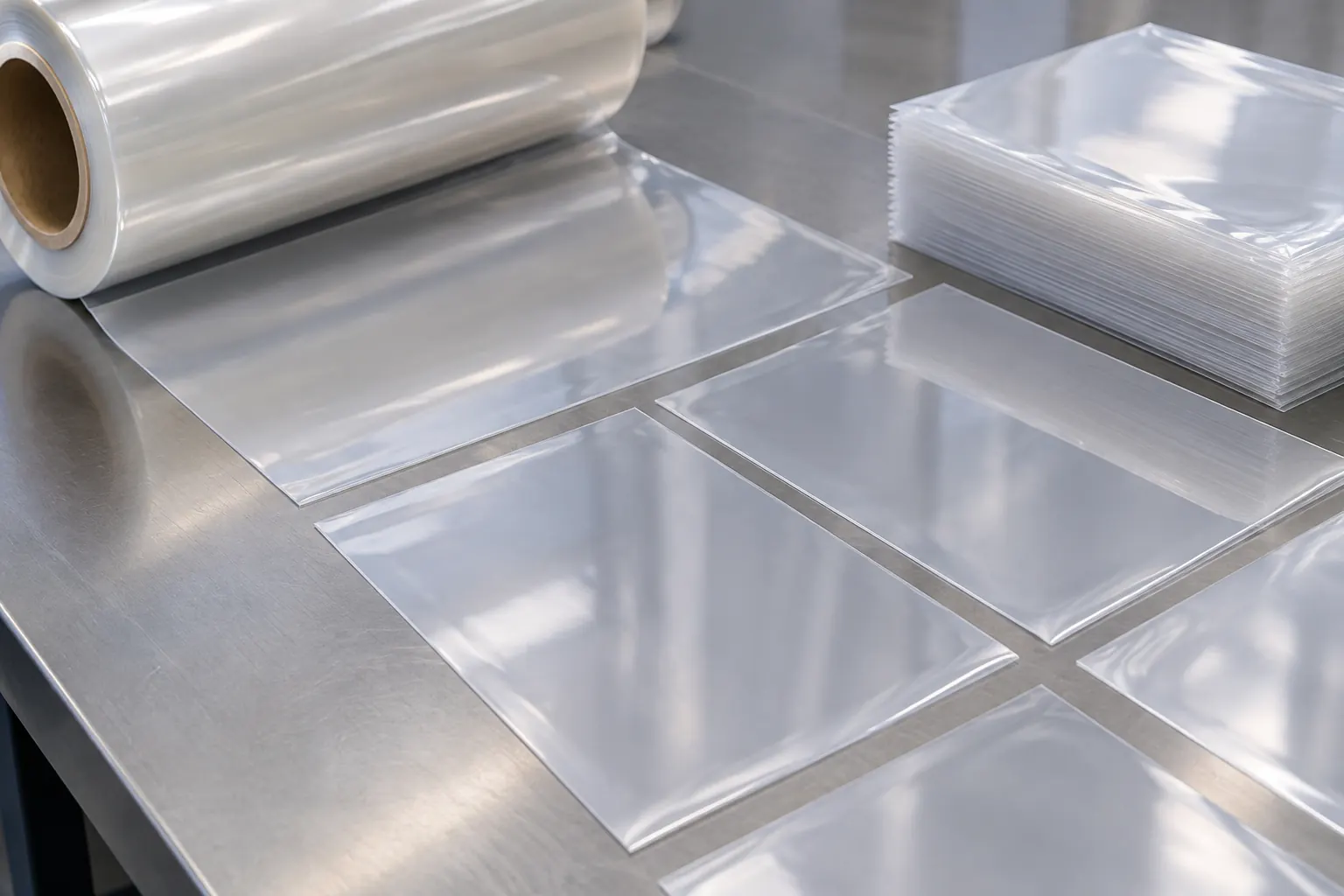
Peças de filme antiembaçante obtidas por corte transversal são usadas como tampas, amostras ou componentes de embalagens pré-formadas. O filme fino tratado pode aderir, curvar ou enrugar quando liberado da tensão da banda, e o contato durante o empilhamento pode marcar a superfície ativa. A análise deve incluir a coleta das peças, a orientação da face tratada e o desempenho após a selagem e o resfriamento.
Atualizado
Onde esta aplicação de corte é utilizada
Peças para tampas de bandejas
Preparar folhas retangulares de filme tratado para fluxos de selagem manuais ou especializados.
Amostras de embalagens para cadeia fria
Cortar corpos de prova controlados para ensaios de embaçamento, selagem e desempenho óptico.
Componentes de cobertura transparentes
Produzir peças planas de filme nas quais a visibilidade e a limpeza do perímetro sejam importantes.
Defina o resultado de corte necessário
- Manter o comprimento e o esquadro da peça após o relaxamento.
- Proteger a face antiembaçante ativa contra atrito e transferência de material.
- Evitar bordas enrugadas, estiradas ou que liberem partículas.
- Separar e empilhar peças leves sem aderência eletrostática.
Problemas a diagnosticar antes de trocar a lâmina
As peças acabadas aderem umas às outras na pilha
- Medir a eletricidade estática e a umidade ambiente.
- Revisar a pegajosidade da superfície antiembaçante.
- Verificar a descarga eletrostática e a pressão de empilhamento.
A borda transversal enruga durante o corte
- Revisar a contenção e o apoio da banda.
- Verificar o perfil de tensão na largura da banda.
- Inspecionar a sequência de corte e a espessura do filme.
A superfície tratada apresenta marcas de contato
- Documentar a orientação da face.
- Mapear as guias e as superfícies de coleta.
- Comparar as marcas antes e depois do empilhamento.
O comprimento da peça muda após o condicionamento
- Registrar a tensão e a temperatura durante o corte transversal.
- Medir após o relaxamento acordado.
- Verificar o estiramento da banda e a orientação da resina.
Tipos de lâmina que podem ser considerados
| Possível tipo de lâmina | Quando pode ser considerado | O que deve ser confirmado |
|---|---|---|
| Configuração de corte transversal com lâmina reta | Para cortar bobinas em folhas contra um apoio ou uma contra-aresta compatível. | Confirmar o movimento, o apoio, o ângulo de ataque, o porta-lâmina, a face tratada, a largura e a velocidade. |
| Configuração de corte rotativo transversal | Para a produção repetitiva em alta velocidade de comprimentos de filme antiembaçante. | Confirmar a faixa de repetição, a sincronização, a interface do cilindro, a saída e o controle eletrostático. |
Informações necessárias para a análise técnica
Você não precisa saber o nome exato da lâmina. Envie as informações disponíveis sobre a peça, a máquina, a lâmina atual e o resultado de corte necessário para que a aplicação seja analisada com base em um desenho ou uma amostra.
- Resina, espessura e camadas do filme e tipo de tratamento antiembaçante
- Orientação da face tratada durante o corte e o empilhamento
- Largura da bobina, dimensões da peça, esquadro e tolerância após relaxamento
- Velocidade, avanço, tensão, temperatura, umidade e eletricidade estática
- Movimento de corte, apoio, desenho do porta-lâmina e amostra usada
- Método de descarga, empilhamento, intercalação e embalagem das peças
- Limites para marcas, partículas, rugas, curvatura e aderência entre camadas
- Processo de selagem, teste de embaçamento sob refrigeração, requisitos para uso alimentício e volume
Perguntas sobre esta aplicação de corte
Por que as folhas antiembaçantes aderem umas às outras?
Eletricidade estática, pegajosidade do tratamento, umidade e pressão de empilhamento podem aumentar a aderência.
A face ativa deve tocar a mesa de coleta?
Somente se a especificação do material e o teste confirmarem que o contato não marca nem transfere o tratamento.
Como o comprimento de corte deve ser aceito?
Defina um método de condicionamento e medição sem tensão, adequado ao filme fino.
A aparência da borda comprova o desempenho antiembaçante?
Não. A amostra tratada também deve ser testada nas condições previstas de umidade e temperatura.
Qual teste posterior é mais útil?
Sele peças representativas e avalie a transparência, o embaçamento, a contaminação e a integridade da selagem após o resfriamento.
Informações relacionadas sobre produtos e serviços
- Corte Transversal de Filme Protetor Antiestático - filme ESD · corte transversal
- Corte Transversal de Filme Imprimível a Laser - filme laser · corte transversal
- Corte transversal de rolos-mãe de papel tissue - rolos-mãe (logs) de papel tissue · corte transversal
Solicite uma análise de faca de corte sob medida
Envie os dados da peça, as informações da máquina ou do porta-faca, fotos ou uma amostra da lâmina atual, a quantidade necessária e exemplos do problema de corte. As dimensões finais, o material, a geometria do fio e as tolerâncias são confirmados conforme os requisitos aprovados.