
Blade Application Guides / Application Guide / Technical films
Window Tint Film Roll Slitting
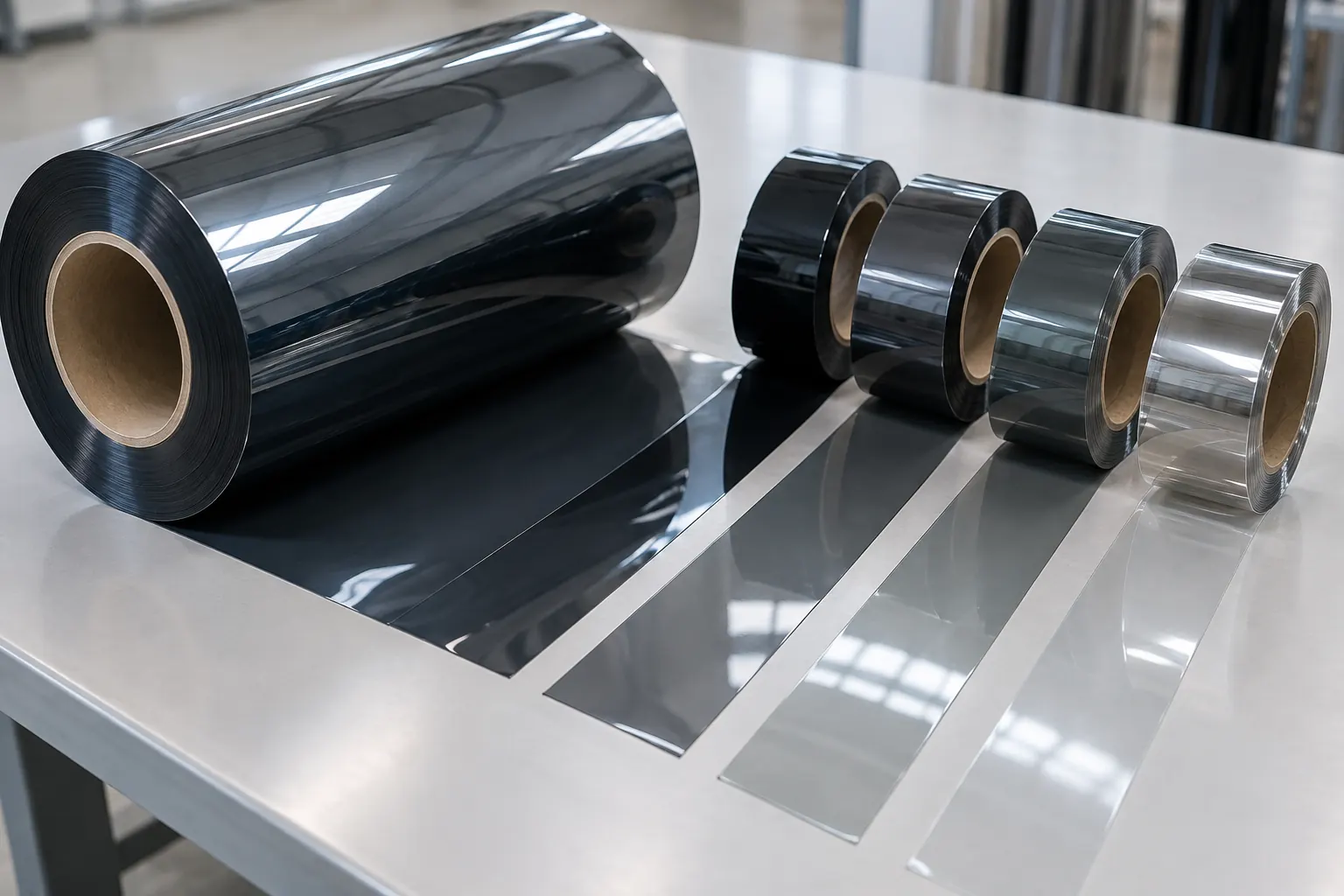
Window tint film may contain dyed, metallized, ceramic, hard-coated, pressure-sensitive adhesive and release-liner layers. Slitting must preserve optical appearance and keep the film, adhesive and liner aligned. The actual construction and coated-face orientation are more useful than the generic name window film when reviewing cut quality.
Where This Cutting Application Appears
Automotive tint rolls
Convert master rolls into installer widths while preserving optical and adhesive edges.
Architectural solar-control film
Prepare wide-format reels with consistent width and clean liner alignment.
Decorative and privacy film
Slit coated adhesive films where edge lift and visible scratches must be controlled.
Common Ways to Describe This Cutting Problem
- window tint film roll slitting blades
- automotive window film slitter knife
- architectural solar control film roll cutting
- clean edge slitting adhesive tint film
- prevent liner offset on slit window film rolls
- ceramic tint web slitting defect analysis
- metallized window film narrow roll conversion
- custom slitting review for optical tint laminate
Define the Required Cut Result
- Keep film, adhesive and release liner flush at both edges.
- Avoid coating scratches, edge haze and liner particles.
- Control adhesive ooze and edge blocking.
- Produce straight, stable rolls for plotter cutting and installation.
Problems to Diagnose Before Changing the Knife
Adhesive smears or oozes at the edge
- Identify adhesive chemistry and coat weight.
- Record web and storage temperature.
- Inspect winding pressure and edge contact.
Release liner extends beyond the film
- Measure layer alignment before slitting.
- Review differential stretch and tension.
- Compare both reel edges after relaxation.
Optical coating shows haze or scratches
- Document coated-face contact path.
- Check debris and surface protection.
- Compare damage before and after slitting.
Slit roll develops edge lift
- Review curl balance and winding direction.
- Inspect adhesive coverage near the edge.
- Check roll hardness and storage conditions.
Knife Forms That May Be Considered
| Possible knife form | When it may be considered | What must be confirmed |
|---|---|---|
| Circular shear slitting arrangement | For multilayer tint constructions requiring supported, controlled edge separation. | Confirm layer stack, shaft interface, overlap, side load, rotation and coated-face orientation. |
| Razor slitting arrangement | For compatible thin constructions on equipment specifically designed for razor web slitting. | Confirm liner and adhesive behavior, support mode, holder, exposure, speed and cleanliness controls. |
Information to Send for Technical Review
You do not need to know the exact blade name. Send the available workpiece, machine, current-knife and cut-result information so the application can be reviewed against a drawing or sample.
- Film type, carrier thickness and complete coating stack
- Adhesive chemistry, coat weight and release-liner construction
- Hard-coat or functional surface orientation through the line
- Master-roll dimensions, target widths and width tolerance
- Speed, tension, temperature, static and cleanroom conditions
- Existing slitting form, holder dimensions and used sample
- Limits for scratches, haze, adhesive ooze, liner offset and particles
- Rewind hardness, packing, storage and installer or plotter requirements
Questions About This Cutting Application
Why does tint film need more than a thickness value?
Adhesive, liner and optical coatings can dominate cutting and handling behavior even when total thickness matches another film.
What causes sticky reel edges?
Adhesive flow, heat, compression, coating weight and edge deformation can combine to create blocking.
Can optical damage originate before slitting?
Yes. Retain incoming samples and map contact surfaces to separate prior scratches from converting damage.
Why does liner offset matter?
An exposed adhesive edge can collect contamination, block in the roll and interfere with later plotting or installation.
What should an acceptance sample include?
Keep both roll edges, unwound web and liner-separated views under consistent lighting.
Request a Custom Cutting-Knife Review
Send the workpiece details, machine or holder information, current knife photos or sample, required quantity and examples of the present cut problem. Final dimensions, material, edge geometry and tolerances are confirmed from the approved requirements.