
Blade Application Guides / Application Guide / Paper converting
Water-Based Coated Poster Paper Rotary Cutting: Clean Display Shapes
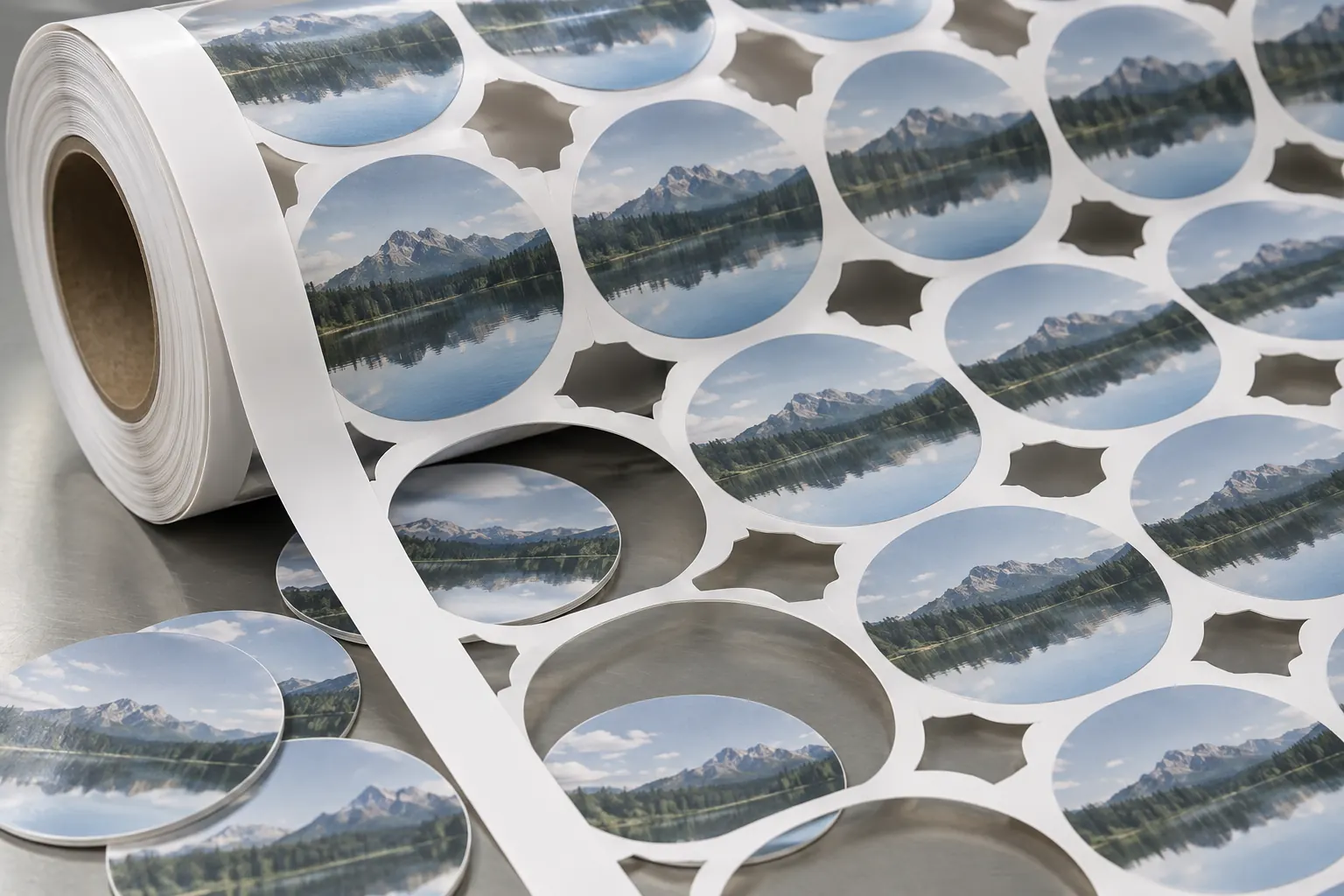
Rotary die cutting turns coated poster paper into repeated display shapes, promotional components or mounting pieces. Large visible surfaces make edge whitening, print misregistration and pressure marking easy to detect, while broad or complex waste matrices require controlled stripping and material conditioning.
Where This Cutting Application Appears
Point-of-sale display shapes
Printed poster stock is cut into repeated promotional panels, hangers or inserts where visible edges and graphics must align.
Decorative graphic components
Curved and notched coated-paper pieces are produced for mounting, assembly or retail presentation.
Printed campaign materials
Registered coupons, cards or display elements are cut from coated web and separated from surrounding waste.
Common Ways to Describe This Cutting Problem
- water-based coated poster paper rotary die-cutting blades
- coated poster rotary profile cutting
- display graphic die cut edge whitening
- aqueous coated paper shape cutting
- printed poster cut registration control
- coated display matrix stripping problem
- rotary cut promotional paper shapes
- custom rotary RFQ for coated poster stock
Define the Required Cut Result
- Produce complete display profiles with clean visible edges
- Maintain cut-to-print registration over the full repeat
- Avoid coating cracks, pressure gloss and surface marks
- Strip large waste areas without tearing usable graphics
Problems to Diagnose Before Changing the Knife
Visible edge whitening follows curved profiles
Review coating toughness, moisture, curve radius, cut progression, support and pressure at different profile orientations.
Printed image and profile move out of register
Check artwork repeat, sensor marks, web stretch, tension isolation, feed accuracy and rotary synchronization.
Broad waste matrix tears during stripping
Evaluate waste layout, bridge geometry, paper grain, coating cracks, stripping angle, speed and tension.
Gloss or emboss-like marks appear near cuts
Review support cleanliness, pressure distribution, coating cure, trapped debris and contact outside the intended profile.
Knife Forms That May Be Considered
| Possible knife form | When it may be considered | What must be confirmed |
|---|---|---|
| Rotary profile-cutting form | Consider for repeated coated-paper display shapes on compatible rotary equipment. | Confirm profile drawing, repeat, cylinder interface, support, print datum and pressure limits through approved trials. |
| Rotary perforating form | Consider for detachable display panels, coupons or fold-and-tear features. | Confirm tooth pattern, residual strength, fold direction, print clearance and functional tear results. |
Information to Send for Technical Review
You do not need to know the exact blade name. Send the available workpiece, machine, current-knife and cut-result information so the application can be reviewed against a drawing or sample.
- Poster-paper base, coating construction, caliper and moisture
- Print, ink, overcoat, cure and visible-face requirements
- Profile drawing, radii, repeat, nesting and dimensional tolerances
- Registration marks and allowable cut-to-print deviation
- Web direction, speed, tension and conditioning environment
- Rotary equipment interface, support and pressure-control method
- Accepted parts, whitened edges, marks and torn waste samples
- Stripping, stacking, mounting and visual-inspection criteria
Questions About This Cutting Application
Why are curved white edges more visible on poster stock?
Curves expose coating fracture in changing directions, and high-contrast printed surfaces make the damaged band conspicuous. Define visual and dimensional limits.
Can humidity alter profile registration?
Yes. Moisture changes paper dimensions and web tension response. Condition material and record the environment when comparing registration.
How can pressure marks be distinguished from print defects?
Compare uncut material, repeating cylinder positions and support contact patterns under consistent lighting. Pressure marks often repeat mechanically.
What helps a broad matrix strip reliably?
Balanced waste geometry, adequate bridges, suitable stripping angle, stable tension and conditioned material all contribute; one factor alone is rarely sufficient.
Can the final rotary form be based on artwork only?
No. Use production profile data plus repeat, equipment interface, material, support, registration, speed and approved finished samples.
Request a Custom Cutting-Knife Review
Send the workpiece details, machine or holder information, current knife photos or sample, required quantity and examples of the present cut problem. Final dimensions, material, edge geometry and tolerances are confirmed from the approved requirements.