
Blade Application Guides / Application Guide / Paper converting
Water-Based Coated Poster Paper Cross Cutting: Clean Display Sheets
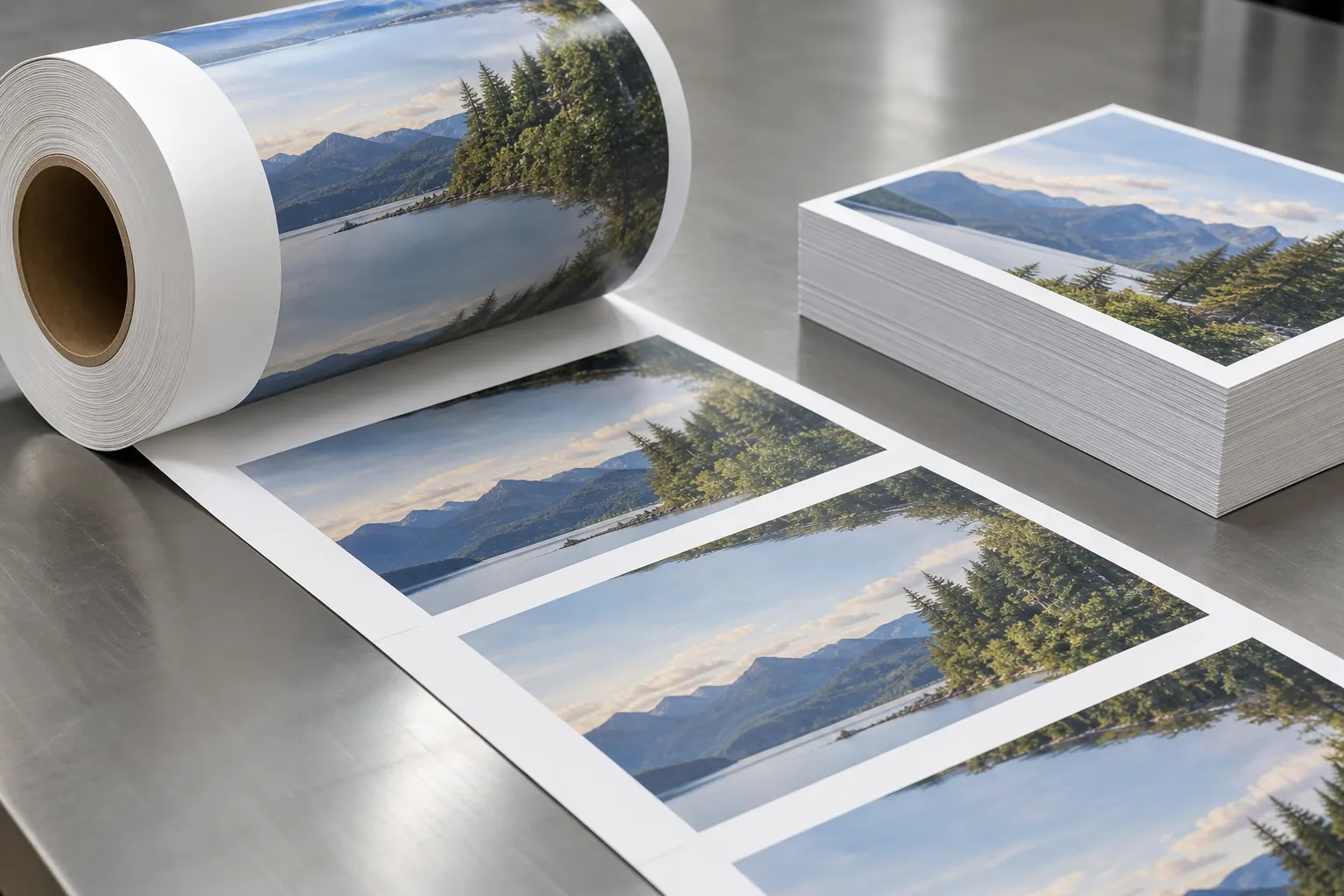
Poster-paper cross cutting must preserve a broad visible surface while controlling coating fracture, sheet curl and squareness. Because aqueous coatings and base paper respond to humidity and drying history, sheet acceptance should be checked after conditioning as well as immediately at the cutoff operation.
Where This Cutting Application Appears
Retail poster sheets
Coated rolls are cut into rectangular display formats where visible edge quality and dimensions are part of the finished appearance.
Sheet-fed printing stock
Printable poster media is sheeted to press size with flatness and squareness suitable for feeding and registration.
Laminating and mounting blanks
Printed sheets are cut before mounting to board or applying protective film, requiring clean faces and accurate geometry.
Common Ways to Describe This Cutting Problem
- water-based coated poster paper cross-cutting blades
- coated poster paper transverse sheet cutting
- aqueous coated display sheet cutoff
- cross cut poster stock without edge cracking
- wide format poster sheet squareness
- coated print paper sheeter curl control
- clean display graphic sheet edges
- custom cutoff RFQ for poster paper rolls
Define the Required Cut Result
- Produce square display sheets at the required size
- Avoid coating cracks and white transverse edges
- Control curl, static and stack alignment
- Protect the visible coated face from scratches
Problems to Diagnose Before Changing the Knife
A white line appears at the cutoff edge
Review coating toughness, moisture, grain direction, support, cutoff progression and whether the base sheet or coating is visibly fractured.
Large sheets skew during delivery
Check web alignment, cross-web tension, sheet support, airflow, static, conveyor speed and impact against delivery stops.
Finished size changes after conditioning
Record moisture, temperature, grain direction, coating balance and time between cutting and measurement.
Coated surface shows scratches in the stack
Inspect loose particles, contact belts, guides, delivery stops, sheet sliding and packing pressure.
Knife Forms That May Be Considered
| Possible knife form | When it may be considered | What must be confirmed |
|---|---|---|
| Straight cutoff knife | Consider on sheeters that separate poster media with a straight transverse action. | Confirm mounting, dimensions, bevel, counterface, motion and allowable deflection from the actual machine and approved samples. |
| Rotary cutoff knife | Consider for continuous high-repeat sheeting on a synchronized rotary cutoff unit. | Confirm cylinder interface, cutting diameter, timing, support and finished-sheet acceptance with line data. |
Information to Send for Technical Review
You do not need to know the exact blade name. Send the available workpiece, machine, current-knife and cut-result information so the application can be reviewed against a drawing or sample.
- Paper basis weight, caliper, grain and moisture range
- Aqueous coating, print, overcoat and drying history
- Web width, sheet size, diagonal and dimensional tolerances
- Line speed, cutoff rate, feed system and acceleration states
- Web support, static control, delivery and stacking method
- Current cutoff form, counterface and mounting drawing
- Accepted sheets and examples of whitening, curl or scratches
- Conditioning method, downstream mounting and inspection lighting
Questions About This Cutting Application
Why should poster sheets be measured after conditioning?
Paper dimensions and curl can change as moisture equilibrates. Define the inspection environment and waiting time so results are comparable.
Is a white edge always coating failure?
Not always. Exposed base fibers, compressed paper or fractured mineral coating can look similar. Edge microscopy and residue inspection help distinguish them.
How can large-sheet skew be documented?
Measure leading-edge angle, both side lengths and diagonals, then record web position, speed and delivery behavior for affected sheets.
Can printed surfaces change cutoff behavior?
Yes. Ink coverage, overcoat, cure and friction may alter stiffness, blocking and marking compared with unprinted stock.
What is required before defining the cutoff knife?
The actual motion, mounting, counterface, material construction, sheet dimensions, speed and approved quality samples must be verified.
Request a Custom Cutting-Knife Review
Send the workpiece details, machine or holder information, current knife photos or sample, required quantity and examples of the present cut problem. Final dimensions, material, edge geometry and tolerances are confirmed from the approved requirements.