
Blade Application Guides / Application Guide / Fiber processing and nonwoven preparation
Polypropylene Staple Fiber Bale Opening Blades
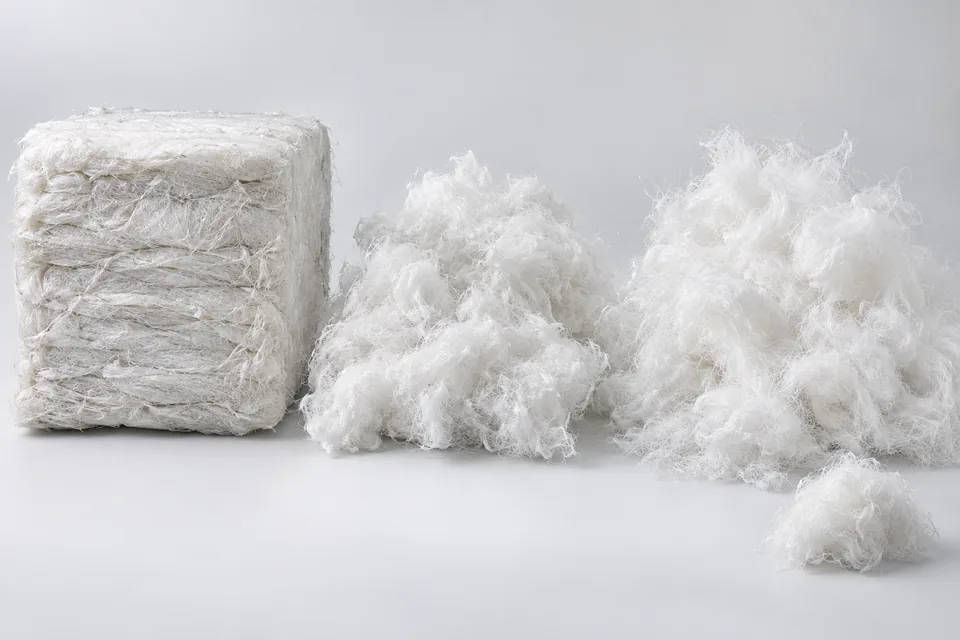
Polypropylene staple fiber bale opening has a distinct purchasing and diagnostic intent from tow chopping: the task is to release compacted layers into a controlled tuft feed without creating excessive fines, wrapping or new fused clumps. Begin with bale construction, binding removal, staple length, finish, storage condition and feed compression. Retain samples from marked bale layers so the first point of change can be identified before a replacement component is specified.
Updated
Where This Cutting Application Appears
Nonwoven feed preparation
Compacted PP staple fiber is opened into controlled tufts before blending, carding or another web-forming preparation stage.
Layer-by-layer bale assessment
Outer, middle and inner bale layers are kept identifiable so storage, density and compression differences are not averaged together.
Controlled opener trials
The feed depth, opening motion, sampling mass and collection point remain fixed while clumps, wrapping and fines are compared.
Downstream feed verification
Discharge samples are compared with material after conveying to determine whether instability begins at opening or later handling.
Define the Required Cut Result
- Release compacted layers into a repeatable tuft-size distribution
- Limit unopened dense clumps and new fine fiber fragments
- Avoid progressive wrapping or finish buildup at one working position
- Deliver an even material feed to the next preparation stage
Problems to Diagnose Before Changing the Knife
Dense PP fiber slabs remain after the opening pass
Compare bale-layer density, feed depth, restraint and working-width engagement before increasing penetration or changing geometry.
Fibers wrap progressively around the opening component
Record wrap direction, start time, staple length, loose-end presentation, surface condition and the exact working position.
Glossy or joined tufts appear intermittently
Inspect the incoming bale for fused areas and record storage condition, local temperature and finish transfer before assigning the issue to edge wear.
Material is open at discharge but clumps during conveying
Retain paired discharge and downstream samples so later accumulation is not confused with the opening result.
PP Bale Opening: Compaction, Joining or Wrapping?
Classify the observed material before selecting a component. A dense compacted slab, a heat-joined tuft and a wrapped fiber mass require different review paths.
Clump separates when manually teased
Treat it first as a compaction and feed-presentation issue; compare bale layer, density and engagement depth.
Tuft remains glossy or fused
Check the same condition in the incoming bale and document storage and process temperature before changing the blade.
Loose fibers wind around one location
Map wrap position, direction, time to onset and local surface condition, then inspect feed asymmetry and cleanout access.
Acceptance Criteria for a Controlled Trial
Agree how the trial will be judged before changing the knife or machine setting.
- Weigh unopened dense clumps from a fixed input sample mass
- Record tuft-size distribution using one agreed sampling method
- Track wrapping location and time to onset during the controlled run
- Compare discharge and downstream feed uniformity without changing conveying settings
Knife Forms That May Be Considered
| Possible knife form | When it may be considered | What must be confirmed |
|---|---|---|
| Replaceable opening segment or straight component | When the existing opener uses replaceable working sections and the interface can be confirmed from a drawing and used sample. | Confirm profile, mounting datum, working direction, support, clearance and all locating features from the actual machine interface. |
| Toothed or hooked opening element | Only when the installed system already uses controlled engagement to separate compacted tufts. | Confirm tooth or hook geometry, spacing, rotation, cleanout path and fiber-wrap evidence from the approved component; do not infer these details from the material name. |
Information to Send for Technical Review
You do not need to know the exact blade name. Send the available workpiece, machine, current-knife and cut-result information so the application can be reviewed against a drawing or sample.
- Polypropylene grade, staple length, denier, crimp and finish condition
- Bale dimensions, density range, layer construction and storage history
- Binding-removal and foreign-material control procedure
- Feed depth, compression, opening speed and working width
- Current component, holder, shaft and drive-interface drawings
- Photos of clumps, fused tufts, wrapping position and used working edge
- Accepted and rejected samples with the tuft, clump and fines method
- Downstream process, trial duration, cleanout rule and annual demand
Related Opening Review and Fiber Pages
Questions About This Cutting Application
Is polypropylene bale opening the same as tow chopping?
No. Bale opening releases compacted staple fiber into tufts for controlled feeding, while tow chopping separates aligned continuous tow into target lengths.
Can a blade be selected from the term PP staple fiber alone?
No. Confirm the existing opening motion, interface, bale density, staple form, feed depth and observed defect with drawings and samples.
Why keep samples from different bale layers?
Outer, middle and inner layers can differ in density, storage exposure and compression, so combining them can hide the source of inconsistent opening.
What should be measured in a trial?
Use a fixed sample mass and record unopened clumps, tuft distribution, fines, wrapping location, time to onset and downstream feed stability.
Do public equipment references define the MEIRENTE blade specification?
No. They explain process context only; the blade must be confirmed from the customer drawing, installed component, material samples and controlled trial criteria.
Public references and scope
These public sources provide material, cutting-method or safety context for this guide. Supplier pages describe their own materials or equipment; they do not establish a MEIRENTE blade specification or performance claim. Confirm the actual grade, machine setup and required cut with a drawing or sample.
Related product and service information
- Polyester Staple Fiber Bale Opening Blades - polyester staple fiber · bale opening
- Carbon Fiber Tow Bale Opening Blades - carbon fiber tow · bale opening
- Aramid Staple Fiber Bale Opening Blades - aramid staple fiber · bale opening
Request a Custom Cutting-Knife Review
Send the workpiece details, machine or holder information, current knife photos or sample, required quantity and examples of the present cut problem. Final dimensions, material, edge geometry and tolerances are confirmed from the approved requirements.