
Blade Application Guides / Application Guide / Plastic sheet converting
PETG Sheet Slitting Blades
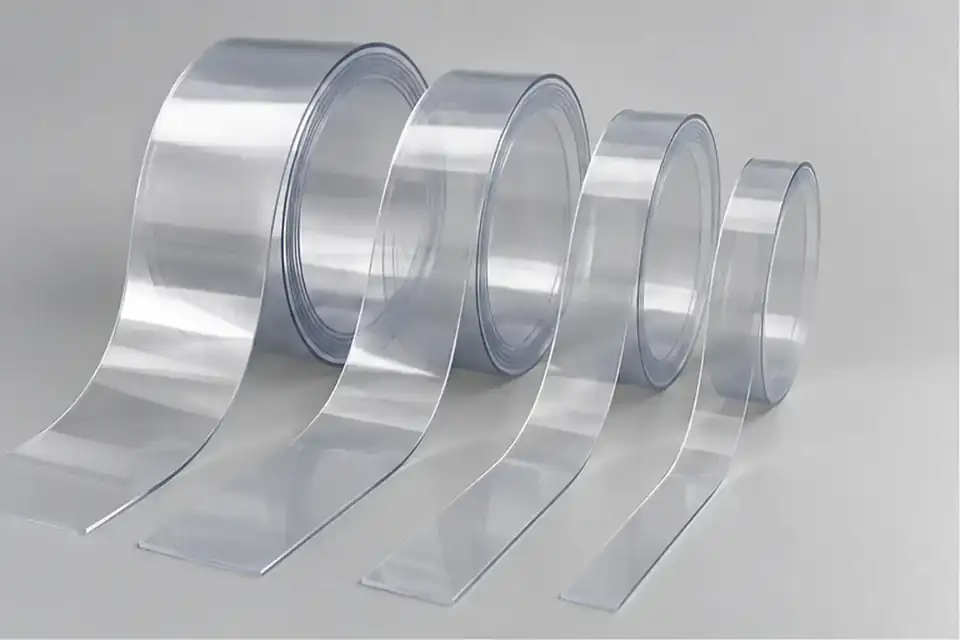
PETG Sheet has a stiff polymer sheet that may chip, crack, melt, stress-whiten or generate static chips at the cut. For sheet slitting, review polymer grade, thickness and impact behavior, surface film, texture and sheet orientation, support, operating speed and the actual equipment interface together. Compare accepted and rejected samples for slit width drifts across the web and sheet edge chips, melts or stress-whitens before confirming a knife configuration.
Reviewed by the MEIRENTE technical team · Updated September 13, 2026
Where This Cutting Application Appears
Protective Panels And Guards
PETG Sheet is converted by sheet slitting for protective panels and guards, where narrow rolls with parallel clean edges supports reliable production.
Signage, Display And Glazing Sheets
PETG Sheet is converted by sheet slitting for signage, display and glazing sheets, where consistent geometry and protected functional surfaces supports reliable production.
Fabricated Industrial Plastic Parts
PETG Sheet is converted by sheet slitting for fabricated industrial plastic parts, where repeatable handling in the next assembly step supports reliable production.
Common Ways to Describe This Cutting Problem
- PETG sheet slitting blades
- PETG sheet slitting blades for plastic sheet converting
- clean edge setup for PETG sheet slitting blades
- defect analysis with PETG sheet slitting blades
- dimensional control for PETG sheet slitting blades
- material handling for PETG sheet slitting blades
- technical review of PETG sheet slitting blades
- custom PETG sheet slitting blades RFQ
Define the Required Cut Result
- Hold slit width and edge straightness across the master roll
- Build stable rewind rolls without telescoping or blocking
- Control the material-specific risk: sheet edge chips, melts or stress-whitens
- Keep the converted PETG sheet suitable for protective panels and guards after sheet slitting
Problems to Diagnose Before Changing the Knife
Slit width drifts across the web
Check web guiding, shaft runout, spacer stack, side load, tension and roll hardness.
Sheet edge chips, melts or stress-whitens
Compare polymer grade, thickness and impact behavior, temperature, support, speed and samples from accepted and rejected positions.
Static fragments adhere to the finished surface
Review surface film, texture and sheet orientation, web orientation, contact surfaces, tension and downstream acceptance.
PETG sheet handling becomes unstable after sheet slitting
Trace separation, transfer and collection from the cut point into protective panels and guards, and record where the first unstable condition appears.
Knife Forms That May Be Considered
| Possible knife form | When it may be considered | What must be confirmed |
|---|---|---|
| Circular shear slitting arrangement | For supported precision width conversion with controlled overlap and side load. | Confirm only from the actual PETG sheet sample, equipment interface, operating motion, current component and approved drawing. |
| Score or crush slitting arrangement | Only where the material and compatible anvil system support controlled penetration. | Confirm only from the actual PETG sheet sample, equipment interface, operating motion, current component and approved drawing. |
Information to Send for Technical Review
You do not need to know the exact blade name. Send the available workpiece, machine, current-knife and cut-result information so the application can be reviewed against a drawing or sample.
- polymer grade, thickness and impact behavior
- surface film, texture and sheet orientation
- master-roll width, diameter, core and required slit widths
- Sheet slitting speed, feed or tension, temperature, support and cutting frequency for PETG sheet
- Current cutting arrangement, holder or rotor drawing, mounting dimensions and a labelled used sample
- PETG sheet direction, contact faces, guiding and product or waste collection route
- Accepted and rejected PETG sheet samples with measurable edge, surface, particle and dimensional limits
- Trial quantity, inspection method, protective panels and guards requirement, packing and annual demand
Questions About This Cutting Application
Why must PETG sheet be reviewed as a complete construction?
Review polymer grade, thickness and impact behavior together with surface film, texture and sheet orientation; these properties can change the response to support, pressure, speed and temperature during sheet slitting.
Can the blade configuration be selected from the term “PETG sheet” alone?
No. Confirm the sheet slitting motion, holder interface, support, speed, dimensions and accepted samples before selecting a configuration.
What commonly causes defects during sheet slitting?
Slit width drifts across the web and sheet edge chips, melts or stress-whitens can come from interacting material, support, alignment, speed and handling conditions, so accepted and rejected samples should be compared at the same production settings.
When should converted dimensions be measured?
Measure the PETG sheet at the agreed inspection point and again after any conditioning or downstream handling that can change the accepted dimension or edge condition.
What should a production trial record?
Record the material lot, sheet slitting setup, operating speed, support, dimensions, slit width drifts across the web and performance in protective panels and guards.
Related product and service information
- HDPE Sheet Slitting Blades - HDPE sheet · sheet slitting
- PP Corrugated Sheet Slitting Blades - PP corrugated sheet · sheet slitting
- ABS Sheet Slitting Blades - ABS sheet · sheet slitting
Request a Custom Cutting-Knife Review
Send the workpiece details, machine or holder information, current knife photos or sample, required quantity and examples of the present cut problem. Final dimensions, material, edge geometry and tolerances are confirmed from the approved requirements.