
Blade Application Guides / Application Guide / Flexible packaging
Mono-Material PE Pouch Film Rotary Die Cutting
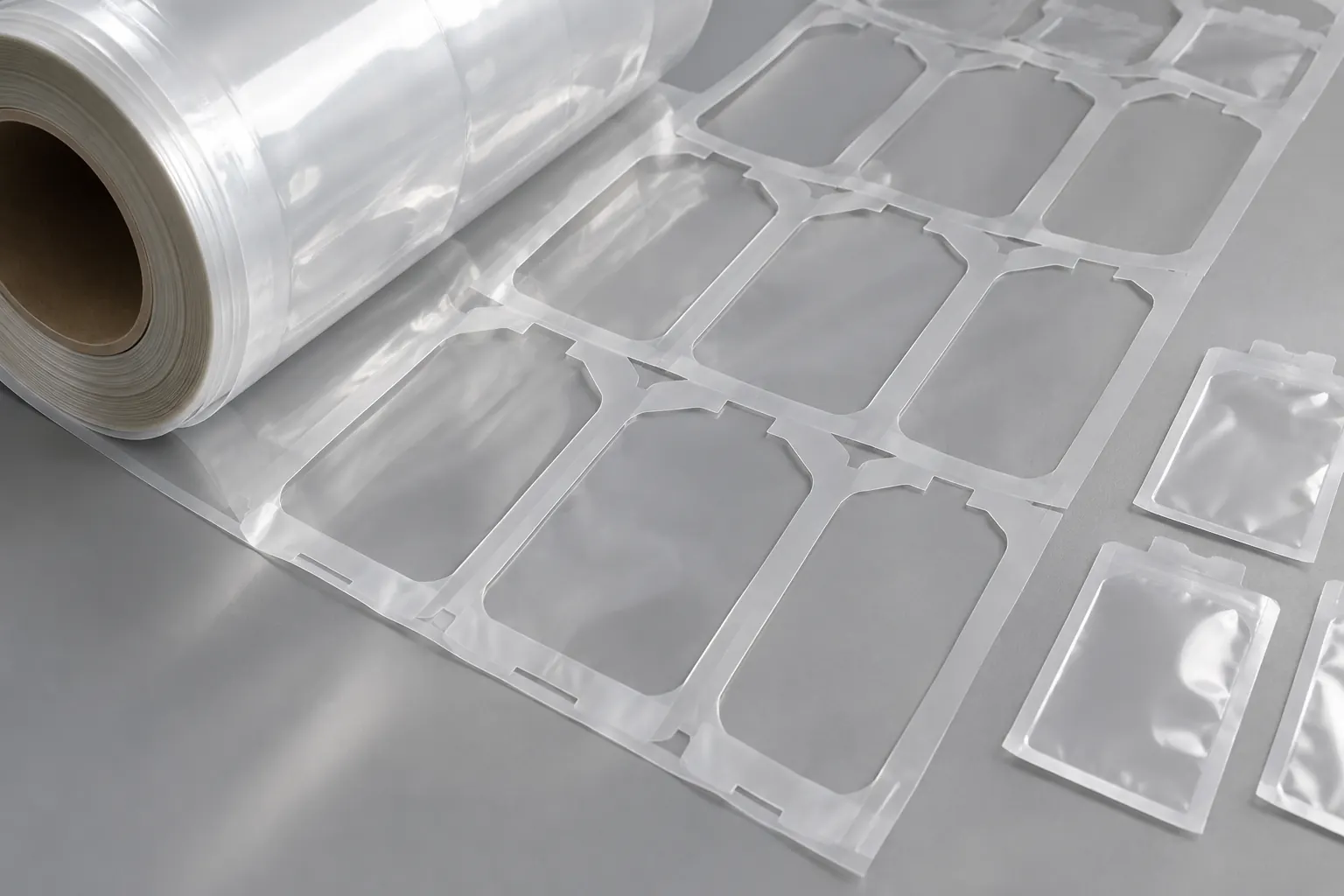
Rotary die cutting an all-PE pouch web is influenced by elastic recovery, layer orientation and soft sealant surfaces. Small openings and registered profiles may distort after release, while a weak waste matrix can stretch instead of stripping cleanly. Technical review should define dimensions in the relaxed state and test the converted feature in its final pouch function.
Where This Cutting Application Appears
Pouch handle and hanging holes
Create registered openings that retain shape after the extensible web relaxes.
Vent and access features
Convert repeated functional openings without contaminating nearby seal areas.
Shaped flexible components
Produce PE film parts or patches with controlled perimeter and release behavior.
Common Ways to Describe This Cutting Problem
- mono-material PE pouch film rotary die-cutting blades
- recyclable all-PE pouch web rotary die cutter
- registered handle hole cutting in PE pouch film
- rotary vent cutting for mono PE packaging
- prevent elastic distortion in PE die-cut features
- waste matrix stripping from soft polyethylene web
- all-PE packaging profile die cutting
- custom rotary tooling review for recyclable pouch stock
Define the Required Cut Result
- Keep relaxed feature dimensions within the approved tolerance.
- Hold registration to print and future seal locations.
- Prevent stretched corners, strings and loose slugs.
- Strip the matrix without wrinkling or elongating usable material.
Problems to Diagnose Before Changing the Knife
Opening changes shape after release
- Measure under tension and after conditioning.
- Mark machine and transverse orientation.
- Review feature radii and local draw.
Waste matrix stretches or tears
- Map narrow bridges and stripping angle.
- Check matrix tension and web temperature.
- Inspect sealant tack and static.
Slug remains attached
- Locate uncut fibers or polymer strings.
- Review support and cutting consistency.
- Check slug removal and retention method.
Seal area wrinkles near the feature
- Confirm feature-to-seal spacing.
- Review restraint during cutting and stripping.
- Test actual pouch sealing after conversion.
Knife Forms That May Be Considered
| Possible knife form | When it may be considered | What must be confirmed |
|---|---|---|
| Rotary profile die arrangement | For repeated shapes in a continuously supported pouch web. | Confirm feature drawing, repeat, web stack, cylinder interface, support and stripping method. |
| Rotary perforating arrangement | For tear features intended to retain defined bridges until consumer opening. | Confirm bridge geometry, tear direction, opening-force test and pouch orientation. |
Information to Send for Technical Review
You do not need to know the exact blade name. Send the available workpiece, machine, current-knife and cut-result information so the application can be reviewed against a drawing or sample.
- PE layer construction, gauge, orientation, coatings and sealant face
- Feature drawing, relaxed dimensions, radii and tolerance
- Print and seal datums plus cut-to-print requirement
- Web width, repeat, speed, tension and operating temperature
- Rotary station interface, support and approved existing sample
- Waste matrix layout, stripping angle and slug-control method
- Allowed strings, distortion, particles and seal-area damage
- Converted pouch trial method, quantity and end-use conditions
Questions About This Cutting Application
Why should features be measured after relaxation?
PE can elongate under web tension and recover after cutting, changing hole size and shape.
Can a very sharp corner remain square?
Material recovery and stress concentration may distort it; practical radii and trial samples should be evaluated.
Why does the waste matrix tear first?
Narrow bridges, high stripping load, tack and poor layout can make the matrix weaker than the intended separation path.
Does a clean-looking hole guarantee pouch performance?
No. Registration, seal integrity, tear strength and end-use loading must also pass.
Can the profile alone define the tooling?
No. Repeat, web stack, support, press interface and waste handling are essential inputs.
Request a Custom Cutting-Knife Review
Send the workpiece details, machine or holder information, current knife photos or sample, required quantity and examples of the present cut problem. Final dimensions, material, edge geometry and tolerances are confirmed from the approved requirements.