
Blade Application Guides / Application Guide / Flexible packaging
Mono-Material PE Pouch Film Edge Trimming
Edge trimming removes unstable or uncoated margins from an all-PE pouch web before printing, lamination, sealing or rewinding. Because the structure can neck in and the trim ribbon can stretch, a successful review needs both the finished-web requirement and a clear trim-removal path rather than a nominal width alone.
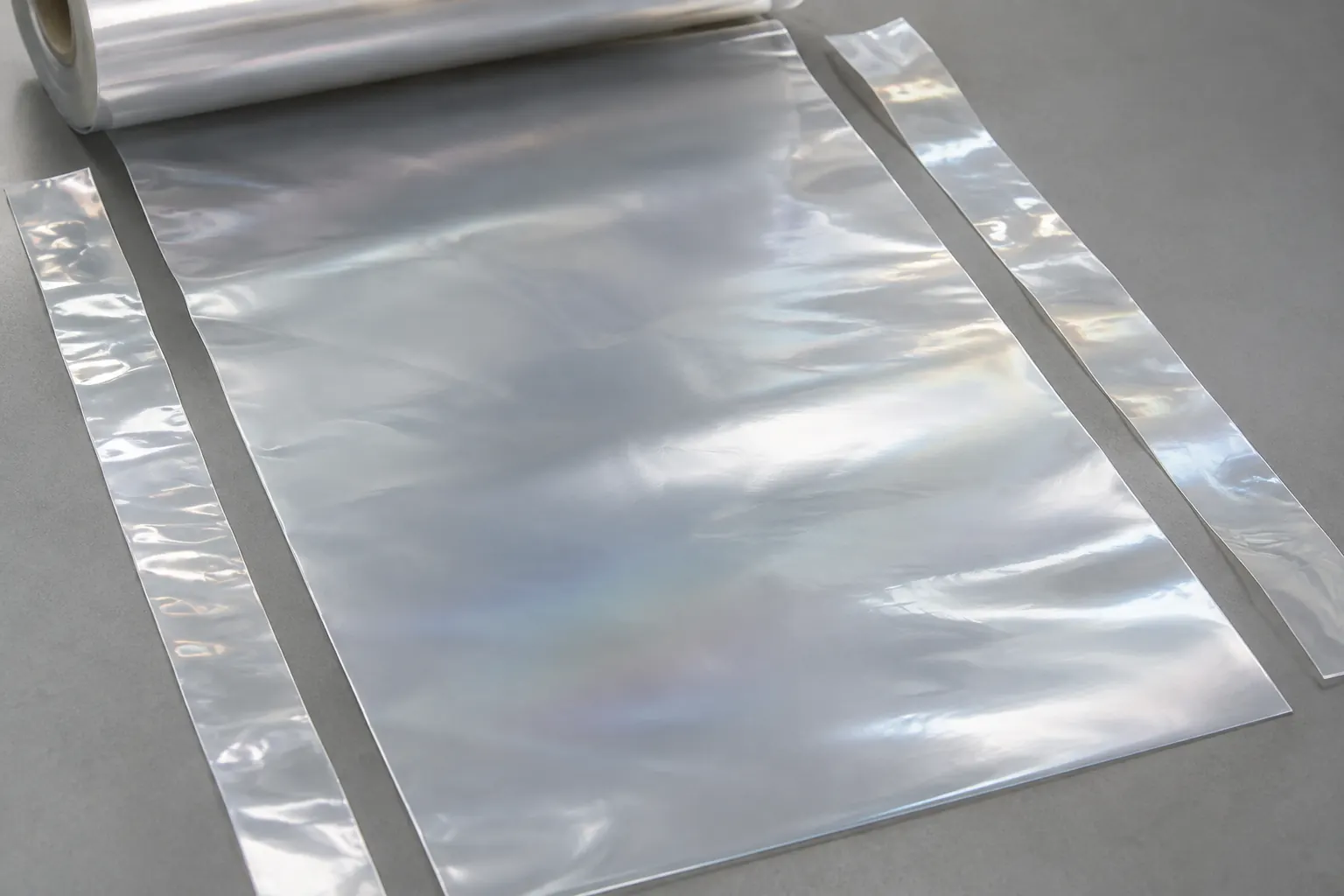
Where This Cutting Application Appears
Extrusion and coating edge cleanup
Remove thick, uneven or uncoated margins before the web enters later converting steps.
Printed web width finishing
Trim registration or handling margins to the specified pouch-web width.
Laminated all-PE reel preparation
Create stable edges before rewinding and delivery to pouch-making equipment.
Common Ways to Describe This Cutting Problem
- mono-material PE pouch film edge-trimming blades
- recyclable PE laminate web edge trim knife
- remove wavy edges from all-PE pouch film
- stable trim ribbon cutting polyethylene packaging
- mono PE sealant layer edge trimming
- control finished width on recyclable film web
- edge trim break prevention for soft PE film
- all-PE packaging film margin removal
Define the Required Cut Result
- Maintain finished width after the web relaxes.
- Produce a continuous trim ribbon without frequent breaks.
- Minimize raised lips, strings and loose PE fragments.
- Keep the trimmed web flat and centered for rewinding.
Problems to Diagnose Before Changing the Knife
Trim ribbon repeatedly breaks
- Record ribbon width and tension path.
- Inspect gauge bands, gels and edge notches.
- Check extraction speed and static.
Finished web necks in after trimming
- Compare width under tension and relaxed.
- Review web draw and temperature.
- Map cross-web gauge profile.
Sticky strings collect near the edge
- Identify sealant resin and additives.
- Check surface temperature and contamination.
- Compare coated and uncoated margins.
Trimmed web wanders during winding
- Review edge-guide datum and sensor position.
- Check asymmetric trim loads.
- Inspect incoming edge wave and roll alignment.
Knife Forms That May Be Considered
| Possible knife form | When it may be considered | What must be confirmed |
|---|---|---|
| Circular shear edge-trim arrangement | For supported margin removal where paired rotating edges are part of the line. | Confirm overlap, side load, holder, rotation, trim width, web path and approved interface. |
| Supported razor edge-trim arrangement | For compatible thin PE film on a line built for razor trimming. | Confirm support, blade exposure, holder, trim extraction, speed and actual film stack. |
Information to Send for Technical Review
You do not need to know the exact blade name. Send the available workpiece, machine, current-knife and cut-result information so the application can be reviewed against a drawing or sample.
- All-PE layer stack, total gauge and edge gauge profile
- Incoming web width, edge condition and target relaxed width
- Trim width on each side and minimum stable ribbon width
- Line speed, web tension, temperature and guiding arrangement
- Sealant face, coatings, additives and surface-treatment details
- Current trimming mode, support and holder dimensions
- Trim extraction route, vacuum or winding method and break history
- Accepted edge samples, width inspection method and production volume
Questions About This Cutting Application
Why can equal trim widths still produce web wander?
Incoming gauge profile, edge wave, alignment and asymmetric tension can shift the web even when nominal trim widths match.
Should width be checked under tension?
Record it under controlled operating tension and again after relaxation, because soft PE can recover.
What causes trim-ribbon breaks?
Narrow ribbon geometry, edge defects, gels, excessive extraction tension and static are common factors to investigate.
Can sealant tack affect trimming?
Yes. A soft or tacky surface can increase stringing, buildup and handling instability.
What proves the edge is acceptable?
Use agreed limits for width, lip, curl, debris and performance in the next printing or pouch-forming step.
Request a Custom Cutting-Knife Review
Send the workpiece details, machine or holder information, current knife photos or sample, required quantity and examples of the present cut problem. Final dimensions, material, edge geometry and tolerances are confirmed from the approved requirements.