
Technologia noży przemysłowych / Przewodnik zastosowań / Electric vehicle component manufacturing
battery-enclosure sealing foam: contour cutting noże tnące
Poradnik techniczny: Ten poradnik opisuje cięcie materiału battery-enclosure sealing foam · contour cutting; wraz z wymaganiami krawędzi, typowymi problemami i danymi potrzebnymi do oceny noża na…
Reviewed by the MEIRENTE technical team · Updated September 13, 2026
Gdzie występuje ten proces cięcia
Electric vehicle component manufacturing production
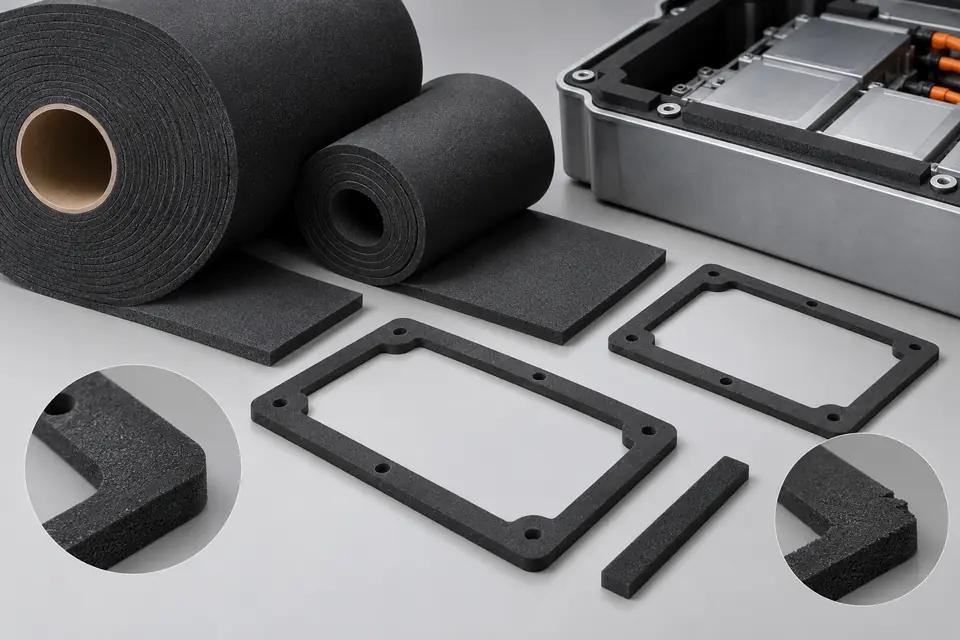
Battery-Enclosure Sealing Foam is processed by contour cutting to support battery sealing, motor insulation, radar absorption, optical display and camera assembly. The finished geometry must remain compatible with downstream handling and assembly.
Cut-quality control
Production teams compare accepted and rejected samples for finished dimensions, edge condition, surface cleanliness, compression behavior and assembly fit, then relate the result to corner radius, cutting path, support, compression and part retention.
Stable material and waste handling
stable support, controlled compression and protected transfer of finished components help the product and waste leave the cut zone consistently without creating a second defect after separation.
Typowe sposoby opisywania tego problemu cięcia
- battery-enclosure sealing foam contour-cutting blades noże tnące 1
- industrial battery-enclosure sealing foam contour-cutting blades noże tnące 2
- custom battery-enclosure sealing foam blades for contour cutting noże tnące 3
- how to improve contour cutting of battery-enclosure sealing foam noże tnące 4
- battery-enclosure sealing foam contour cutting edge defect analysis noże tnące 5
- battery-enclosure sealing foam contour cutting dimensional control noże tnące 6
- Electric vehicle component manufacturing battery-enclosure sealing foam contour cutting setup noże tnące 7
- battery-enclosure sealing foam blade RFQ data for contour cutting noże tnące 8
Określ wymagany rezultat cięcia
- Achieve accurate contours without cracks, drag marks or delamination for battery-enclosure sealing foam
- Prevent foam tearing, insulation fiber pullout, optical scratches, layer shift or incomplete profile separation
- Maintain the required geometry for battery sealing, motor insulation, radar absorption, optical display and camera assembly
- Deliver a cut condition accepted by the next electric vehicle component manufacturing operation
Problemy do sprawdzenia przed zmianą noża
The cut edge shows foam tearing, insulation fiber pullout, optical scratches, layer shift or incomplete profile separation
Compare blade condition, corner radius, cutting path, support, compression and part retention, material lot and accepted versus rejected samples.
Finished dimensions drift during a production run
Check feed registration, tension or hold-down, temperature, support condition, runout and when dimensions are measured.
The workpiece shifts, curls or loses functional surface quality
Review stable support, controlled compression and protected transfer of finished components, contact-face cleanliness, material direction, support and the first point where deformation appears.
Product and waste do not separate consistently
Check cut completeness, waste width, exit angle, static, extraction, collection tension and downstream transfer.
Możliwe formy noża
| Możliwa forma noża | Kiedy można ją rozważyć | Co należy potwierdzić |
|---|---|---|
| Custom profile cutting blade | Considered when contour cutting requires accurate contours without cracks, drag marks or delamination under stable support and guidance. | Confirm only after reviewing a real battery-enclosure sealing foam sample, the equipment interface, mounting drawing, operating direction and an accepted cut reference. |
| Oscillating contour knife | Considered when the equipment interface and material response require an alternative geometry or cutting motion. | Confirm only after reviewing a real battery-enclosure sealing foam sample, the equipment interface, mounting drawing, operating direction and an accepted cut reference. |
Informacje potrzebne do analizy technicznej
Nie trzeba znać dokładnej nazwy noża. Prosimy przesłać dostępne dane o ciętym materiale, maszynie, obecnie używanym nożu i rezultacie cięcia, aby zastosowanie można było ocenić na podstawie rysunku lub próbki.
- Battery-Enclosure Sealing Foam composition, grade, thickness and allowable lot variation
- Layer, coating, porosity, temper, adhesive or surface-function details relevant to contour cutting
- Input width and target dimensions, tolerances and acceptance drawing
- Line speed, feed mode, tension or hold-down, temperature and cutting frequency
- Current blade or knife drawing, holder interface, mounting dimensions and used sample
- Material direction, support, contact faces and product or waste collection method
- Accepted and rejected samples with limits for finished dimensions, edge condition, surface cleanliness, compression behavior and assembly fit
- Trial quantity, inspection method, downstream operation, packing and annual demand
Pytania dotyczące tego procesu cięcia
Why must battery-enclosure sealing foam be reviewed as a complete material construction?
Its substrate, coating, interfaces and surface condition can respond differently to pressure, friction and bending, so nominal thickness alone does not predict contour cutting performance.
Can the blade be selected from the material name alone?
No. Confirm corner radius, cutting path, support, compression and part retention, the holder interface, production speed, support and accepted samples before fixing the blade geometry.
What commonly causes defects during contour cutting?
Material variation, unstable support, alignment error, contamination, inappropriate clearance and blade wear can interact to create foam tearing, insulation fiber pullout, optical scratches, layer shift or incomplete profile separation.
When should the finished dimensions be measured?
Record both immediate and conditioned results when recovery, residual stress, temperature, moisture or adhesive flow can change the part after cutting.
What should be recorded during a production trial?
Record the battery-enclosure sealing foam lot, setup, speed, support, blade condition, dimensions, edge observations, waste behavior and downstream acceptance.
Powiązane informacje o produktach i usługach
- EV-motor slot insulation paper: contour cutting noże tnące - EV-motor slot insulation paper · contour cutting
- automotive radar-absorber sheet: contour cutting noże tnące - automotive radar-absorber sheet · contour cutting
- head-up-display optical film: contour cutting noże tnące - head-up-display optical film · contour cutting
Poproś o analizę niestandardowego noża tnącego
Prosimy przesłać dane materiału, informacje o maszynie lub uchwycie, zdjęcia bądź próbkę obecnego noża, wymaganą liczbę sztuk oraz przykłady aktualnego problemu z cięciem. Wymiary końcowe, materiał, geometria krawędzi i tolerancje są potwierdzane na podstawie zatwierdzonych wymagań.