
ブレード技術 / 用途ガイド / Semiconductor fabrication
DBG process dicing tape: razor slitting 切断刃
技術ガイド: このガイドでは DBG process dicing tape · razor slitting; の切断品質、一般的な不具合、特注刃の検討に必要な情報を整理します。
Reviewed by the MEIRENTE technical team · Updated September 13, 2026
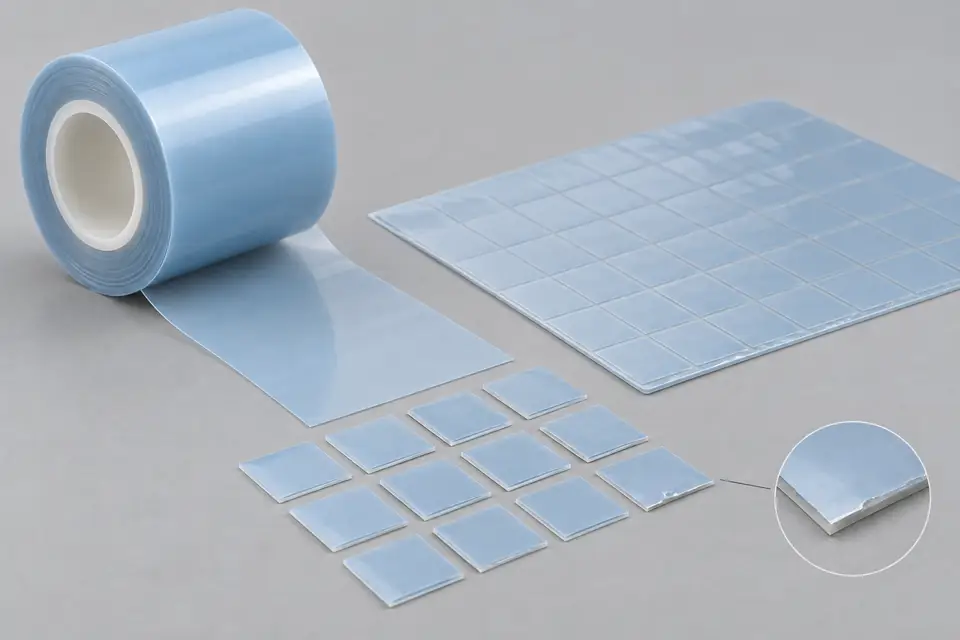
この切断用途が使用される工程
Semiconductor fabrication production
DBG Process Dicing Tape is processed by razor slitting to support wafer mounting, dicing, molding protection and temporary process support. The finished geometry must remain compatible with downstream handling and assembly.
Cut-quality control
Production teams compare accepted and rejected samples for cut width, edge cleanliness, adhesive residue, liner condition, particle level and dimensional stability, then relate the result to razor presentation, penetration depth, web tension, support and slit-line alignment.
Stable material and waste handling
clean contact surfaces, controlled web tension and protected collection of converted tape help the product and waste leave the cut zone consistently without creating a second defect after separation.
この切断問題でよく使われる検索表現
- DBG process dicing tape razor slitting blades 切断刃 1
- industrial DBG process dicing tape razor slitting blades 切断刃 2
- custom DBG process dicing tape blades for razor slitting 切断刃 3
- how to improve razor slitting of DBG process dicing tape 切断刃 4
- DBG process dicing tape razor slitting edge defect analysis 切断刃 5
- DBG process dicing tape razor slitting dimensional control 切断刃 6
- Semiconductor fabrication DBG process dicing tape razor slitting setup 切断刃 7
- DBG process dicing tape blade RFQ data for razor slitting 切断刃 8
必要な切断結果を明確にする
- Achieve clean narrow-web edges without adhesive drag or surface marking for DBG process dicing tape
- Prevent adhesive transfer, backing stretch, liner cut-through, edge lift or particulate contamination
- Maintain the required geometry for wafer mounting, dicing, molding protection and temporary process support
- Deliver a cut condition accepted by the next semiconductor fabrication operation
ナイフ交換前に確認すべき問題
The cut edge shows adhesive transfer, backing stretch, liner cut-through, edge lift or particulate contamination
Compare blade condition, razor presentation, penetration depth, web tension, support and slit-line alignment, material lot and accepted versus rejected samples.
Finished dimensions drift during a production run
Check feed registration, tension or hold-down, temperature, support condition, runout and when dimensions are measured.
The workpiece shifts, curls or loses functional surface quality
Review clean contact surfaces, controlled web tension and protected collection of converted tape, contact-face cleanliness, material direction, support and the first point where deformation appears.
Product and waste do not separate consistently
Check cut completeness, waste width, exit angle, static, extraction, collection tension and downstream transfer.
検討可能なナイフ形状
| 候補となるナイフ形状 | 検討できる条件 | 確認が必要な事項 |
|---|---|---|
| Precision razor slitting blade | Considered when razor slitting requires clean narrow-web edges without adhesive drag or surface marking under stable support and guidance. | Confirm only after reviewing a real DBG process dicing tape sample, the equipment interface, mounting drawing, operating direction and an accepted cut reference. |
| Low-drag web slitting blade | Considered when the equipment interface and material response require an alternative geometry or cutting motion. | Confirm only after reviewing a real DBG process dicing tape sample, the equipment interface, mounting drawing, operating direction and an accepted cut reference. |
技術検討に必要な情報
正確なブレード名称が分からなくても問題ありません。被切断材、設備、現行ナイフ、必要な切断結果について、分かる範囲の情報をお送りください。図面またはサンプルに基づいて用途を検討します。
- DBG Process Dicing Tape composition, grade, thickness and allowable lot variation
- Layer, coating, porosity, temper, adhesive or surface-function details relevant to razor slitting
- Input width and target dimensions, tolerances and acceptance drawing
- Line speed, feed mode, tension or hold-down, temperature and cutting frequency
- Current blade or knife drawing, holder interface, mounting dimensions and used sample
- Material direction, support, contact faces and product or waste collection method
- Accepted and rejected samples with limits for cut width, edge cleanliness, adhesive residue, liner condition, particle level and dimensional stability
- Trial quantity, inspection method, downstream operation, packing and annual demand
この切断用途に関するよくある質問
Why must DBG process dicing tape be reviewed as a complete material construction?
Its substrate, coating, interfaces and surface condition can respond differently to pressure, friction and bending, so nominal thickness alone does not predict razor slitting performance.
Can the blade be selected from the material name alone?
No. Confirm razor presentation, penetration depth, web tension, support and slit-line alignment, the holder interface, production speed, support and accepted samples before fixing the blade geometry.
What commonly causes defects during razor slitting?
Material variation, unstable support, alignment error, contamination, inappropriate clearance and blade wear can interact to create adhesive transfer, backing stretch, liner cut-through, edge lift or particulate contamination.
When should the finished dimensions be measured?
Record both immediate and conditioned results when recovery, residual stress, temperature, moisture or adhesive flow can change the part after cutting.
What should be recorded during a production trial?
Record the DBG process dicing tape lot, setup, speed, support, blade condition, dimensions, edge observations, waste behavior and downstream acceptance.
関連する製品・サービス情報
- wafer mounting tape: razor slitting 切断刃 - wafer mounting tape · razor slitting
- semiconductor molding protection tape: razor slitting 切断刃 - semiconductor molding protection tape · razor slitting
- leadframe dambar removal tape: razor slitting 切断刃 - leadframe dambar removal tape · razor slitting
特注切断ナイフの技術検討を依頼する
被切断材の詳細、設備またはナイフホルダーの情報、現行ナイフの写真またはサンプル、必要数量、現在の切断不良例をお送りください。最終寸法、刃物材質、刃先形状、公差は、承認済み要件に基づいて確認します。