
Tecnologia delle lame / Guida applicativa / Display manufacturing
miniLED reflector sheet: shear slitting lame da taglio
Guida tecnica: Questa guida descrive il taglio di miniLED reflector sheet · shear slitting; con obiettivi del bordo, problemi comuni e dati necessari per valutare una lama personalizzata.
Reviewed by the MEIRENTE technical team · Updated September 13, 2026
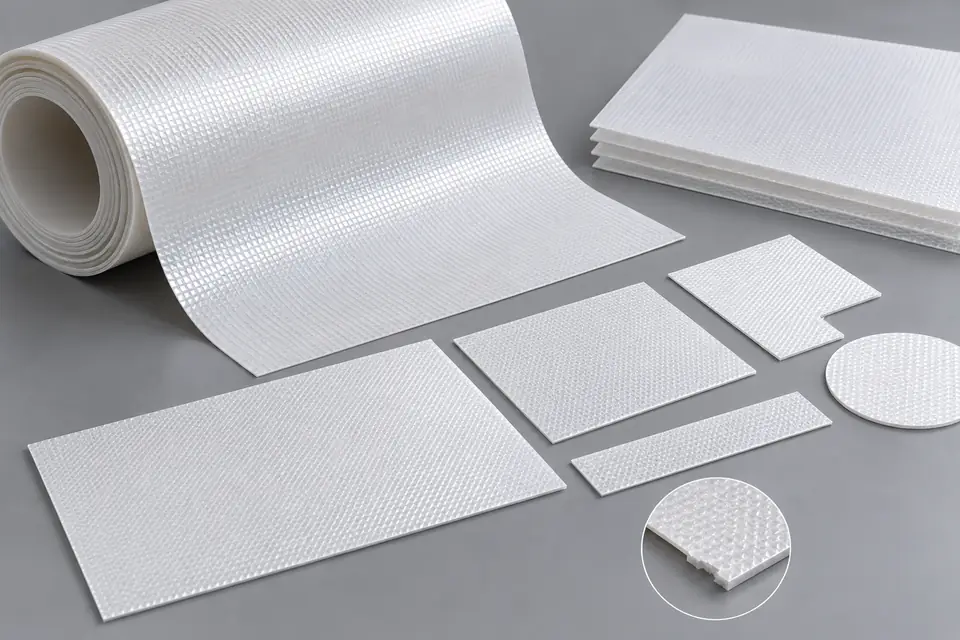
Dove viene utilizzata questa applicazione di taglio
Display manufacturing production
MiniLED Reflector Sheet is processed by shear slitting to support display polarization, reflection control, brightness enhancement and optical filtering. The finished geometry must remain compatible with downstream handling and assembly.
Cut-quality control
Production teams compare accepted and rejected samples for edge cleanliness, optical surface condition, profile accuracy, coating continuity and orientation, then relate the result to side clearance, overlap, runout, web tension and slitter alignment.
Stable material and waste handling
non-marking support, controlled tension and protection from dust or face-to-face abrasion help the product and waste leave the cut zone consistently without creating a second defect after separation.
Modi comuni per descrivere questo problema di taglio
- miniLED reflector sheet shear slitting blades lame da taglio 1
- industrial miniLED reflector sheet shear slitting blades lame da taglio 2
- custom miniLED reflector sheet blades for shear slitting lame da taglio 3
- how to improve shear slitting of miniLED reflector sheet lame da taglio 4
- miniLED reflector sheet shear slitting edge defect analysis lame da taglio 5
- miniLED reflector sheet shear slitting dimensional control lame da taglio 6
- Display manufacturing miniLED reflector sheet shear slitting setup lame da taglio 7
- miniLED reflector sheet blade RFQ data for shear slitting lame da taglio 8
Definite il risultato di taglio richiesto
- Achieve stable slit width with low debris and controlled edge deformation for miniLED reflector sheet
- Prevent surface scratches, coating chips, whitening, layer separation or optical-edge distortion
- Maintain the required geometry for display polarization, reflection control, brightness enhancement and optical filtering
- Deliver a cut condition accepted by the next display manufacturing operation
Problemi da diagnosticare prima di cambiare la lama
The cut edge shows surface scratches, coating chips, whitening, layer separation or optical-edge distortion
Compare blade condition, side clearance, overlap, runout, web tension and slitter alignment, material lot and accepted versus rejected samples.
Finished dimensions drift during a production run
Check feed registration, tension or hold-down, temperature, support condition, runout and when dimensions are measured.
The workpiece shifts, curls or loses functional surface quality
Review non-marking support, controlled tension and protection from dust or face-to-face abrasion, contact-face cleanliness, material direction, support and the first point where deformation appears.
Product and waste do not separate consistently
Check cut completeness, waste width, exit angle, static, extraction, collection tension and downstream transfer.
Tipi di lama che possono essere valutati
| Possibile tipo di lama | Quando può essere valutato | Cosa occorre confermare |
|---|---|---|
| Matched circular shear-slitter pair | Considered when shear slitting requires stable slit width with low debris and controlled edge deformation under stable support and guidance. | Confirm only after reviewing a real miniLED reflector sheet sample, the equipment interface, mounting drawing, operating direction and an accepted cut reference. |
| Precision dished slitter blade | Considered when the equipment interface and material response require an alternative geometry or cutting motion. | Confirm only after reviewing a real miniLED reflector sheet sample, the equipment interface, mounting drawing, operating direction and an accepted cut reference. |
Informazioni da inviare per la verifica tecnica
Non è necessario conoscere il nome esatto della lama. Inviate le informazioni disponibili sul pezzo, sulla macchina, sulla lama attuale e sul risultato richiesto, così da valutare l'applicazione sulla base di un disegno o campione.
- MiniLED Reflector Sheet composition, grade, thickness and allowable lot variation
- Layer, coating, porosity, temper, adhesive or surface-function details relevant to shear slitting
- Input width and target dimensions, tolerances and acceptance drawing
- Line speed, feed mode, tension or hold-down, temperature and cutting frequency
- Current blade or knife drawing, holder interface, mounting dimensions and used sample
- Material direction, support, contact faces and product or waste collection method
- Accepted and rejected samples with limits for edge cleanliness, optical surface condition, profile accuracy, coating continuity and orientation
- Trial quantity, inspection method, downstream operation, packing and annual demand
Domande su questa applicazione di taglio
Why must miniLED reflector sheet be reviewed as a complete material construction?
Its substrate, coating, interfaces and surface condition can respond differently to pressure, friction and bending, so nominal thickness alone does not predict shear slitting performance.
Can the blade be selected from the material name alone?
No. Confirm side clearance, overlap, runout, web tension and slitter alignment, the holder interface, production speed, support and accepted samples before fixing the blade geometry.
What commonly causes defects during shear slitting?
Material variation, unstable support, alignment error, contamination, inappropriate clearance and blade wear can interact to create surface scratches, coating chips, whitening, layer separation or optical-edge distortion.
When should the finished dimensions be measured?
Record both immediate and conditioned results when recovery, residual stress, temperature, moisture or adhesive flow can change the part after cutting.
What should be recorded during a production trial?
Record the miniLED reflector sheet lot, setup, speed, support, blade condition, dimensions, edge observations, waste behavior and downstream acceptance.
Informazioni correlate su prodotti e servizi
- OLED polarizer film: shear slitting lame da taglio - OLED polarizer film · shear slitting
- microprism brightness-enhancement film: shear slitting lame da taglio - microprism brightness-enhancement film · shear slitting
- flexible OLED support film: shear slitting lame da taglio - flexible OLED support film · shear slitting
Richiedete una verifica per una lama da taglio su misura
Inviate i dati del pezzo, le informazioni sulla macchina o sul portalama, fotografie o un campione della lama attuale, la quantità richiesta ed esempi del problema di taglio. Dimensioni finali, materiale, geometria del filo e tolleranze vengono confermati in base ai requisiti approvati.
Informazioni correlate su prodotti e servizi